Banking Sector Q1 Preview: Dullest Quarter In Four Years Anticipated On Margin Pressure, Slower Loan Growth
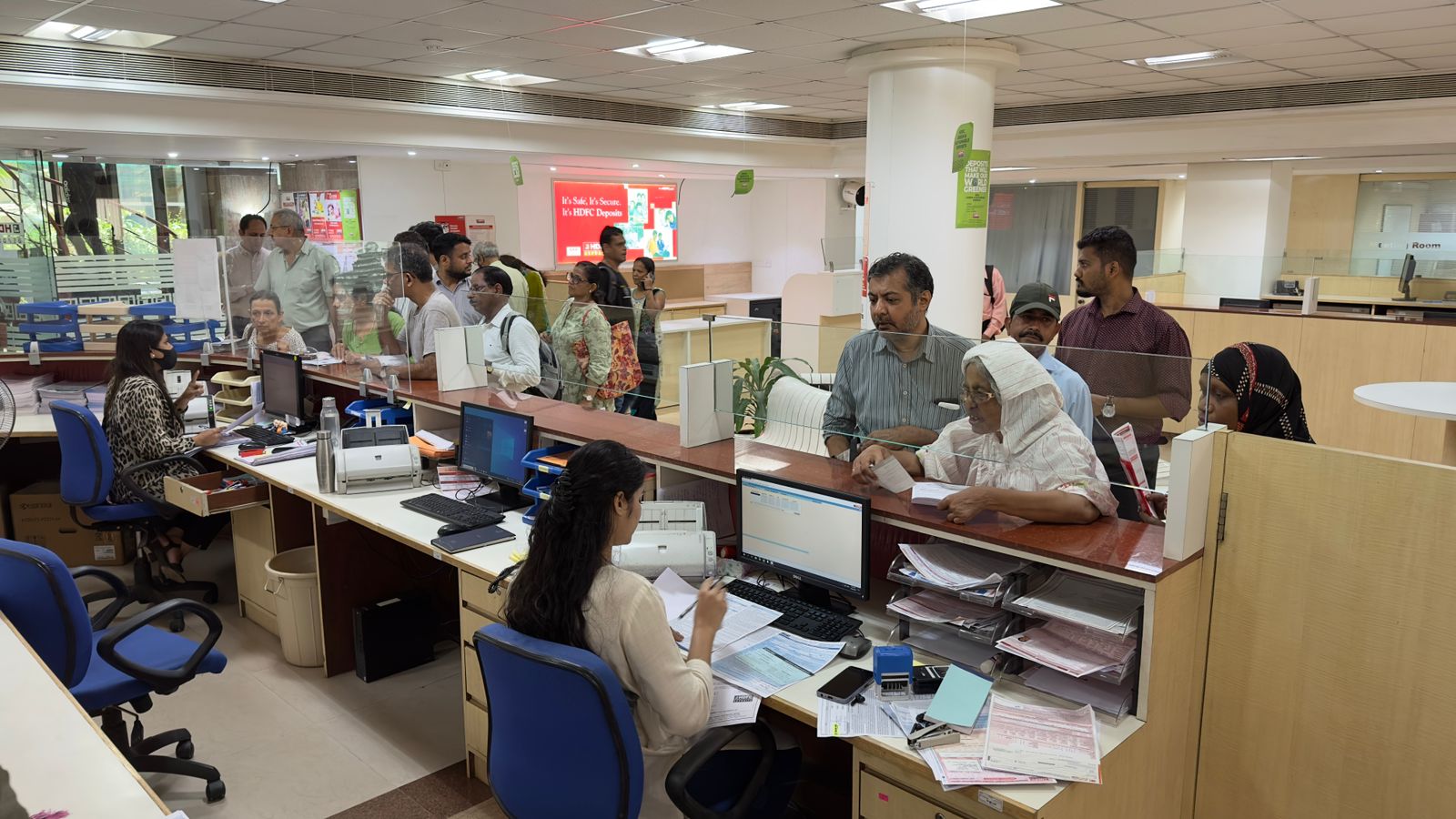
Typically, the first quarter of a financial year is slow in terms of business growth. However, Indian banks are set to witness one of the dullest quarters in nearly four years, led by a slowdown in loan growth, margin compression and seasonally weak asset quality, which is likely to dampen earnings, six brokerages said.
“1QFY26 would be the first quarter where the recent rate cuts start to hurt revenue growth,” Kotak Institutional Equities said in a preview note.
It expects earnings to decline 2% on year in April-June on the back of weak revenue growth.
While banks have fewer levers to offset this weakness, trends in asset quality and consequently in credit costs may partially cushion this impact, the brokerage said.
Slowing Loan Growth
At a system level, loan growth has decelerated to 9.6% on year as of June 13, slipping below the crucial double-digit mark, according to recent data from the Reserve Bank of India.
Provisional business data released by various banks has confirmed that loan growth for frontline banks is at 7–12% on year.
“Loan growth is expected to moderate to sub-11% on year and 1% on quarter for coverage banks led by a seasonally weak Q1, slowdown in retail unsecured credit, increased corporate borrowing through bond market amidst a declining rate environment, and muted private capex,” Dolat Capital Market Research said in a note.
Meanwhile, deposit growth remained healthy at 10.4% YoY, outpacing advances for the first time in several quarters. This shift has improved the sector's credit-deposit ratio, but it also reflects the underlying weakness in credit demand.
Margins Under Pressure
Apart from loan growth, pressure on banks' margins will continue as a cumulative 100 basis points cut in the repo rate and a surprise cut in the cash reserve ratio by the RBI have triggered rapid repricing of floating-rate loans, especially those linked to external benchmarks.
This has led to a 30-basis point on year compression in net interest margins for most banks, with large private lenders like HDFC Bank, ICICI Bank, and Axis Bank particularly exposed due to their high share of EBLR-linked loans, JM Financial said in a report.
Dolat Capital expects banks' margins to compress by 7–20 bps on quarter in April-June across most lenders as repricing of EBLR-linked loans, slower growth in unsecured portfolios, and March-quarter related one-offs would hurt yields.
To protect margins, banks have cut savings and term deposit rates, but the benefit from lower deposit costs will take time to materialise. For now, most brokerages expect NIMs to remain under pressure, particularly in the first half of FY26.
For public sector banks, Dolat Capital has factored in NIM compression of 7–10 bps, while the same is higher for private banks at 15–20 bps owing to their higher share of EBLR-linked loans.
Overall, FY26 is expected to be a challenging year for net interest income for most banks because of the rate cut cycle. Kotak Institutional Equities expects public banks to take a higher impact in the June quarter, while private banks would see a higher impact in the September quarter.
Credit Costs Rise
On asset quality, large private sector banks would see healthy books led by robust provision buffers. However, seasonal factors such as higher slippages in agriculture loans and persistent stress in unsecured retail segments are likely to push up credit costs for many lenders.
Mid-sized and small finance banks, especially those with higher exposure to unsecured lending, are expected to report elevated credit costs.
PSU banks, which have benefited from recoveries in recent quarters, may see a normalisation in slippages, though some like Indian Bank and Punjab National Bank are seen as potential outperformers.
Trading Income Gains
One bright spot in an otherwise muted quarter is the prospect of strong trading and mark-to-market gains. The sharp fall in government securities yields of 30–80 bps during the quarter is expected to boost treasury income for most banks, aiding operating profits.
However, the impact on reported profits may be limited due to new investment accounting norms that direct a portion of these gains to capital reserves rather than the profit and loss statement.
In terms of fee income as well, Q1 is typically a seasonally weak quarter and this year is no exception.
Banks are also grappling with higher operating expenses, particularly on account of annual appraisals and wage hikes, which are expected to outpace the growth in advances.
Despite the challenging operating environment, bank stocks have held up well on hopes of a recovery in the second half of FY26. Brokerages prefer outperformers such as ICICI Bank, HDFC Bank, RBL Bank, IDFC First Bank, PNB, and Indian Bank.
Expected laggards would be Axis Bank, Bandhan Bank and Bank of Baroda.

-
Gold Is Rs 22,000 Cheaper Than A Month Ago. Should You Buy Amid The Wedding Season?

Gold's potential slide to $3,500 could save around Rs 4,700 per 10 grams, but a soft inflation print could just as easily push prices back up. One way to split the risk is to buy in parts, some now and the rest after the Fed's Dec. 9 decision.
-
AI Agents Are Gaining Power. Who Governs Them?
Artificial intelligence agents promise to transform productivity by moving machines from assisting decisions to executing them. But as organisations delegate greater authority to these AI-agents, they must first establish who controls that authority and who remains accountable when things go wrong.
-
Why Swapping Your Old Gold Can Trigger A Rs 5 Lakh Tax Bill, And How You Can Avoid It Legally
Swapping old gold for new is taxed as a sale and a fresh purchase. Getting your own gold remade can cut most of that bill, though it has its own costs.
-
The AI Trade is Done. The Real Opportunity for Investors Starts in 2027 | Unhedged Position
As pureplay AI stocks plunge and circular, capex-led financing unwinds, 2027 is set to be a year of reckoning for AI companies. Yet the bust clears the way for a better opportunity for investors in 2027 -- shifting the spotlight from AI builders to the companies using AI.
-
Leadership As Mission: Why The Age Of AI Demands More Human Leadership
Debjani Ghosh examines how AI is changing leadership, arguing that its success must be measured by its impact on people and the accountability of those guiding its use.
-
We May Need Another Tukaram Mundhe To Fight Air Pollution | The Reason Why
Developers may install basic measures such as sprinklers and green nets, resume work, and continue violating rules when this equipment stops working.
-
Extracting Value From Battery Scrap Could Be Challenging For India | The Reason Why
A discarded lithium-ion battery still contains valuable materials such as lithium, nickel and cobalt. These can be recovered and reused. When such batteries are crushed and shredded, they produce a dark powder called black mass.
-
One El Nino, India Can Handle. Two Could Break The Granary
India's grain stocks can absorb one bad year, but a second El Nino could drain the buffer in two to three years, economists say.
-
India's Troika Of Good Luck | Joining The Dots
As Jensen Huang's exit drags Nvidia down, a cooling AI trade and resilient earnings have revived investor interest in India. A likely RBI rate hike looms.
-
Talking Points This Week: Leadership Shock At Nvidia, Earnings Strength, And The Fog Over Hormuz
The Anthropic IPO pricing and first trading day, Nvidia's upcoming earnings, and any fresh signals from Iran will set the tone for the following week.









