What You Don't Know About Aadujeevitham
After 14 years and many hardships, this week a bestselling Malayalam novel releases as Aadujeevitham (Goat Life), a splashy film with an A-list crew. It also features a Haitian actor and a Palestinian song on the AR Rahman soundtrack. The backstories around the film and the book are as fascinating as their inspiration—the true life survival story of Najeeb Muhammad who worked as a modern slave tending hundreds of goats single-handedly in Saudi Arabia for two years in the 1990s.
Author Benyamin met Najeeb in Bahrain, 10 years after his ordeal. Najeeb had gone from a fisherman in Kerala, his work inextricably connected with water, to a parched life where he wasn't even allowed to wash his bottom with the precious water that was reserved only for the animals. His status was lower than that of a goat, yet he managed to keep his empathy alive through the ordeal, eventually seeing himself as one of the goats.
Najeeb's devastating story instantly hooked Benyamin, who was drawn to the untold stories of lonely migrants. From the lingering scent of a wife's blackened pickle and to the elaborate names he gives the goats, Najeeb's painful solitude is visible on every page of the book.
Like lakhs of Malayalis, Benyamin too migrated to West Asia at the age of 21. His first job was as a worker in a company that installed and maintained air conditioners and other electrical equipment. That's when he started reading, and, eight years later, wrote his first book. Now he is the author of 28 books and spends his days writing at his home in Kulanada village in central Travancore district near Alleppey. His wife continues to work in the Gulf as a nurse.
The idea of living a 'goat life' resonated with many, and not just those who had faced labour rights violations in Gulf countries. Even techies in glass and concrete prisons identified with Najeeb's lonely slavery by an Arab employer he called arbab (saviour), alongside hundreds of goats in a masara (goat pen). "People from Bangalore in the IT field wrote to me that we are also goats and the office is the masara, our manager is that arbab," says Benyamin. "Anyone can relate." I know I certainly related when I read the English translation a decade ago.
When Benyamin retired after 21 years at the same company, after completing Aadujeevitham, his sixth book, he had risen to the position of project manager. But his interest lay elsewhere. "I met people from many countries and communities, heard their struggles, and found they were not registered in any literature," says Benyamin. "I thought it was my duty to tell readers about such stories."
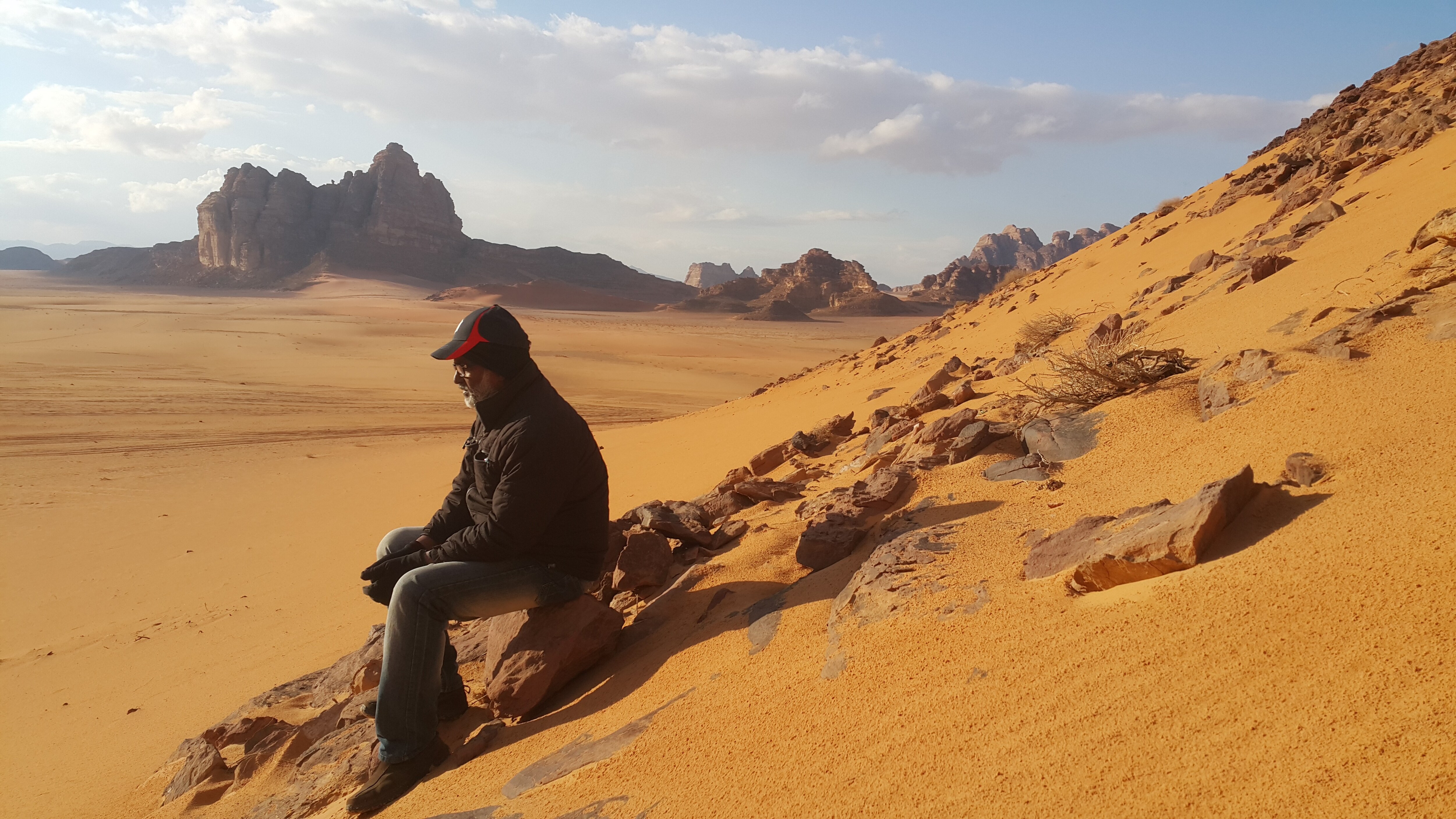
Though Benyamin never named the country where Najeeb's torture unfolded, the book was banned in Saudi Arabia and the UAE. Most of the member states of the Gulf Cooperation Council refused to give permission for the film to be shot there too. Eventually, the crew recreated Najeeb's West Asian sandy solitary confinement in the Wadi Rum desert in Jordan and in the depths of the Sahara Desert in Algeria. When the pandemic hit mid-shooting, an 80-member team, including lead actor Prithviraj Sukumaran, were stranded for months in Jordan. "The shooting itself was like goat life," says Benyamin.
In 2008, Aadujeevitham wasn't published by DC Books, Benyamin's regular publisher. He offered it to a smaller publisher who had repeatedly been asking him for a book. The book made literary history, becoming one of the most sold Malayalam novels. It won the Kerala Sahitya Akademi Award and was soon on the syllabus of universities across the country.
Sivapriya R, then an editor at Penguin, said she persevered despite the "ungrammatical translation" that landed on her desk: "The story is so deeply moving. It is truly global, it could really be set anywhere, it could be any man from any community in any country." The English novel Goat Days was published in 2013. It is now translated into nine languages and in its 251st edition.
Though he doesn't have a formal screenplay credit, Benyamin says he was closely associated with the film from start to finish, adding that director Blessy and the actors frequently looked to him for clarifications and suggestions. "It is my movie too," he says. "It's not that I just gave them the story and left." Benyamin says the director has captured the essence of the book and turned it into something new.
Meanwhile, at home in Kerala, the author writes from the time he wakes up to midnight. "I am always reading or writing," he says. "I am with books most of the day." Thanks to royalties, he is no longer the nomad he once was, but he remains absorbed by the isolation and pain of those who live away from home.
Priya Ramani is a Bengaluru-based journalist and is on the editorial board of Article-14.com.
The views expressed here are those of the author and do not necessarily represent the views of NDTV Profit or its editorial team.

-
Navigating Energy Crossroads: S Jaishankar's Call For Diversified Supply Chains At G20 Ministerial Meeting

As geopolitical fault lines continue to test maritime trade routes and commodity flows, Jaishankar's message remains pertinent: true economic resilience requires open markets, protected transit lines, and a genuine commitment to multilateral cooperation rather than coercion.
-
Indians Are Travelling, But Not Every Journey Is A Holiday | The Week In Whys
Pilgrims, patients and working women are the real travellers, and the system hasn't quite caught up with them.
-
Getting To Work Costs Women More | The Reason Why
It is not just about women paying more than men. It is about women paying much more in cities than in villages.
-
AI Bias In Investing Cannot Be Eliminated, But It Can Be Governed
Framing is a particularly important example as identical financial information presented in terms of gains rather than losses can lead an LLM to reach a different assessment.
-
Joining The Dots | Dark Skies, Steady Diya: Why Hope Holds This Diwali
With war, a weak rupee and foreign outflows weighing on sentiment, policymakers at the NDTV World Summit and market veterans at NDTV Profit Ignite: Diwali Edition offered the same advice: stay invested and filter out the noise.
-
The Curious Case of Equitas Small Finance Bank And A CEO Who Quit For Stock
PN Vasudevan believes persistent investor concerns over a perceived conflict of interest had become a governance overhang on Equitas Small Finance Bank's stock, even as the lender improved profitability and asset quality.
-
Talking Points This Week: AI Cash Burn, A Tiger Comeback And An India That Still Finds Its Own Path
India is not immune to higher oil or tighter global liquidity, yet its earnings base is broader, its domestic policy levers are still available.
-
Foreign Investors Own Half Of HDFC Bank and ICICI Bank. An LTCG Cut Could Matter Most Here
Foreign portfolio investors have US$115 billion parked in HDFC Bank, ICICI Bank. If the government cuts long-term capital gains tax, Jefferies says returning foreign money could land here first.
-
'Never Seen This Level Of Negativity': Sandeep Tandon Says The Next Rally May Be Closer Than You Think
Veteran investor Sandeep Tandon says foreign selling is easing, large-caps are due a comeback and mid-caps are crowded, while he turns positive on gold, power and pharma this Diwali.
-
Indians Stay With Family, Not In Hotels | The Reason Why
India still lacks enough clean, reliable and affordable hotels for budget-conscious travellers.










