The World’s Best Democracy
My teenage daughter is learning about the American Revolution, enlightenment ideas and how, way back in 1789, a certain newly minted constitution began with ‘We the People….' She's also learning about the war between the monarchy and parliament in the French Revolution.
The 'D' word is coming up a lot. I'm worried we are not preparing her for the modern world. Why are we talking to children about a dying system and filling their minds with wishful, increasingly unattainable ideas such as justice, freedom and liberty?
I propose that instead of global institutions working hard to issue reports that lament the death of democracy, offering ineffective suggestions to stop their erosion/contraction and stem the rise of autocrats across the world, we should just update the dictionary meaning of the word democracy.

You will surely agree that the dictionary definition of democracy—“a government in which the supreme power is vested in the people and exercised by them directly or indirectly through a system of representation usually involving periodically held free elections”—is now quite outdated. The V-Dem Democracy Report 2024 said 35 countries had witnessed a decline in free and fair elections, from 16 in 2019. Now, 71% of the world's population live in autocracies.
Anyway, dictionaries constantly add and fine-tune their words. Last year, in my favourite example, the Oxford English Dictionary added the word anti-woman. “Hostile to the rights and interests of women; antagonistic to women; = anti-woman adj. Now frequently in predicative use.”
Why not redefine democracy to suit 2024? We can get tips from the country that recently declared itself the gold standard of democracy.
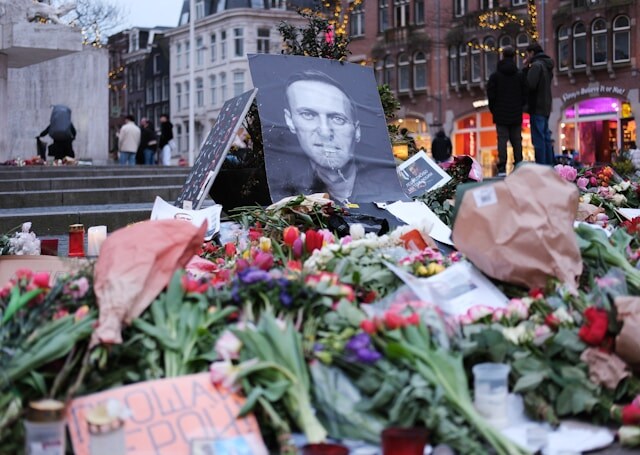
“Our democracy is the best,” Vladimir Putin's press secretary Dmitry Peskov said, less than three weeks after the death of 47-year-old Alexei Navalny in state custody. Navalny was Vladimir Putin's most vocal and persistent critic. Peskov also said, “We will no longer tolerate criticism of our democracy.”
Meaning, if you call the democracy that is Russia by any other name, you can say bye bye to watching ballet at the Bolshoi and visiting Lenin's tomb, or whatever it is people who are free do in Moscow. My suggestion to update the definition could actually be lifesaving for dissenters. Like Russian Oleg Orlov, a 2022 Nobel Prize winner, whose trial began on the day Navalny died, and who was sentenced to two and a half years in prison for calling a democracy by any other name.
“I have committed no crime. I am being tried for a media article I wrote in which I called the political regime that's been put in place in Russia totalitarian and fascist,” he said in a statement in court. “I wrote it over a year ago. At the time, some of my friends thought I was blowing things out of proportion.”
Tanya Lokshina said the trial was so Kafkaesque that Orlov spent his time in court reading Kafka's The Trial. There's even a photo of this on the internet which is worthy of your time. In fact the courtroom, en route to jail, seems to be one of the few places where Russian dissenters can express themselves. Navalny often used the courtroom to speak his mind, and another dissenter Alexei Gorinov held up a sign in court, ‘I am against the war' about the Ukraine war, before he was sentenced to 7 years imprisonment. Since 2022, nearly 20,000 citizens have been detained for saying they don't like Russia's war against Ukraine. Democracies enjoy starting wars and their citizens should understand this and kindly support them.
In the democracy that is Russia, the rainbow flag, a symbol of “international LGBT extremism” is boycotted. You can be fined or detained for wearing rainbow-coloured frog-shaped earrings or posting the flag any of your social media accounts.
In the democracy that is Russia, the real opposition leaders are in jail, the gents who stood against Putin in the recently completed election where he won his fifth term (he's been King of Democracy for 24 years), never said a word against him. You could call them Putin's B-Team.
After he secured 87% of the vote, Putin said in in his victory speech: “You just can't stop us.” I couldn't agree more. So let's crowdsource a new definition of democracy. Below can be the starting point:
A democracy is “a government run by an autocrat with high ratings who pretends supreme power is vested in the people. It's a system that can't handle criticism, jails dissenters, enjoys warmongering and other assorted extrajudicial activities, dislikes any inclusive thinking around minorities and LGBTQIA+ communities. It usually involves periodically held elections where all opposition is neutralised so the autocrat can sail to power yet again.”
With this definition, all dissenters can call countries such as Russia democratic without feeling they are betraying their beliefs. Bonus: they won't have to fear the shadow of a jail term.
Priya Ramani is a Bengaluru-based journalist and is on the editorial board of Article-14.com.
The views expressed here are those of the author and do not necessarily represent the views of NDTV Profit or its editorial team.

-
High US Salaries, No Green Card Certainty: The Financial Calculation Facing Indian H-1B Families

The suspension of PERM processing at eight technology employers does not cancel existing H-1B visas. What it does is force a question many Indian families have been avoiding: is the US salary worth tying your career and family plans to one employer?
-
Swiggy vs Eternal: Food Delivery's Two Rivals Are No Longer In The Same Race
Eternal is building a private AI assistant, dark.ai. Swiggy is still working out how to make Instamart pay, with an operating loss of Rs 895 crore in the July-September quarter while Blinkit stayed profitable.
-
Where You Live Shapes How You Get To Work | The Reason Why
Two-wheelers are the most popular way to get to work in India, accounting for nearly 43% of workplace commutes.
-
Unhedged Position: Can India See An Indonesia-Style Time Correction?
The Nifty is trading below levels it first clocked in 2024. Is there, then, as I have suggested in the headline, potential that the current time correction drags on painfully for the next three-five, even ten years?
-
Navigating Friction And Energy Realities: An Analysis Of Marco Rubio's October Visit To India
Occurring at a critical juncture marked by stalled trade negotiations and escalating geopolitical pressures over global energy supplies, the visit offers a profound window into modern US-India relations.
-
India Exports Capital. Why Not Export Trusteeship?
The big question, then, is whether India can build an institution that global borrowers, investors, banks, and lawyers can trust, even without an Indian connection.
-
France's Economy & Politics Are In Crisis | The Reason Why
Let's look at how the French economy and politics evolved under Nicolas Sarkozy, Franois Hollande and Emmanuel Macron.
-
You May Inherit The Business. You Must Earn Its Credibility.
Succession tests the founder's ability to share authority as much as it tests the next generation's readiness to assume it.
-
Signing Deals Is One Thing; Making Them Work Is Another | The Week In Whys
Sometimes, things don't turn out as planned. Indian companies have lost some bids to rivals, some projects won't produce until 2030.
-
FOMC Wall, PERM Suspension, Hospital Stocks | Talking Points This Week
A PERM suspension would directly affect green-card sponsorship rather than H-1B visas, so the near-term earnings impact could remain relatively limited. The key question is whether this marks a new phase in US scrutiny of Indian IT.









