

The Shadow Fleet And Rise Of Parallel Global Energy System | The Reason Why
Although profits are shrinking, Russia is still finding ways to trade through obscure means and military protection



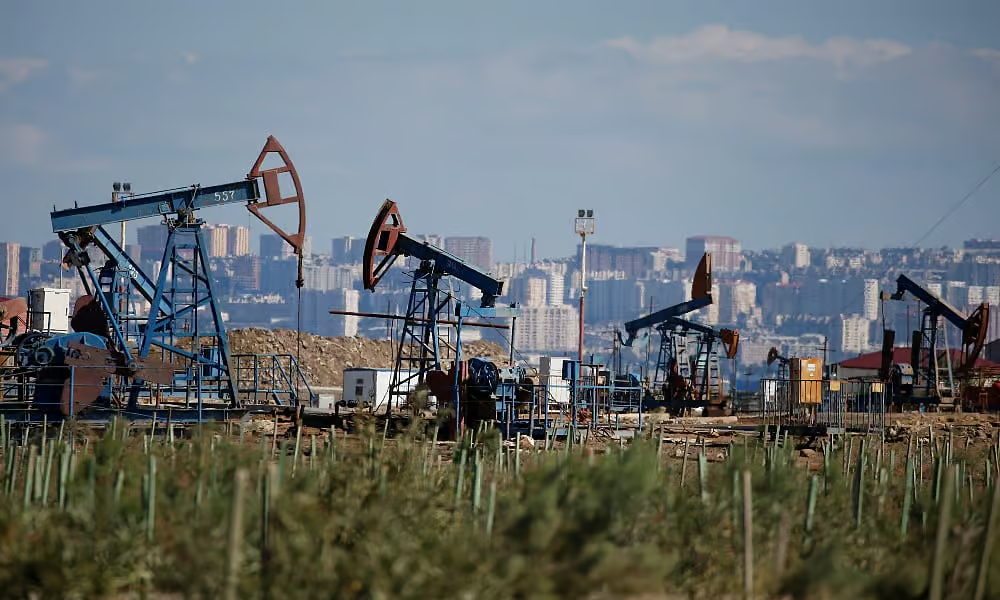
Post Russia-Ukraine war, Western nations imposed sanctions on Russia but avoided restricting oil, as Russia is a big player in the global energy market. Russia produced about 11 million barrels daily and exported nearly 10% of the world’s oil.
Sanctions on Iran reduced supply and raised prices. So instead of banning Russian oil, the G7 set a $60-per-barrel price cap to maintain stability.
The idea was simple: keep oil flowing to avoid a global shock, but starve Moscow of revenue by controlling shipping, insurance, and finance. What actually happened was more interesting — and more troubling.
What the Shadow Fleet Actually Is
After the price cap, Russia had two choices: sell its oil at deep discounts or find ways to sell its oil without facing sanctions. It chose the second option. It had figured out who to sell to. The buyers were India and China.
The real challenge was how to deliver the oil and get paid. Much of global insurance and international payments is processed by Western firms. The sanctions and other restrictions meant they would neither insure Russian cargoes nor process Russian payments. The shadow fleet became the solution.
Russia bought old tankers, hid ownership behind shell companies, and shifted to non-Western buyers, insurers and financial intermediaries. This allowed Russian oil to keep moving — and eventually to be sold at prices above the cap.
Thus, Russia rebuilt the entire logistics, payments, and insurance systems outside Western control. The trade flows shifted, but did not stop.
Mechanism of Shadow Fleet
Think of the shadow fleet not as a navy or a bunch of ships working together, but more like a sneaky way of doing business.
Most of these ships are old. Under normal circumstances, they would have been retired. By early 2026, around 900-1500 shadow fleets sailed, accounting for roughly one-fifth of global tanker capacity.
They fake documents, flags and even locations. Russia doesn’t want others to know who owns them, where they came from and where they are currently, thus circumventing the sanctions. When their location is hidden, they often meet other ships at sea to transfer or rename oil.
Taken together, shadow fleet architecture is about recreating—piece by piece—the entire logistical and financial architecture of the oil trade outside Western control. This way, oil still moves, but the system becomes riskier for everyone involved.
The Kyiv School of Economics estimates that Moscow spent about $10 billion on old tankers from 2022 to 2024. The shadow fleet enabled Russia to earn an extra $9.4 billion in oil revenue in 2024 by selling above the price cap.
An Inconvenient European Role
Bloomberg found that nearly 60% of these shadow fleet tankers came from Western European owners, mostly Greek companies. It was legal as the rules only monitored tanker sales, not stopped them.
Shipowners sold old ships at high prices to buyers using shell companies in places like Dubai or Hong Kong. So as long as the buyers weren’t officially Russian, European owners could sell their ships. This helped Russia get old tankers without disclosing the real ownership.
Rising Restrictions on India’s Pragmatic Role
India gained the most from the shadow fleet. Before 2022, very little of India’s oil came from Russia, but by 2024–25, about a third of flows were coming in. India bought nearly $155–$160 billion worth of Russian oil, making it the second-biggest buyer after China.
Even when the US raised tariffs and pressured India to stop, India kept buying Russian oil because it was a good deal. Now, India has more pressure to cut back on buying Russian oil. Imports have gone down recently, but the two countries are still doing business with each other.
ALSO READ
India's Priority Is Affordable Energy: MEA On Proposed US Bill Tying Russian Oil To 500% Tariffs
This System Won’t Vanish Quietly
Things are getting tougher for the shadow fleet. Some oil shipments are stuck, while some are sitting idle in the sea. The US, EU, and UK sanctioned over 150 ships, and joint action even pulled shadow fleet activity down by 90%. Ukraine even used drones to hit some tankers.
Although profits are shrinking, Russia is still finding ways to trade through obscure means and military protection. For instance, China keeps importing LNG, and the system keeps finding ways around the rules.
The big turning point might not even be political—it could be a huge oil spill, damage to underwater cables, or a navy clash. For now, the shadow fleet shows that sanctions don’t really stop trade; they just change how it works and who takes the risk. And right now, those risks are piling up.
Disclaimer: The views expressed in this article are solely those of the author and do not necessarily reflect the opinion of NDTV Profit or its affiliates. Readers are advised to conduct their own research or consult a qualified professional before making any investment or business decisions. NDTV Profit does not guarantee the accuracy, completeness, or reliability of the information presented in this article.