Tariffs, Alliances And Diplomacy: Navigating India's Economic Crossroads | Talking Point This Week
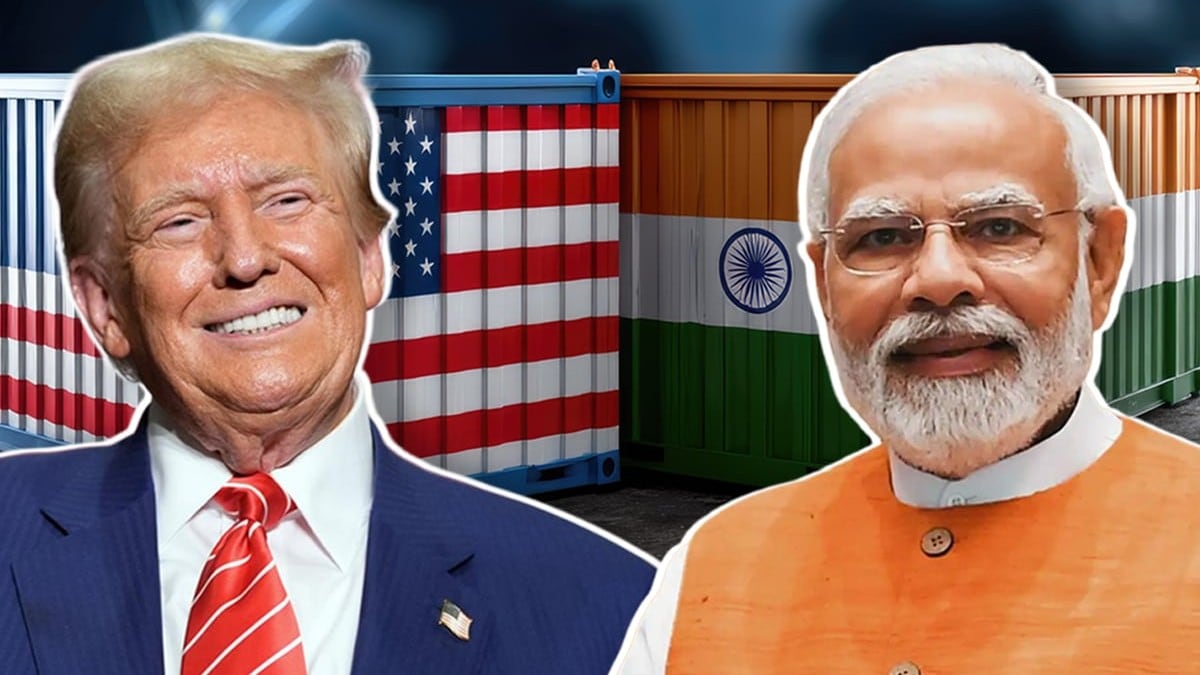
To all, Michhami Dukkaddam. We celebrated the festival of forgiveness this week, as well as ushered in Lord Ganesha in our homes and hearts. But while we enjoy the best period in a calendar in India, there is tough news too. India is now incurring 50% tariffs on exports to the US, starting Aug. 27, making it one of the highest tariffed countries. An estimated 70% ($55 billion) of India's exports to the US are now under threat, accelerating downside risks to growth. And amidst all the non-diplomatic comments by Peter Navarro, Scott Bessent mentioned: “I do think India's the world's largest democracy, the US is the world's largest economy. I think at the end of the day we will come together.” I must add though, if this looked like being the biggest news, the street is set for heavy newsflow over the next seven days, with PM Modi's meetings with Japanese and Russian leaders, and the much touted 'Dragon-Elephant' tango on Sunday. In other newsflow, R Ashwin has retired from IPL. An end to a glittering career.
Here are the key talking points of this week:
Why Are US Markets Not Freaking Out?
Paul Krugman says this of markets behaviour - "My read of economic and financial history is that market pricing almost never takes into account the possibility of huge, disruptive events, even when the strong possibility of such events should be obvious. The usual pattern, instead, is one of market complacency until the last possible moment." There are enough telltale signs which have been pointing to why the US markets should pause, or correct. And one would never know the timing of a potential crack. Overheated valuations (S&P 500's PE), economic uncertainty due to Trump's tariff policies and slowing growth, with weaker job market data, as well as low market volatility are all potential triggers for a pullback. Lets see if it comes as a surprise or otherwise.
India-Japan Bonhomie
On Friday morning, after his first set of conversations, PM Modi emphasised that the India-Japan partnership is "strategic and smart," driven by economic logic that transforms shared interests into shared prosperity. He highlighted India's role as a springboard for Japanese businesses to access the Global South, positioning the partnership as a key driver for stability, growth, and prosperity in the Asian century. There are great expectations on green energy transmission, PM Modi noted. And in a call for Make in India and make for the world, he said that sectors like manufacturing, auto and energy are booming in India. "Together we can contribute to the growth of the global South," he said. "There are successful business that can be owned by both countries together."
The investment friendship with Japan has been around for long. Let us see if it picks up pace for the times ahead.
Inflection Points Ahead?
The MSCI India Index has significantly underperformed the MSCI Emerging Markets (EM) Index, lagging by 18% since mid-April 2025 and by nearly 24% over the past year, marking the largest underperformance in 15 years on a trailing 12-month basis. In contrast, North Asian markets like Korea (+34%) and Taiwan (+44%) have posted robust gains in USD terms, highlighting a stark divergence in regional performance. Historically, after such substantial underperformance periods (15-20%), the MSCI India Index tends to rebound. Recent posts on X also suggest growing investor interest in Indian equities, with some pointing to potential recovery driven by domestic reforms and undervaluation relative to other EMs, though concerns about high valuations and global economic headwinds persist. This combination of historical trends and current market sentiment indicates a possible inflection point for Indian markets in the near term.
Nomura On Rates
Nomura notes that recently, most Asian central banks have adopted a cautious, observational stance, but we anticipate the next phase of monetary policy relaxation will commence shortly, driven by five key factors: 1) the emerging economic impact of US tariffs and China's slowdown; 2) inflation rates falling below target levels; 3) high real interest rates; 4) the US Federal Reserve's shift toward policy easing; and 5) diminishing concerns about financial stability. Their revised calculations of Asia's trimmed mean and weighted median inflation indicate that core inflation is below target in all countries, with a notable inflation shortfall of -0.6 percentage points in Indonesia and at least -1 percentage point in the Philippines, India, Thailand, and Singapore. Nomura's adjusted Taylor rule estimates suggest the potential for policy rates to fall even lower than anticipated in China, India, the Philippines, and Thailand.
Own One?
As we end, a telling statistic of last week. Sales of Labubu dolls pushed Pop Mart's net profit up by 400% year-on-year in the first half of 2025. Collectors outside the Chinese toymaker's home market have gone crazy for the smiling, elvish trinkets. Some 40% of sales were abroad. The firm, whose shares have risen by nearly 250% since the start of the year, is worth more than three times as much as Mattel and Hasbro, America's biggest toymakers, combined. Do you own a Labubu doll?
Ganpati Bappa Morya,
Niraj

-
Why Swapping Your Old Gold Can Trigger A Rs 5 Lakh Tax Bill, And How You Can Avoid It Legally

Swapping old gold for new is taxed as a sale and a fresh purchase. Getting your own gold remade can cut most of that bill, though it has its own costs.
-
The AI Trade is Done. The Real Opportunity for Investors Starts in 2027 | Unhedged Position
As pureplay AI stocks plunge and circular, capex-led financing unwinds, 2027 is set to be a year of reckoning for AI companies. Yet the bust clears the way for a better opportunity for investors in 2027 -- shifting the spotlight from AI builders to the companies using AI.
-
Leadership As Mission: Why The Age Of AI Demands More Human Leadership
Debjani Ghosh examines how AI is changing leadership, arguing that its success must be measured by its impact on people and the accountability of those guiding its use.
-
We May Need Another Tukaram Mundhe To Fight Air Pollution | The Reason Why
Developers may install basic measures such as sprinklers and green nets, resume work, and continue violating rules when this equipment stops working.
-
Extracting Value From Battery Scrap Could Be Challenging For India | The Reason Why
A discarded lithium-ion battery still contains valuable materials such as lithium, nickel and cobalt. These can be recovered and reused. When such batteries are crushed and shredded, they produce a dark powder called black mass.
-
One El Nino, India Can Handle. Two Could Break The Granary
India's grain stocks can absorb one bad year, but a second El Nino could drain the buffer in two to three years, economists say.
-
India's Troika Of Good Luck | Joining The Dots
As Jensen Huang's exit drags Nvidia down, a cooling AI trade and resilient earnings have revived investor interest in India. A likely RBI rate hike looms.
-
Talking Points This Week: Leadership Shock At Nvidia, Earnings Strength, And The Fog Over Hormuz
The Anthropic IPO pricing and first trading day, Nvidia's upcoming earnings, and any fresh signals from Iran will set the tone for the following week.
-
Signature Play: The Classic Cocktail Is Dead. Or Is It?
Classic cocktails are disappearing from India's cocktail menus. But they're still being ordered, taught to bartenders and borrowed from. So, who's really having the last drink?
-
A New Samvat Wishlist: Inclusive Prosperity And Human Development
India has strengthened its economic foundations through infrastructure, digital access and enterprise. Its next growth chapter must deepen productivity, create better livelihoods and widen participation in prosperity.









