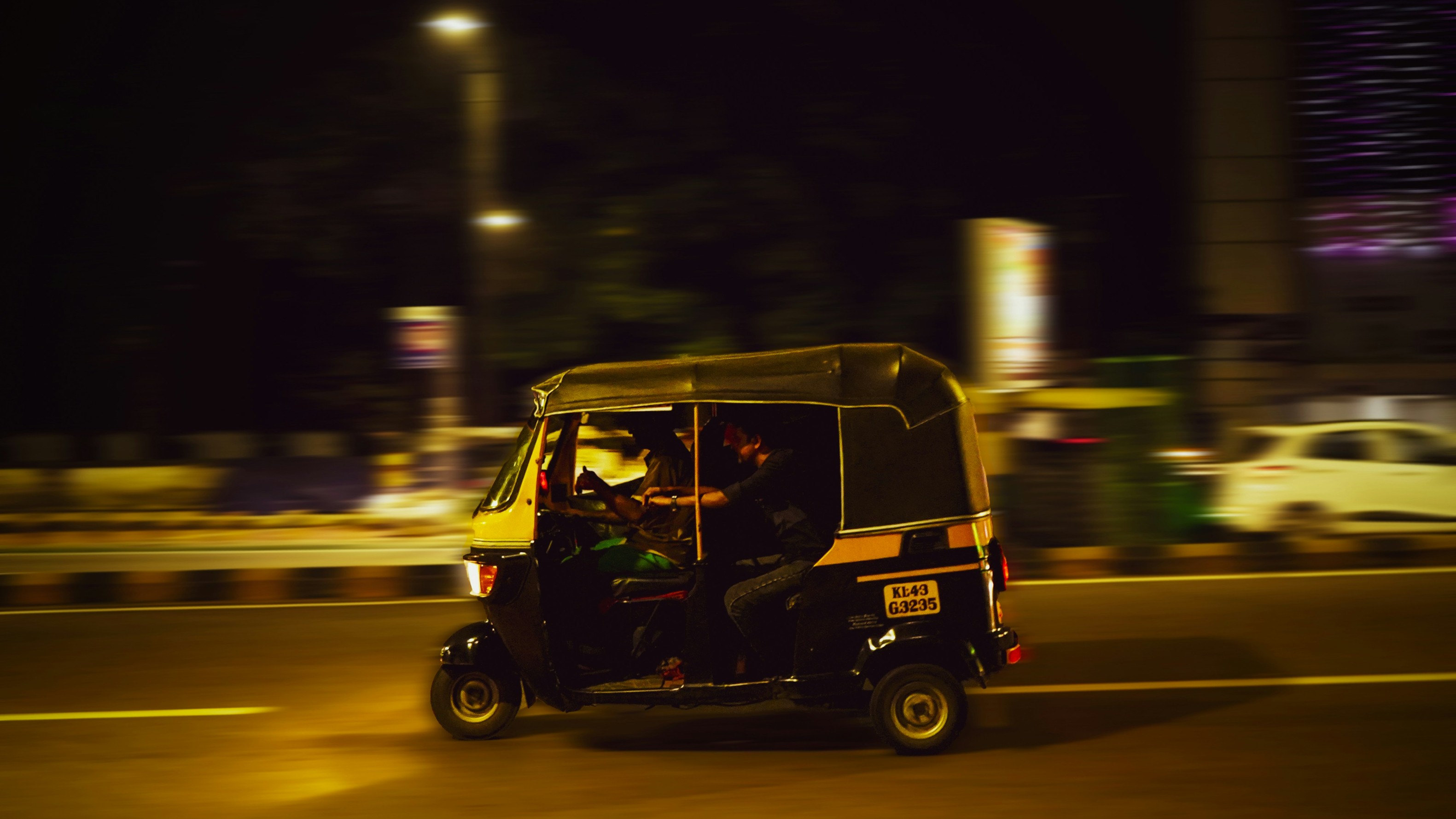
Every Indian city tells the same story: buildings grow taller, traffic gets slower, commuting becomes riskier and roads feel narrower. Ironically, cities have grown in size, but the space available for movement has shrunk.
We see politicians cutting ribbons of new car showrooms, but they go silent when asked about pollution and traffic. Yes, cars are attractive. But that's because no one wants to use unreliable public transportation. When public transport fails, private vehicles don't just fill the gap — they overwhelm the system. That has created what can be called 'negative roads' — urban systems where walking becomes unsafe, public transport remains neglected and underfunded, and rising private vehicle use shrinks effective road space.
The Most Ignored Mode of Transport
Let's start with the bus service. Buses remain the most neglected part of India's urban transport system. We don't have adequate buses in our cities. Mumbai has only about 28 buses per lakh people, far below the recommended 40–60. Usually, the state-run services struggle with finances and governance. If government services fall short, supporting private entities that address these gaps becomes critical.
But that doesn't happen. People want and like better services offered by providers such as Uber Shuttle, Ola Shuttle, Shuttl, and Cityflo. But they often face scepticism and heavy regulation. Outdated permit structures don't allow seat-by-seat booking on fixed routes, making their expansion and survival difficult.
Don't Normalise Air Purifiers As Delhi Chokes | The Reason WhyRailway Accidents in Background
The consequences of neglected public transport are not limited to roads. They are most brutally visible in suburban rail systems.
Over 70% of railway-related deaths in India occur due to people falling from trains or being run over on tracks. A 2016 CAG report recorded more than 33,000 suburban rail deaths between 2010 and 2014, with over half occurring in Mumbai alone.
Causes? Chronic overcrowding and capacity constraints. In 2012, the High-Level Rail Safety Review Committee, led by Dr Anil Kakodkar, described the situation as unacceptable for any civilised society, placing responsibility squarely on the Railways and calling for urgent intervention.
Yet, accountability remains diffuse.
Letting Women Work Night Shifts Can Be Revolutionary | The Reason WhyPolitical Credit, Public Risk
Public transport failures rarely carry clear political ownership. When a metro line opens or a bridge is completed, ministers are visible, and credit is clearly claimed. However, when trains stall, buses break down, or accidents occur, blame is often scattered — contractors, weather, technical issues, or sometimes within the authorities. For instance, in Mumbai, it's passed among Indian Railways, MMRDA, or the municipal authorities of BMC, NMMC, TMC, etc.
According to an ORF study, this fragmented institutional planning and implementation lie at the heart of India's public transport failures. Agencies that plan the roads, utilities, real estate development, open spaces and pollution work in silos, putting pressure on cities.
India Has No North-South Divide In Fertility | The Reason WhyHow Policy Tilted Toward Cars
This explains why politicians are more visible at car launches than bus depots, because those events generate more visibility than everyday commuting improvements. The recent inauguration of Tesla's Mumbai showroom is one such example.
This bias has historical roots. The Maruti–Suzuki partnership of the early 1980s transformed India's automobile industry. Cars became symbols of progress, independence, and economic growth. Government policies gradually aligned with the industry. Automobile companies enjoy benefits such as land concessions and lower taxes, thereby indirectly promoting private car ownership.
Public transportation, in contrast, gets step-daughterly treatment with weak enforcement and poor funding. This feature is not unique to transport. In one of my previous articles, I highlighted how an impure water supply has normalised the use of RO filters and Bisleri cans and is not seen as state failure. It's the same with public transportation.
And then, one cannot blame people for buying cars. Everyone seeks convenience that they can afford. As soon as people's income rises, they don't wait for bus services to improve. They buy cars. The ITDP's Transport4All survey (2023) found that over 60% of users cited overcrowding, delays, and poor comfort as major problems.
China's $1-Trillion Trade Surplus Isn't Just An Export Story | The Reason WhyWho Are the Cities Built For?
The idea of negative roads is not just about congestion or comfort. It is also about incentives. Underfunding public transport creates overcrowding. Overcrowding worsens user experience. Poor experience pushes people toward private vehicles. As car ownership rises, political urgency to fix mass transit weakens. Public transport losses grow, fiscal pressure increases, and policy attention shifts elsewhere. The cycle then repeats.
Breaking this loop requires a change in how cities think about mobility. Public transport cannot be treated merely as a social obligation or fiscal burden. Cities that move people efficiently grow faster, pollute less, and function better.
Until people, not vehicles, become central to the road and city planning, negative roads will remain a defining feature of urban India.
Disclaimer: The views expressed in this article are solely those of the author and do not necessarily reflect the opinion of NDTV Profit or its affiliates. Readers are advised to conduct their own research or consult a qualified professional before making any investment or business decisions. NDTV Profit does not guarantee the accuracy, completeness, or reliability of the information presented in this article.
India Has A Mirage Of Rising Female Workforce | The Reason WhyEssential Business Intelligence, Continuous LIVE TV, Sharp Market Insights, Practical Personal Finance Advice and Latest Stories — On NDTV Profit.