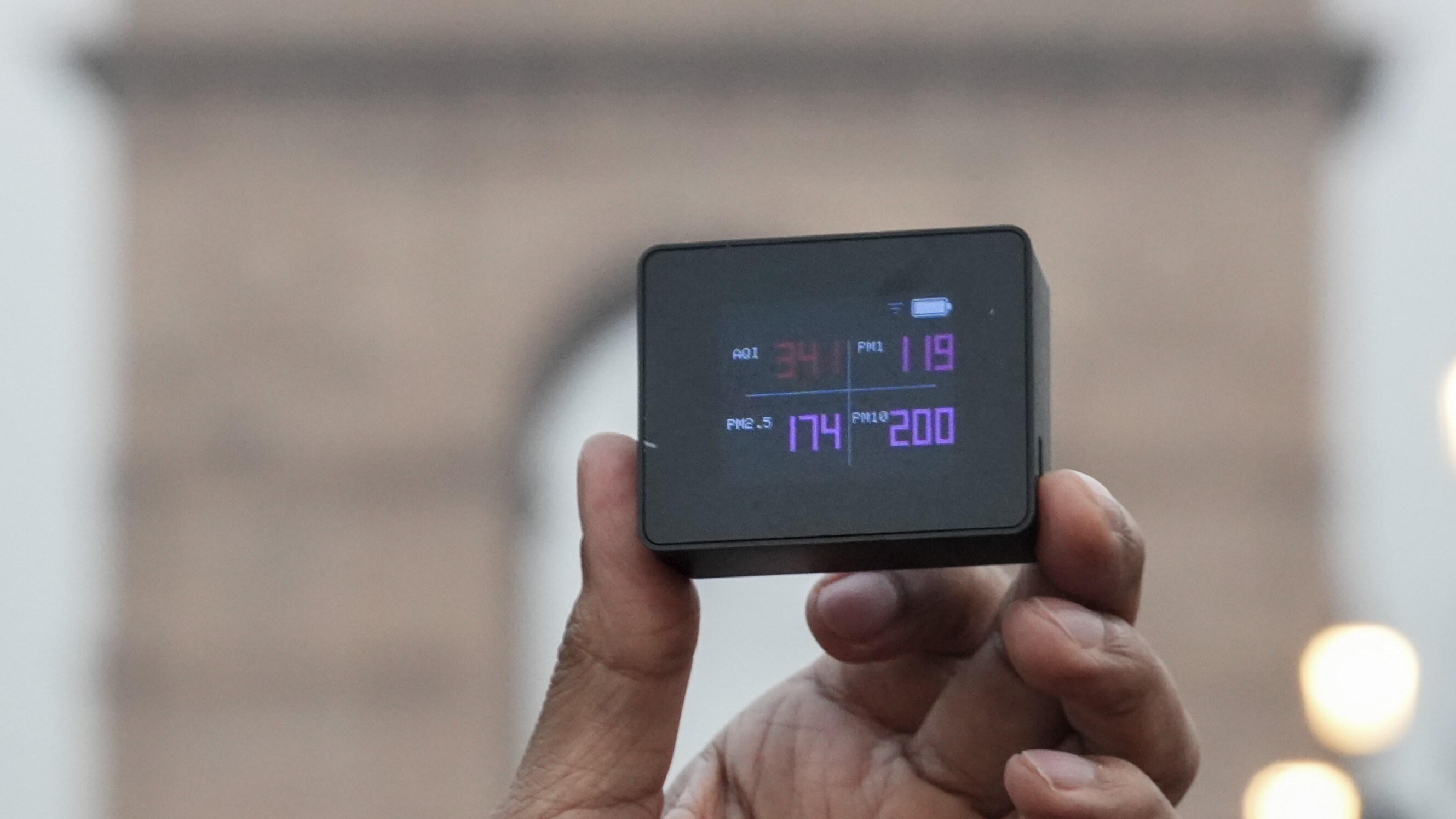
Mirza Ghalib once wrote: "Ik roz apni rooh se poocha, ki Dilli kya hai — to yun jawab main keh gaye, yeh duniya mano jism hai aur Dilli uski jaan.” (One day, I asked my soul, What is Delhi? It replied: The world is like a body, and Delhi is its soul.)
But today, he would be heartbroken to see the soul struggling for fresh air.
On most days in an Indian metro, opening your window feels like opening the door of an old diesel generator. Many write that it is worse than smoking cigarettes. More than 90 cities in the world's top 100 polluting list are in India. With every passing year, the AQI is rising, reaching "hazardous" levels.
Also Read | Layoffs Are Rising In Tech, But These Skills Are Helping People Unlock Better Pay
Why Politicians Don't Take Pollution Seriously
But bad air doesn't move governments in India because it hasn't moved the voters. Pollution is still not the top priority. Here's what Tariq Thachil, professor of Political Science at the University of Pennsylvania, found in his research on Delhi pollution:
Voters acknowledge that pollution is harmful, but when it comes to elections, it ranks below issues like jobs, inflation, development, identity, etc.
Citizens de-prioritise air pollution because they perceive a tradeoff between economic development and curbing emissions.
Voters tend to blame rival parties for air pollution rather than their own (the one they support), showing strong partisanship and polarisation.
People perceive that pollution causes slow and cumulative damage, and cleaning up today would mean disruption.
In short, pollution becomes a low-priority voting issue during elections, and partisan habits prevent it from becoming a decisive political demand. And as the saying goes, "Every nation gets the government it deserves," the issue becomes secondary even to the government.
How London, Beijing Solved Air Pollution
However, it doesn't mean that political will doesn't change. The success stories of London and Beijing, politically opposite regimes, offer us glimmers of hope. They also tell us that political will shifts only after a crisis becomes impossible to ignore.
The five-day "killer smog" caused around 12,000 deaths, and London came to a standstill. Public pressure compelled the government to act. The Clean Air Act of 1956 introduced smoke-free zones, restricted coal burning, promoted alternate fuels, and relocated power stations away from urban areas.
The 2013's 'airpocalypse' turned out to be an inflection point for Beijing. After people's outrage, the government launched coal-to-gas projects, emission controls and industrial relocations. In both cases, the governments acted. They did not resort to private sector fixes.
Private Escape for A Few
But the vacuum created by the government's inaction has boosted the businesses of air purifiers in India. A decade ago, air purifiers felt like an ultra-rich gadget. But today, they are a necessity, although an expensive one. Walk through an upscale neighbourhood in Delhi or Gurugram, and you can see homes, malls, offices and hotels lined with purifiers and giant HEPA towers.
But these machines cannot fix anything outside our homes. And worse, once a private solution is easily available, the core problem gets normalised. Air purifier users slowly adjust and become quieter, while the others continue to breathe the polluted air.
This quiet withdrawal by the elite doesn't just weaken the fight against pollution; it deepens the inequality of who gets to breathe safely and who doesn't.
It happened with drinking water. RO filters and 20-litre water cans stopped being symbols of state failure; they became aspirational appliances and then a basic necessity. That's exactly what is happening with the air today. Slowly, prices of air purifiers will fall, and when enough people can buy their way out, governments will happily step away from solving.
India's Filter Politics: The Real Danger
Unfortunately, we do not see a mission-level action plan from the government like the ones that ended polio, increased the tigers' count or boosted digital payments. Instead, the government seems more focused on cracking down on anti-pollution protests.
Add air purifiers to that, and it's easy to see the public outrage softening. This will hurt citizens' health, weaken democracy, and amplify our long-term economic pain.
The filters have already stopped the government from giving us clean water. Let's not repeat that mistake with the air we breathe. Ghalib saw Delhi as the world's soul — we shouldn't let that soul depend on a filter.
Disclaimer: The views expressed in this article are solely those of the author and do not necessarily reflect the opinion of NDTV Profit or its affiliates. Readers are advised to conduct their own research or consult a qualified professional before making any investment or business decisions. NDTV Profit does not guarantee the accuracy, completeness, or reliability of the information presented in this article.
Essential Business Intelligence, Sharp Market Insights, Practical Personal Finance Advice, Daily Fuel, Gold and Silver Prices and Latest Stories — On NDTV Profit.