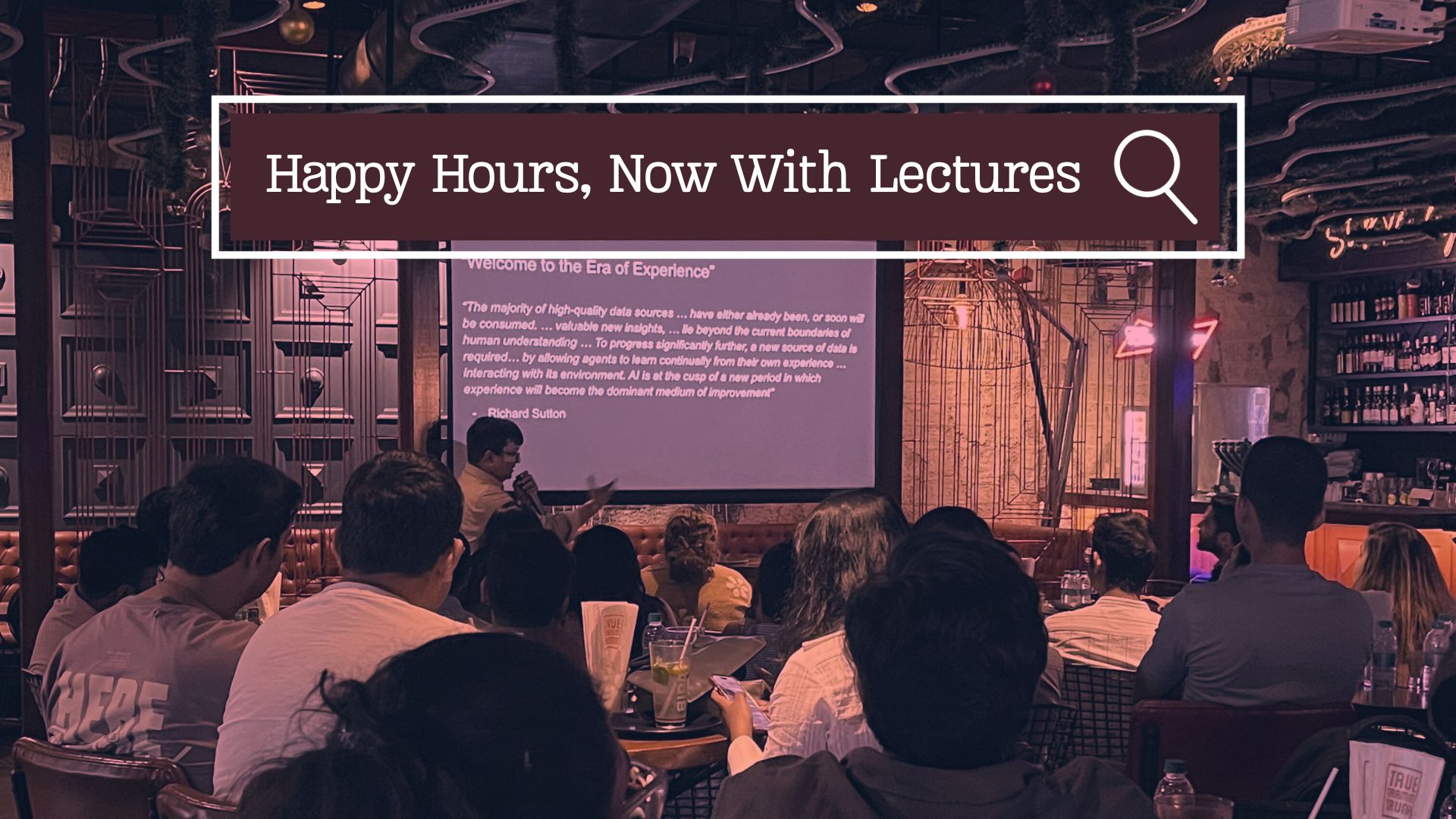
On a recent Sunday evening, the barstools at a Bandra pub weren't packed with people debating IND vs SA, Nifty's rally, or breakups. Instead, a neuroscientist was on the mic explaining why our brains love chaos, while twenty and thirty-somethings sipped beer, took notes, and, brace yourself, asked follow-up questions. No, this wasn't a one-off fever dream after too many cocktails. It was what Nobel laureate physicist Richard Feynman believed humans are wired to do, 'find things out, just for the pleasure of it.'
It's part of a fast-growing trend: lectures in bars, a movement that has quietly swept through Indian cities over the last three to four months.
Across Mumbai, Delhi, Bengaluru, and Pune, platforms like Brydge, Society of Intellectuals, and Pint of View are transforming nightlife into a fun version of college, and one can't seem to get enough of it.
"I went to a session alone thinking it would be awkward, but it was the most low-pressure social space I've been in all year," says Ankita, a 27 year-old marketing professional.
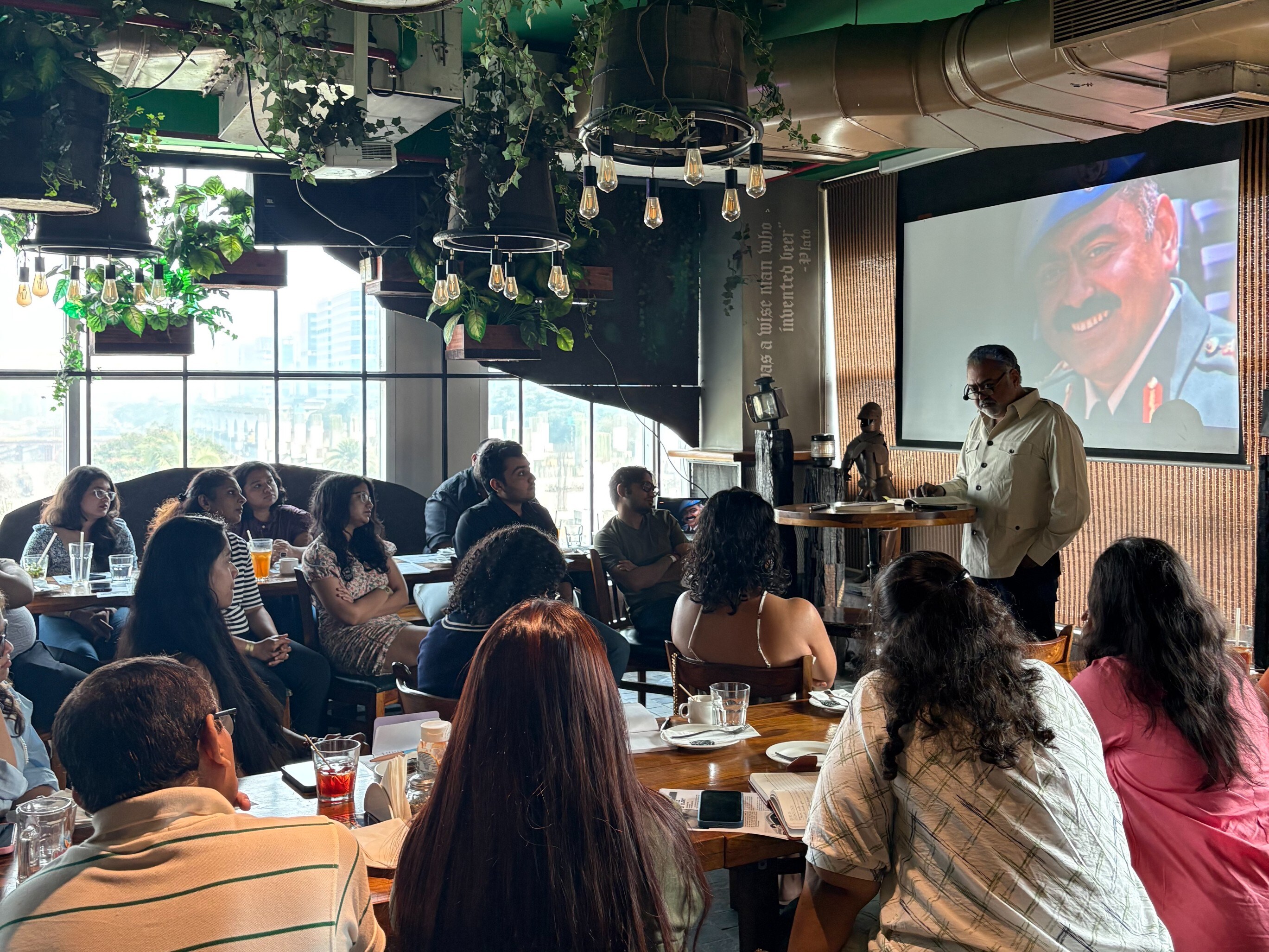
A lecture in session. (Source: Society of Intellectuals)
Lonely In A Crowd: Why Now?
Scroll fatigue, content hangovers, trending-aesthetic exhaustion - pick your poison. If much of modern life has become a negotiation between stimulation and solitude, bar lectures offer a middle ground; a reason to leave home, without the pressure of performing. The world, as we know it, is going through a loneliness spike among the connected class.
A June 2025 report by the WHO Commission on Social Connection finds that one in six people around the world struggles with loneliness, a phenomenon tied to roughly 100 deaths every hour. Looking inward, a 2021 Ipsos India survey found that 43% of urban Indians aged 18–34 report feeling 'frequently' or 'always' lonely. Additionally, a 2022 Fortis Mental Health Survey points to a marked rise in emotional distress, most prominently among urban youth.
Brydge's co-founder Siya Sarnaik says that Brydge came from a need to have better social experiences, and create, "a third space where people can actually connect beyond work and home....where people feel seen, where they can just start a conversation and meet others who are curious too."
The result is a room where a 28-year-old product designer and an 83-year-old grandfather sit a table apart, listening to the same story about borders, history, or storytelling.
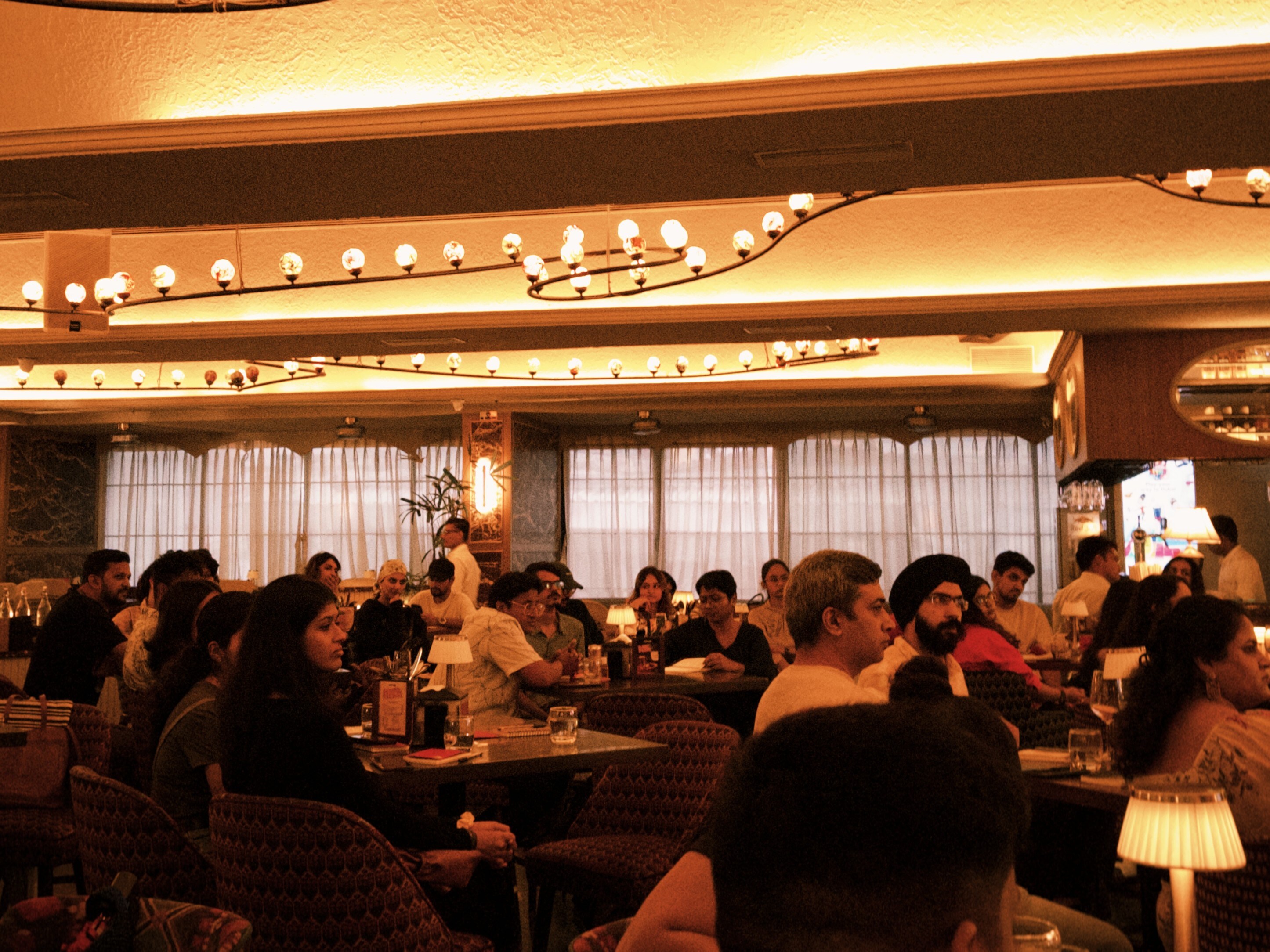
People across demographics coming together to learn. (Source: Brydge)
Offline, By Choice
This paradox of high connectivity and low community is driving a craving for third spaces where people can feel both smart and socially alive. Bars have always been social spaces, but pairing them with ideas creates something fresher, and more comfortable.
Society of Intellectual's founder Muskan Bhalla had a similar story to tell. A researcher by training, she began the platform in September because she felt that 'serious' information had become strangely gated. "I couldn't change the education system, so I created my own space where people could learn from diverse speakers," she says.
India's young professionals are overstimulated, not in a glamorised, hustle bro productivity way, but in the exhausted sense of always being 'reachable.' Reports suggest that the average young Indian spends over 2 hours daily on social platforms. For many attendees, the appeal is not intellectual ambition so much as the emotional relief of being offline.
"My screen-time report shames me every Sunday," laughs Naman, 23. " So going to such lectures feels like I'm rebelling against my own phone."
Curiosity As Social Glue
'Knowledge-core' is now cool; Think annotated books on Instagram, library aesthetics, podcast screenshots, philosophy reels. If traditional lectures often feel one-directional, bar lectures offer something more conversational. Learning used to be a communal act: we have memories of classrooms, debates, clubs. But in adulthood, it has become solitary with online courses, YouTube deep dives, and half-finished Coursera tabs.
"I didn't realise how much I missed being a student until someone explained geometry over beer," says Namrata, 35. Meanwhile, Atharv, a 24-year-old PR professional, says that he's made more friends here than on dating apps, "If someone asks a good question, I immediately like them."
SOI frequently has to close Q&A sessions early, not because people have run out of questions, but because they haven't. At Brydge, conversations spill far beyond the event itself. After one talk by a retired Army Colonel, the speaker stood for two hours as attendees approached him individually.
Another widely discussed session featured a criminologist explaining serial killers through theory rather than sensationalism, with attendees leaving receiving custom-designed case files.
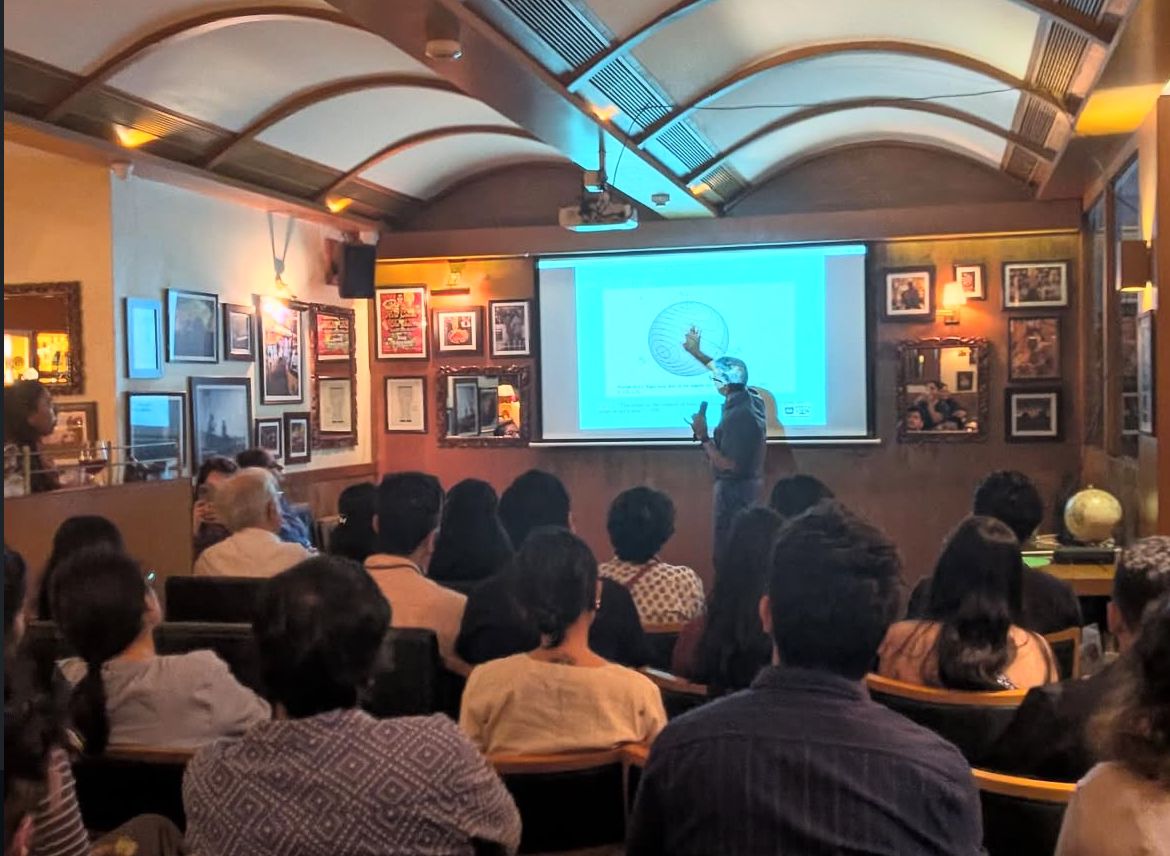
(Source: Instagram/Pint Of View Mumbai)
What People Misunderstand (And Why They're Wrong)
The most common reaction Muskan hears to lectures in informal settings? "Why would I go to a bar to listen to a lecture?" Her response is simple: "It's always worth it. At home you're scrolling alone. Here, you learn something, try a new place, meet people. Human capacity is much higher than isolation."
Brydge often gets asked whether alcohol leads to misbehaviour. Siya responds with a firm no. "For someone to spend their time and money to come here, they're coming with intention. They're curious, they're respectful."
Where This Goes Next
The real question is whether intelligence can become aspirational the way fitness and fashion have. Organisers are now dreaming beyond bars. Siya says, "We want to build user-centric experiences across different fields: arts, psychology, everything, and we're building more IPs the way we did with Intellect on Ice."
SOI has already added a stargazing event, aligned with its core philosophy. Muskan adds, "The core will always be knowledge, depth, and human connection. Even if venues change, the heart stays the same."
Maybe this is the reset we didn't know we needed. Nights that end with a new idea, a new friend, or at least a weird fact about bats or medieval architecture. Maybe in a few years, we'll RSVP to Friday night plans with: ‘Who's speaking?'
Essential Business Intelligence, Sharp Market Insights, Practical Personal Finance Advice, Daily Fuel, Gold and Silver Prices and Latest Stories — On NDTV Profit.