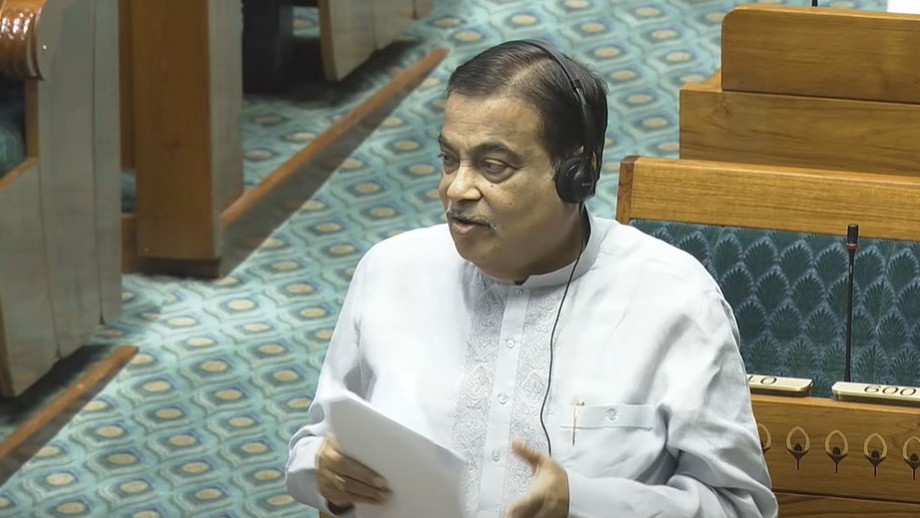
Addressing growing concerns over the impact of ethanol-blended petrol on vehicles, Union Road Transport and Highways Minister Nitin Gadkari said flex-fuel cars that run entirely on ethanol would be a driving factor in reducing India's reliance on imported fossil fuels.
Gadkari was recently spotted riding in a flex-fuel Toyota car that runs entirely on ethanol in Delhi.
The government achieved its E20 blending target, which mandates 20% ethanol in petrol, by March. However, many vehicle owners have reported issues related to performance and efficiency. They also raised questions about long-term engine health and fuel compatibility, but the government maintains that E20 fuel is safe for vehicles.
Ethanol-Blended Fuel: Will Non-E20 Cars Be Phased Out? Nitin Gadkari ClarifiesFlex-Fuel Vehicle Features
Gadkari highlighted the economic advantages of flex-fuel vehicles running entirely on ethanol. He pointed out that these cars were significantly more cost-effective than traditional petrol-powered vehicles.
With ethanol priced at Rs 65 per litre compared to Rs 120 per litre for petrol, the savings are substantial. He also noted that flex-fuel vehicles generate around 60% of their electricity while in use, further reducing operational costs. According to Gadkari, the effective cost of running a flex-fuel car on ethanol comes down to roughly Rs 25 per litre.
“The cost of ethanol is Rs 65 per litre, whereas petrol costs Rs 120 per litre. Moreover, while running, ethanol produces 60% electricity. If we compare the mileage, then in terms of efficiency, the effective cost of petrol comes down to around Rs 25 per litre; that is how cheap ethanol becomes in comparison," he told journalists.
Gadkari On Ethanol Concerns
On concerns linked to the impact of ethanol on vehicle performance, Gadkari recently clarified in Parliament that normal wear and tear arising from the use of E20 fuel could be “managed” during routine servicing of vehicles. He cited research from ARAI, IOCL and SIAM, saying no phase-out or retrofit was needed for vehicles not fully compliant with E20 fuel standards.
He was responding to a question raised by TMC MP Jagadish Chandra Barma Basunia in Lok Sabha on Dec. 11. He said that safety and performance parameters for ethanol-blended petrol, including driveability and startability, have been tested under BIS and automotive industry standards.
Essential Business Intelligence, Continuous LIVE TV, Sharp Market Insights, Practical Personal Finance Advice and Latest Stories — On NDTV Profit.