The Supreme Court on Wednesday directed authorities to urgently address traffic congestion at toll plazas on Delhi borders amid rising air pollution levels. A Bench led by Chief Justice of India Surya Kant, along with Justices Joymalya Bagchi and Vipul Pancholi, asked the National Highways Authority of India (NHAI) and the Municipal Corporation of Delhi (MCD) to consider temporarily closing or relocating nine toll points, LiveLaw reported.
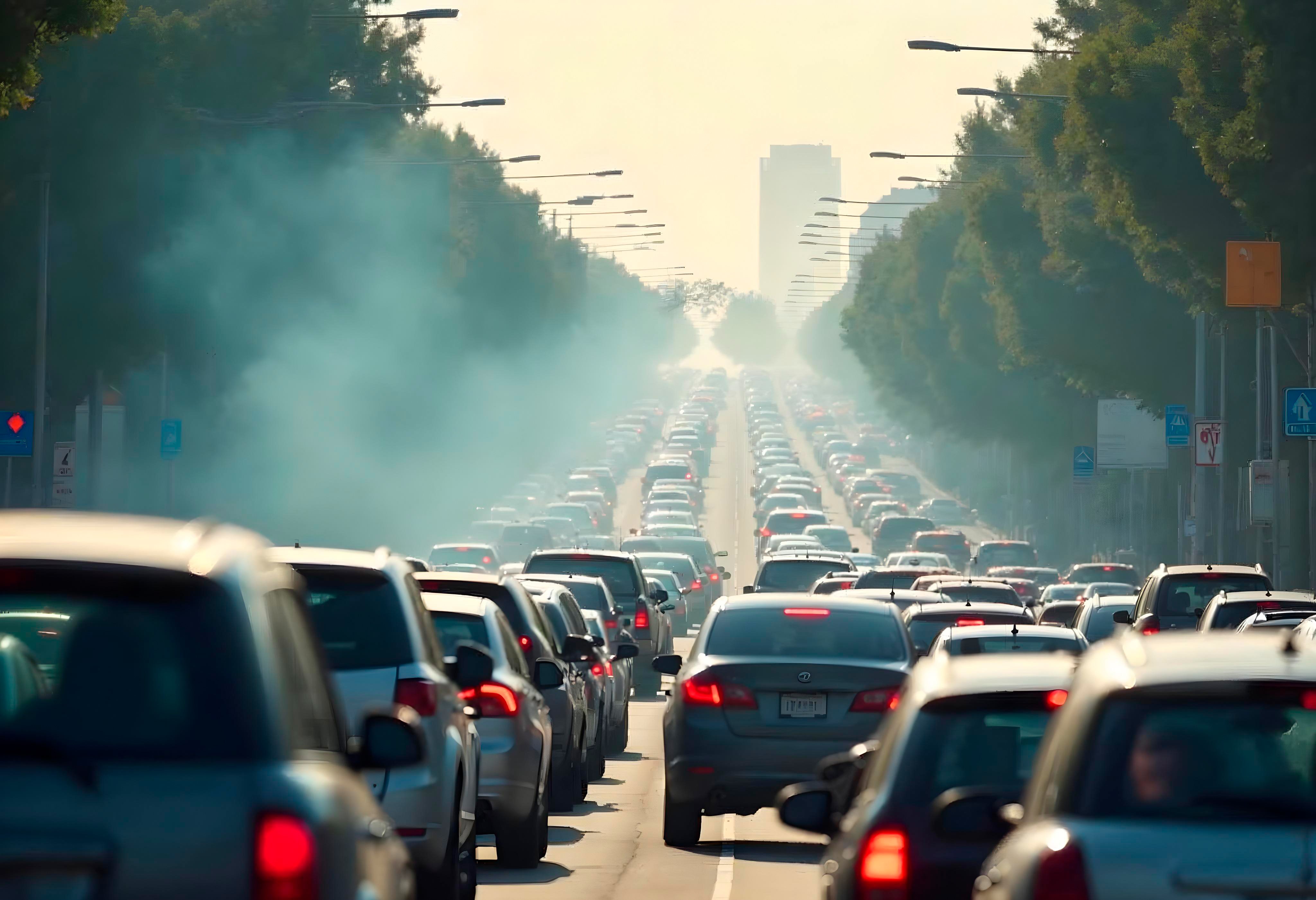
The apex court held that MCD-operated toll plazas, particularly at the Gurugram border, were creating long traffic jams and vehicle queues. This was resulting in significantly increasing emissions and worsening air pollution on both sides of the Delhi-Gurugram border.
Expressing strong displeasure, the CJI questioned why authorities could not suspend toll collection at least till January. “Why can't the officials say that till January there will be no toll plaza?” the Chief Justice asked, adding sarcastically, "Tomorrow you will start putting toll plazas inside the CP because you need money?"
How Delhi's New Pollution Controls Will Impact 12 Lakh Vehicles In NCR — ExplainedNo Toll Plaza On Delhi Borders Till Jan. 31
The CJI stressed the need for a concrete plan ensuring “absolute no toll plaza till Jan. 31 next year.” Rejecting claims that congestion complaints were exaggerated, the Chief Justice said these were lived realities, not allegations. According to SC, vehicles were stranded primarily because of bottlenecks created at toll collection points.
During the hearing, the CJI suggested a broader rethink, saying toll plazas need not be set up every 5 to 10 kilometres. He said placing them at intervals of about 50 kilometres could help divert traffic.
The Bench directed the NHAI to examine shifting the nine MCD-run toll booths in Delhi to alternative locations. It suggested these be managed by the NHAI. It also said that NHAI could share a portion of its revenue with the MCD to make up for the losses during suspension.
Meanwhile, the apex court has directed the MCD to decide on this issue within one week.
Action On Older Vehicles:
During the hearing, the Bench also modified its Aug. 12 order and clarified that action can be taken against diesel vehicles older than 10 years and petrol vehicles older than 15 years if they do not meet BS-IV emission standards.
The clarification was issued on a request by the Delhi Government amid the air quality crisis. The court accepted submissions that older BS-III vehicles significantly contribute to pollution. It ruled that protection from coercive action will apply only to BS-IV and newer vehicles, irrespective of age.
The development comes after Delhi recorded ‘severe' air quality levels of over 400 for three consecutive days this week. Many areas, such as Anand Vihar, Ashok Vihar, Bawana and Dwarka, among others, recorded AQI above 350 on Thursday at 8:00 a.m., according to data from the System of Air Quality Forecasting and Research (SAFAR) portal.
In view of the situation, Delhi Labour Minister Kapil Mishra announced that all government and private offices will run partially, with 50% attendance daily. Moreover, the Commission for Air Quality Management (CAQM) invoked additional restrictions under the GRAP-IV anti-pollution plan. Vehicles that do not have BS-VI engines will not be allowed to enter the national capital from today. Fuel stations will also not deny services to the vehicles without a valid pollution under control (PUC) certificate.
The Delhi government has also announced that students from nursery to Class 5 will study in online mode in view of the toxic pollution levels in the city.
Essential Business Intelligence, Continuous LIVE TV, Sharp Market Insights, Practical Personal Finance Advice and Latest Stories — On NDTV Profit.