

BMC Election 2026: Safety To Sanitation — What Mumbai’s Voters Want Fixed Before Anything Else
In a city governed by India’s richest municipal corporation, expectations are high — and patience is thin.



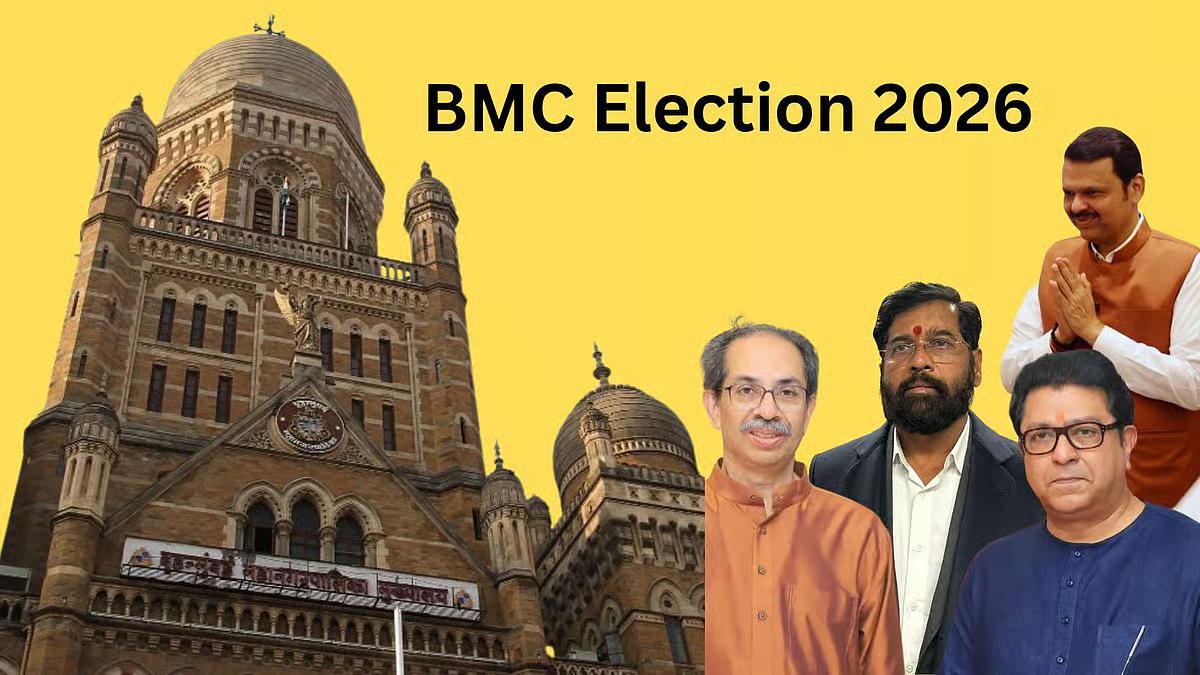
As Mumbai prepares for the 2026 BMC elections, one message from voters is strikingly clear: fix the basics first.
A recent citywide survey by Ascendia Strategies shows that across gender, community and identity lines, Mumbai’s voters are far less concerned about political branding and far more focused on everyday civic failures — from unsafe public spaces to overflowing drains and unreliable sanitation.
In a city governed by India’s richest municipal corporation, expectations are high — and patience is thin.
The Primacy Of Everyday Problems
When asked about the most important civic issues, potholes and waterlogging top the list, cited by nearly a quarter of Marathi Manoos. Close behind are poor sanitation and drinking water, followed by waste management and air pollution.
These are not new complaints. But their continued dominance in voter priorities signals something deeper: despite large budgets and frequent infrastructure announcements, many Mumbaikars feel the basics of city management remain unresolved.
This focus cuts across communities. Whether it is women worried about safety, Marathi Manoos frustrated with road conditions, or Muslim voters navigating uncertain political alignments, the demand is consistent — visible, measurable improvements in daily life.
Women Voters Put Safety First
Among women voters, safety concerns dominate civic expectations.
Top priorities include CCTV cameras in public areas, women helplines and panic buttons, and increased police patrolling. Notably, traditional solutions such as more street lighting rank surprisingly low, suggesting voters are looking for responsive, technology-enabled safety systems rather than cosmetic fixes.
Equally significant is how women approach voting itself. Nearly two-thirds say they make voting decisions independently, with minimal influence from family, community groups or media. This makes safety infrastructure not just a social issue, but a decisive electoral one.
For parties contesting the BMC polls, generic promises about “women’s security” may no longer suffice. Voters are clearly signalling what they want — and what they will judge.
What This Means For BMC 2026
Mumbai’s voters are not asking for grand visions or ideological battles. They are asking for safer streets, cleaner neighbourhoods, functional drainage and reliable basic services.
In the run-up to the BMC elections, the winners are likely to be those who can credibly demonstrate delivery — ward by ward, street by street. Because in Mumbai’s civic politics, the message from voters is blunt: before anything else, fix the city.