Tata Steel, Tata Power, Wipro, ACC And More — Stocks That Were Trading Before India's Independence
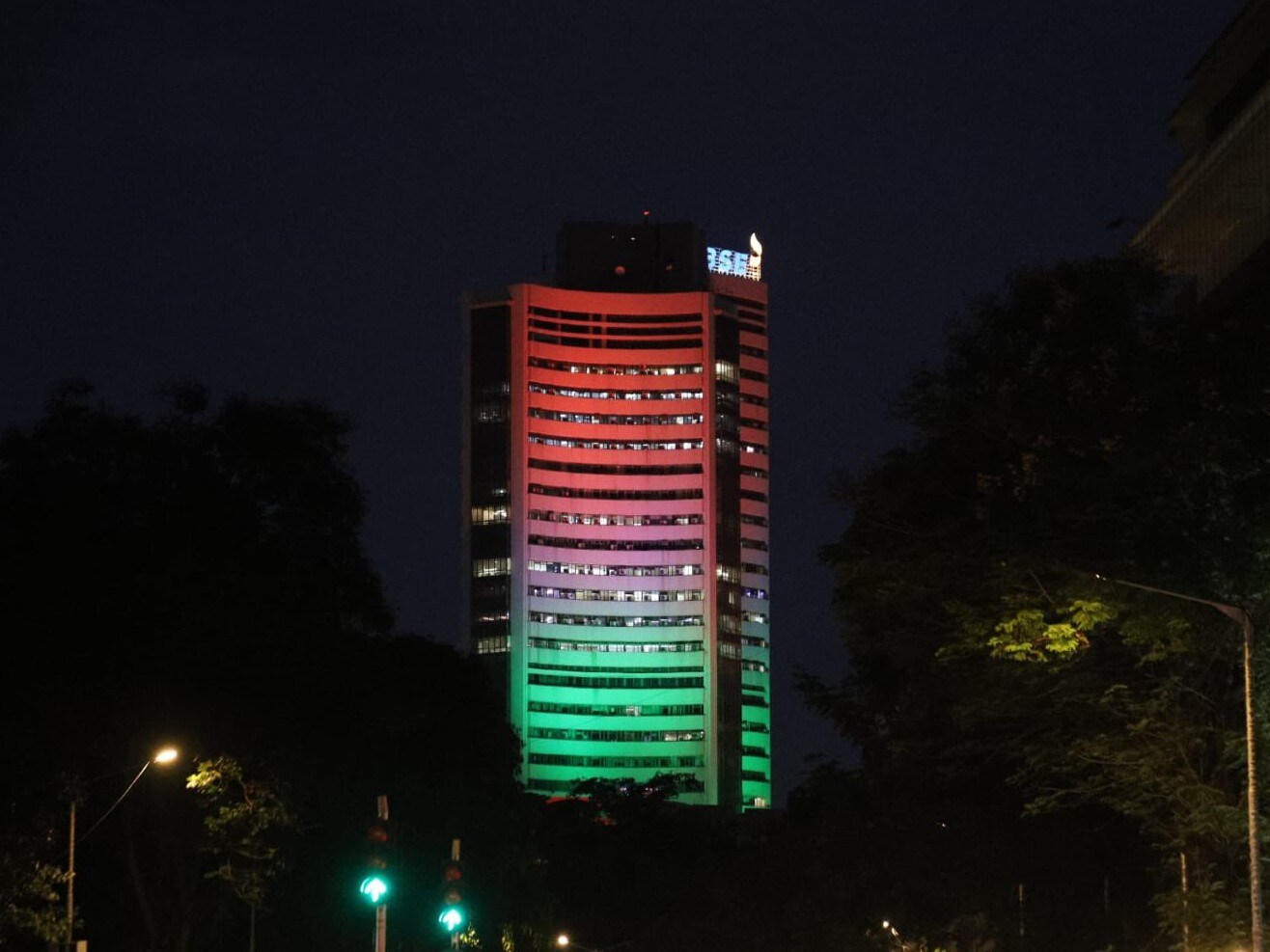
As India marks its 79th year of independence, eighteen companies that predate the nation's freedom continue thriving on BSE.
BSE, established in 1875 as Asia's oldest stock exchange, now ranks 6th globally by market capitalisation, exceeding $5 trillion, providing the platform for these remarkable corporate survival stories spanning nearly a century of economic transformation.
Nearly eight decades after India's independence, eighteen companies that were already trading before 1947 remain active on the Bombay Stock Exchange, showcasing remarkable corporate endurance with wildly varying performance since 1990.
Wipro
The IT giant leads all companies with exceptional 27% annualised returns. Listing just months before independence in June 1947, the company transformed from a vegetable oil manufacturer into India's fourth-largest IT services player, exemplifying successful business model evolution and strategic adaptation.
Tata Power
With 10.9% annualised returns over the last 35-year period, Tata Power is one of India's largest integrated power companies. It operates across electricity generation, transmission, and distribution, maintaining its position as a leading utility company for nine decades.
Alembic
With diverse operations spanning across pharmaceuticals, real estate, and power assets, demonstrating the benefits of multi-sector operations, Alembic has delivered strong 15.2% annualised returns since 1990.
Bombay Dyeing
Originally a textile business, the company has since diversified into real estate development, polyester staple fibre manufacturing, and retail operations, with a 3.9% annualised return since 1990.
ACC
One of India's leading cement manufacturers, ACC has maintained steady growth in manufacturing and selling cement and ready-mix concrete products. Since 1990, it has delivered 9.4% annualised returns.
Tata Steel
As one of India's largest steel manufacturers, the company has successfully navigated multiple economic cycles while maintaining its industrial leadership position. Its shares have achieved 9.7% annualised returns since 1990.
Swan Energy
Originally incorporated as a cotton and polyester textile manufacturer, the company completely pivoted to real estate development and LNG storage facilities. The company has delivered 14.5% annualised returns through business transformation.
Walchand Peoplefirst
With annualised returns of 5.8% since 1990, the company was founded by industrialist Seth Walchand Hirachand and incorporated in July 1920.
Formerly known as Premier Construction Ltd, its operations have evolved from heavy engineering and construction to consulting and training services. Now operating as Walchand Plus in partnership with Dale Carnegie Training USA, it focuses on behavioural skills development and HR consultancy.
Walchandnagar Industries
Walchandnagar Industries achieved solid 13.3% annualised returns, maintaining focus on heavy engineering and foundry & machine shop business operations throughout its eight-decade journey.
Supreme Industries
With 18.7% annualised returns since 1990, Supreme Industries emerged as a strong wealth compounder for its investors.
Founded in 1942 during India's independence struggle, the company was taken over by the Taparia family in 1966, who focused entirely on plastics processing. Now India's largest plastic manufacturer, handling over 6,40,000 tonnes of polymers annually across 29 plants, Supreme pioneered several products, including 'Satranj' PP mats and various piping systems.
Andhra Cements
Andhra Cements delivered 8.7% annualized returns through steady cement manufacturing and sales operations.
The Ravalgaon Sugar Farm
The Ravalgaon Sugar Farm generated 6.8% annualized returns. Now owned by Reliance Industries, the company shifted from sugar farming to confectionery product manufacturing.
Peninsula Land posted negative -3.9% annualized returns. The real estate development company has faced sustained challenges in the volatile property sector.
Raja Bahadur International
Raja Bahadur International achieved 14.5% annualized returns. Originally known as The Raja Bahadur Motilal Poona Mills Ltd, it was promoted by the Pittie family in the late 19th century and incorporated in 1926 for textile manufacturing. The company later diversified into drawing office equipment and machine tool accessories before transitioning to real estate development and construction, including the Raja-Shree Business Park leased to Tata Consultancy Services.
Victoria Mills
Originally in fabric manufacturing, the company successfully transitioned to real estate development operations. Its shares have delivered annualized returns of 7% over the last 35 years.
Shree Digvijay Cement
Shree Digvijay Cement delivered strong 16% annualized returns through consistent cement manufacturing and sales operations.
Kesar Enterprises
With modest annualized returns of 2.4%. Originally incorporated as The Kesar Sugar Works in August 1933.
The company belongs to the Kilachand Devchand group and operates sugar production, spirits, ethanol, and a 44MW bagasse-based cogeneration power plant at Baheri, Uttar Pradesh. The company has experienced recent challenges with poor sales growth of -8.40% over five years.
Mukand
The special alloy steel, billets, bars, and rods manufacturer has faced significant challenges in the competitive steel sector, with -0.5% annualized returns.

-
Navigating Friction And Energy Realities: An Analysis Of Marco Rubio's October Visit To India

Occurring at a critical juncture marked by stalled trade negotiations and escalating geopolitical pressures over global energy supplies, the visit offers a profound window into modern US-India relations.
-
India Exports Capital. Why Not Export Trusteeship?
The big question, then, is whether India can build an institution that global borrowers, investors, banks, and lawyers can trust, even without an Indian connection.
-
France's Economy & Politics Are In Crisis | The Reason Why
Let's look at how the French economy and politics evolved under Nicolas Sarkozy, Franois Hollande and Emmanuel Macron.
-
You May Inherit The Business. You Must Earn Its Credibility.
Succession tests the founder's ability to share authority as much as it tests the next generation's readiness to assume it.
-
Signing Deals Is One Thing; Making Them Work Is Another | The Week In Whys
Sometimes, things don't turn out as planned. Indian companies have lost some bids to rivals, some projects won't produce until 2030.
-
FOMC Wall, PERM Suspension, Hospital Stocks | Talking Points This Week
A PERM suspension would directly affect green-card sponsorship rather than H-1B visas, so the near-term earnings impact could remain relatively limited. The key question is whether this marks a new phase in US scrutiny of Indian IT.
-
Everything, Everywhere, All At Once: Dalal Street's Week To Forget | Joining The Dots
Visa curbs, a Starlink spat and cancer drug caps: what connects this week's shocks for Indian markets
-
India Is Going Abroad For Critical Minerals. But It May Take Years To Pay Off | The Reason Why
Although India's steps are in the right direction, they remain modest compared with India's growing dependence.
-
When Everyone Has AI, What Gives You An Edge?
India's young workforce is entering an uncertain world of work where powerful AI tools are becoming widely accessible. The advantage will belong to those who combine deep expertise with digital fluency, and the distinctly human capabilities that technology cannot manufacture.
-
Wrong Labels, High Pesticide Residues Holding Back Agri Exports | The Reason Why
India needs stronger domestic food-safety and labelling standards, with best practices becoming part of everyday business for farmers, traders and food companies.










