Tata Consumer Products Q1 Results: Profit Up 24%, Margin Expands
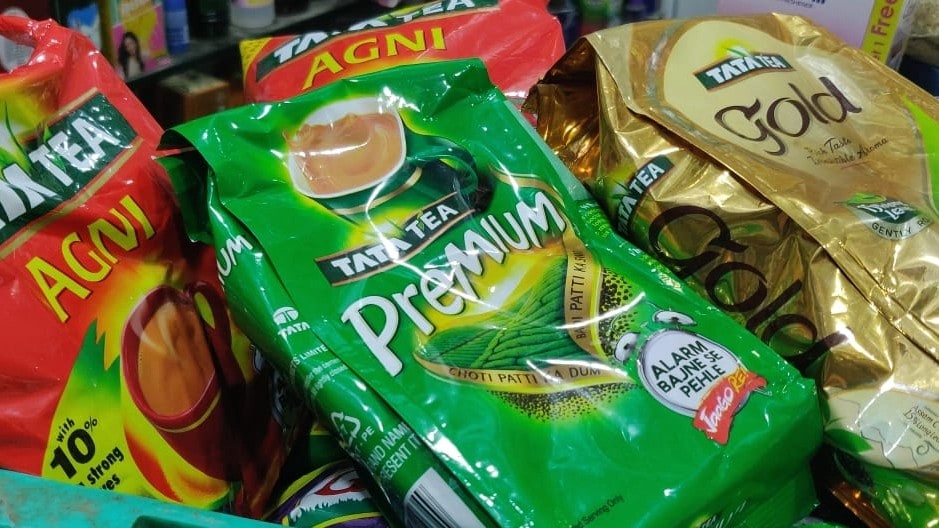
Tata Consumer Products Ltd.'s first quarter net profit rose in line with analysts' estimates, led mainly by the domestic foods business.
Net profit of the maker of Tata Tea and Tata Salt increased 24% to Rs 316.6 crore in the quarter ended June, according to an exchange filing on Wednesday. That compares with the Rs 324.9 crore consensus estimate of analysts tracked by Bloomberg.
Tata Consumer Q1 FY24 Highlights (Consolidated, YoY)
Revenue rose 12% to Rs 3,741.2 crore, as compared with the estimated Rs 3,761.3 crore.
Operating profit up 19% to Rs 545 crore as against an estimate of Rs 536.2 crore.
Margin expanded to 14.6% from 13.7% despite higher expenses. Analysts had pegged the metric at 14.3%.
Total expenses increased 12% to Rs 3,304.36 crore.
Advertising-to-sales for the domestic business stood at 7.1%.
"During the quarter we saw positive results from the interventions put in place for the branded tea business, which grew volumes for the second consecutive quarter," said Sunil D'Souza, managing director and chief executive officer at Tata Consumer Products.
Key Highlights
India business grew 15.5% to Rs 2,477.9 crore.
International business revenue rose 7% to Rs 894.8 crore as demand remained soft. In constant currency terms, revenue rose 3%.
Revenue in non-branded businesses, which include plantation and extraction businesses for tea, coffee and other produce, rose 7.2% to Rs 377.1 crore. Revenue increased 5% in constant currency terms.
For the quarter, the domestic food business saw a revenue growth of 24% and volume growth of 6%.
Beverage business grew 10% and volume growth stood at 3%.
Modern trade and e-commerce grew 22% and 28%, respectively, on a year-on-year basis with domestic total reach now at 3.9 million outlets.
Tea volume grew 3% during the quarter. Citing Nielsen data, the company said its market share in the tea business declined 50 basis points volumewise and 110 basis points in terms of value in June over the previous year.
Coffee continued its strong performance with a revenue growth of 21%.
Salt revenue grew 18% during the quarter, on a high base of last year.
D'Souza said that the company was able to maintain volume growth momentum in the salt business, despite the pricing actions taken earlier to manage inflation. However, Nielsen data suggests that there was a market share loss of 30 basis points led by the low-priced salt brands.
Nourishco, Sampann and Soulfull—referred to as growth businesses—grew 58% and collectively account for 20% of the domestic business now.
NourishCo, the ready-to-drink brand, saw a 60% revenue growth over the previous year despite an elevated base and adverse weather conditions. The Sampann portfolio posted a growth of 51% YoY, albeit on a soft base.
"The profitability profile of our growth businesses improved significantly, primarily led by NourishCo," according to the company.
The top line of Tata Starbucks, the joint venture with Starbucks Corp., grew 21% over the previous year. The premium coffee chain opened 16 new stores during the quarter, taking the total count to 348 across 46 cities.
"We continue to see improving demand trends for our core categories and remain cautiously optimistic going forward, subject to rural recovery and a normal monsoon," the company said in its investor's presentation.
As for the international market, where brands such as Tetley Tea in the United Kingdom and Eight O'Clock coffee in the United States are sold, the company said inflation started to plateau, even as the demand trends remained soft. Pricing actions and structural interventions, however, have led to a sequential improvement in margin for three quarters now.
Shares of Tata Consumer Products closed 0.67% higher on Wednesday before the results were declared, as compared with a 0.53% gain on the benchmark BSE Sensex.

-
Signature Play: The Classic Cocktail Is Dead. Or Is It?

Classic cocktails are disappearing from India's cocktail menus. But they're still being ordered, taught to bartenders and borrowed from. So, who's really having the last drink?
-
A New Samvat Wishlist: Inclusive Prosperity And Human Development
India has strengthened its economic foundations through infrastructure, digital access and enterprise. Its next growth chapter must deepen productivity, create better livelihoods and widen participation in prosperity.
-
Love, Sex Aur Dhokha: The Audacious Plot To Spy On Jensen Huang
A Taipei dinner, a Singapore chip buyer and a suspected Chinese asset: inside the alleged spy operation that got close to NVIDIA's Jensen Huang.
-
Ten Things I Learnt This Samvat
Patience can be a trap. Cheap stocks can stay cheap. Leverage can wipe you out. What did Samvat 2082 teach us? Niraj Shah writes on 10 lessons from the year gone by.
-
Talking Points This Week: Tech Nerves, FII Buying, And A Faraway Banking Shock
The global markets are not shining this Diwali. The exception in the large markets is, India.
-
Midterm Rally Lasted A Day. The Hard Reality Of A Divided US May Last Two Years | Opinion
Between a contested AI boom, a debt ceiling that arrives in 2027 and a president with every incentive to act alone, the next two years may prove more volatile than the first day's rally suggests.
-
Blue Wave Will Derail the AI Trade but Won't Dismantle the AI Era | Unhedged Position
The Democrats' sweep of the US Congress will see politics collide with economic forces both over the long and short term.
-
It's Time To Take The GST Council's Bet On Trust Global
Payment records can prove India's services exports, and clear, proportionate rules can bring foreign digital sellers into the tax net.
-
Opinion | India at 38: From Innovation Overperformer to Innovation Powerhouse
India now has 453 VC-backed deep science startups, 18 of them late-stage, after 117 percent growth since 2020. Laurus Labs, at USD 9.3 billion, is the most valuable deep science company in any middle-income economy outside China.









