

Silver Crosses $75 An Ounce For The First Time



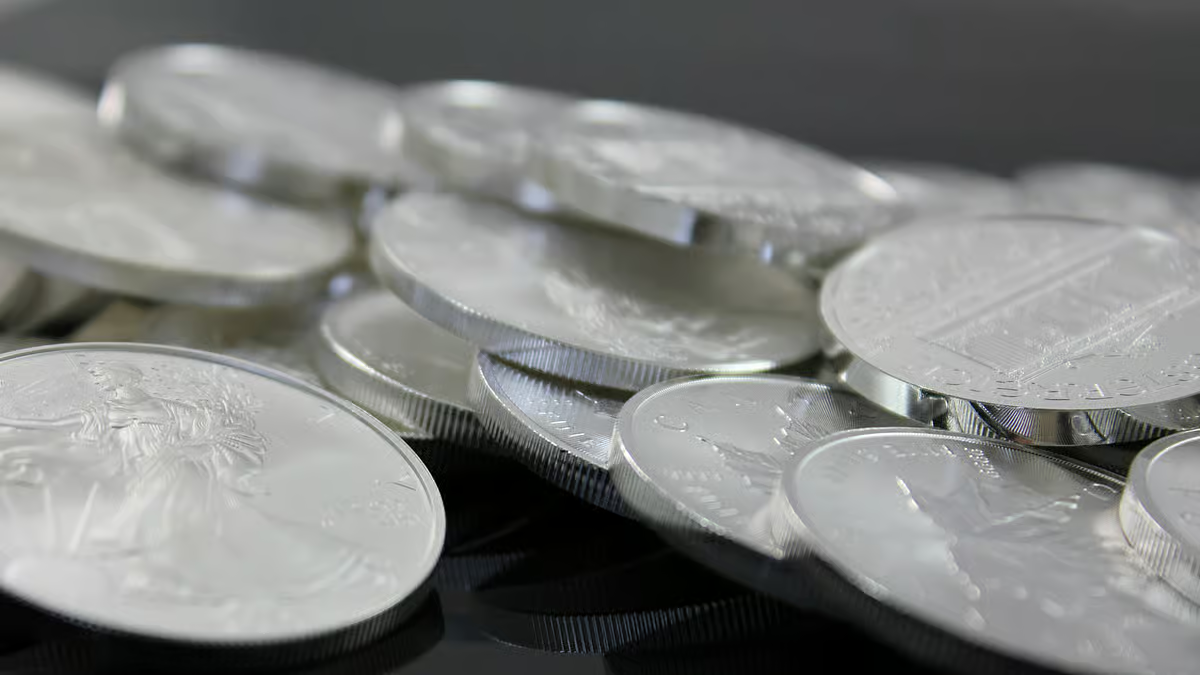
Spot silver rose for the fifth consecutive trading session, crossing $75 per ounce for the first time.
The rise can be attributed to a combination of factors, including strong industrial and investment demand, tightening inventories, escalating geopolitical tensions, and the anticipation of additional interest rate cuts by the U.S. Federal Reserve, all of which are contributing the upward trend.
On the Multi Commodity Exchange (MCX), silver futures for the March 2026 contract jumped 4%, or Rs 8,951, to their lifetime peak of Rs 2,32,741 per kg. The metal has gained Rs 29,176, or 14.33%, since December 18.
Gold prices also scaled uncharted territory, crossing the Rs 1.39 lakh per 10 grams mark for the first time on the commodities bourse. Rising for the fourth straight session, gold futures for February delivery climbed Rs 1,119, or 0.81 per cent, to a new record high of Rs 1,39,216 per 10 grams.
Commodity markets were shut on Thursday due to the Christmas holiday.
Bullion prices gathered momentum globally as both gold and silver touched lifetime highs in international markets. On the Comex, gold futures for February delivery rose $58.8, or 1.3%, to reach a new peak of USD 4,561.6 per ounce.
Silver futures on the Comex extended gains for the fifth straight day, with the March contract jumping $3.81, or 5.31%, to a fresh high of $75.49 per ounce. The metal had settled at $71.68 per ounce on Wednesday.
The safe-haven demand has been reinforced by factors such as the US blockade of Venezuelan crude shipments, ongoing Russia-Ukraine hostilities, and Washington’s recent military strike against ISIS in Nigeria.
Investors continue to factor in two quarter-point rate cuts by the Federal Reserve next year as inflation eases and labour market conditions soften, despite differing views among Fed officials on the future policy path.
Commodity market experts believe the record-breaking rally in bullion could continue into early 2026, supported by easing inflation, a weaker dollar, and persistent geopolitical risks that continue to boost safe-haven demand.