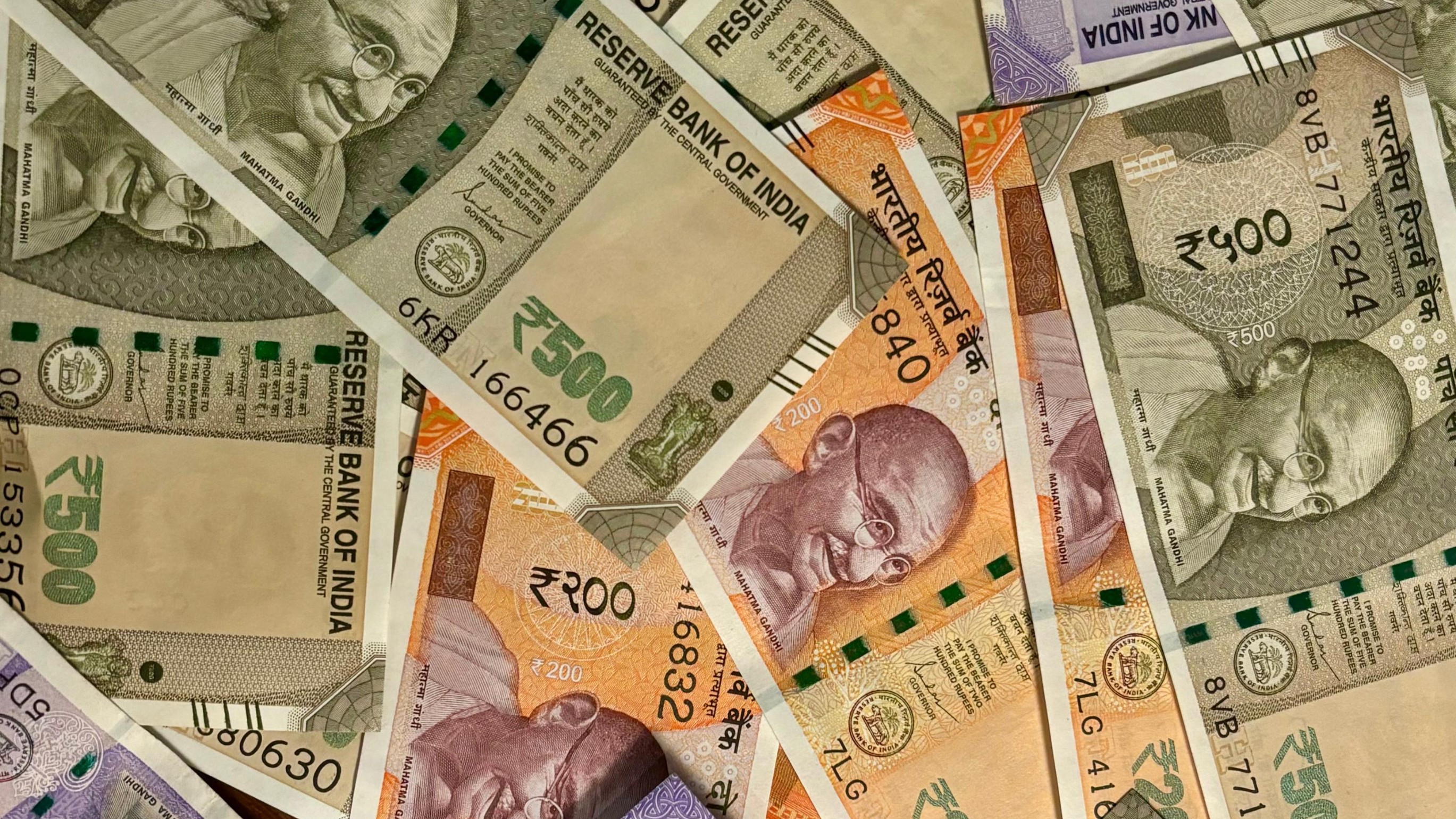
The Indian rupee's sharp depreciation in 2025 has triggered concerns about the macro outlook, but global brokerage Jefferies says there is little reason to panic. Despite a 5% fall against the US dollar year-to-date and a much steeper decline against other major currencies, the brokerage believes the rupee is now firmly in undervalued territory and should stabilise around current levels.
Jefferies notes that the rupee has weakened 2% in the past three weeks and 5% year-to-date against the dollar, even as the dollar index is down 9% over the same period. The depreciation has been sharper versus major currencies, with the rupee down 9% against the yuan, 16% against the euro and 11% against the pound so far this year. Part of this move reverses the rupee's outperformance in 2024.
On a real effective exchange rate (REER) basis, the rupee now looks deeply undervalued. The 40-currency trade-weighted REER is estimated at 94–95, the lowest level in the past 11 years and about 12% below the November 2024 peak. Jefferies estimates the rupee is around 5% undervalued, the most in the last 12 years.
Also Read | Layoffs Are Rising In Tech, But These Skills Are Helping People Unlock Better Pay
Jefferies sees no major risk on the current account front. Exports rose 4% year-on-year in the September–November period, despite the imposition of 50% US tariffs. A sharp 19% jump in exports in November helped narrow the trade deficit by 23% year-on-year to a five-month low.
Low crude oil prices are expected to keep India's current account deficit around 0.6–0.7% of GDP in FY26 and FY27. The current account is also supported by strong services exports, which rose 15% during April–October 2025, and remittances, up 15% during April–September 2025.
On the capital account, foreign portfolio investors have sold about $18 billion worth of equities this year. Net FDI inflows have also been sluggish due to IPO-related and private equity-related outflows, though inward FDI commitments are improving, particularly in financial services and data centres.
Foreign exchange reserves remain a key buffer. Reserves stood at $687 billion as of December 5, up $47 billion year-to-date and flat month-on-month, even as the rupee fell 5% year-to-date and 1% over the past month.
Jefferies expects the rupee to stabilise around the 90–91 levels over the next six to 12 months, supported by low current and fiscal deficits, contained inflation and strong FX reserves.
The brokerage does not expect aggressive currency defence measures such as those seen in 2013–14. It believes the government and RBI will balance inflation risks—estimated at 35 basis points for every 5% rupee depreciation—with exporter competitiveness. Potential positives include a trade deal with the US and India's inclusion in Bloomberg EM bond indices in February 2026, which could drive inflows of around $25 billion.
Sector Impact: Winners And losers
Jefferies says net exporters stand to benefit from rupee weakness. IT companies see earnings sensitivity of 2–5% for every 1% depreciation versus the dollar. Coforge and TCS could benefit further due to higher exposure to the euro and pound. Export-oriented healthcare firms may see a 0.4–0.8% earnings boost, while select auto and industrial companies could gain 0.5–3.0%. Reliance Industries and ONGC are also expected to see positive earnings impact.
On the downside, companies with large foreign currency liabilities—such as IndiGo, GMR, Adani Ports, Thermax, JSW Energy, JSW Steel and Torrent Pharma—may face mark-to-market pressures. Import-dependent consumer companies including LG Electronics, Asian Paints, HUL and GPL could see an EPS impact of 0.4–2.0% for every 1% rupee depreciation.
Rupee Likely To Bounce Back Strongly In Second Half Of FY27: SBI StudyEssential Business Intelligence, Sharp Market Insights, Practical Personal Finance Advice, Daily Fuel, Gold and Silver Prices and Latest Stories — On NDTV Profit.