PhysicsWallah Listing: India’s First Pure-Play EdTech To Test The Offline Bet
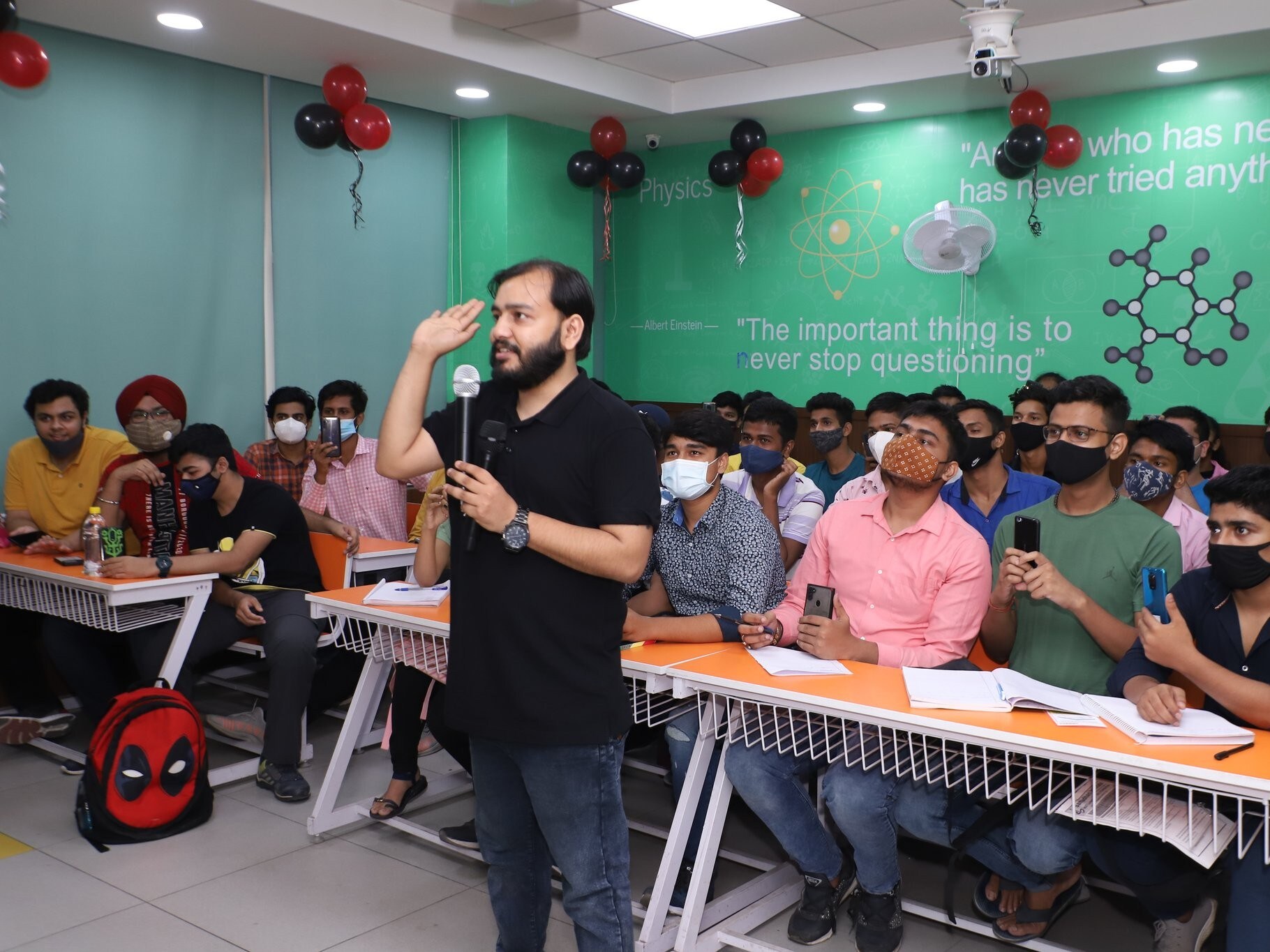
PhysicsWallah Ltd., India's first pure-play ed-tech company to enter the public markets, made a strong debut with the stock listing at a 33% premium. Its IPO was subscribed 1.92 times, reflecting cautious optimism from investors who see both promise and pressure in the company's evolving business model.
Financial Performance: Growth with Heavy Costs
PhysicsWallah's revenues have expanded rapidly, rising from Rs 744 crore in financial year 2023 to Rs 2,887 crore in fiscal 2025, with the first three months of fiscal 2026 contributing another Rs 847 crore. However, profitability has been inconsistent.
Ebitda moved from a loss of Rs 975 crore in fiscal 2024 to a positive Rs 74 crore in the previous financial year, before slipping back to a loss of Rs 80 crore in the first three months of this fiscal.
Profit has remained negative throughout, widening from Rs 84 crore in fiscal year 2023 to Rs 1,131 crore in financial year 2024, before improving to a loss of Rs 243 crore in fiscal 2025 and Rs 127 crore in the first three months of this financial year.
The company is clearly scaling at speed, but the cost of expansion — particularly the offline push — continues to drag profitability.
Strengths: Low-Cost Brand, Strong Ownership, Multi-Channel Reach
PhysicsWallah's core strength lies in its cost-efficient courses that cater to India's value-conscious education market.
Promoters retain a strong 72% stake post listing, signalling confidence in long-term prospects.
Its presence across online platforms, offline centres, YouTube, print content and apps creates a large, diversified funnel for student acquisition.
Weaknesses: Limited Geographic Spread and Expensive Offline Pivot
PhysicsWallah lacks meaningful exposure to South India, one of the most competitive academic markets in the country. More importantly, its flagship shift toward offline centres is being driven by economics rather than strategy.
The contrast in revenue per student explains the shift:
Online student: Rs 3,682.79
Offline student: Rs 40,404.56
An offline learner generates more than ten times the revenue of an online one. As a result, offline revenue that accounted for 37.77% of total receipts in fiscal 2023 has risen to 46.83% in financial year 2025.
However, this transition is capital-intensive. The breakdown of the Rs 3,100 crore IPO proceeds reveals surprising priorities:
Rs 710 crore (22.9%) for marketing
Rs 597.5 crore (19.3%) for rent payments of existing centres
Rs 460.5 crore (14.8%) for new offline centre fit-outs
In total, Rs 1,307.5 crore — or 42.2% — is being directed toward marketing and rent rather than building new infrastructure. This indicates that organic brand pull is no longer sufficient to fill offline classrooms, requiring substantial paid marketing and recurring lease commitments.
Opportunity: Larger Market, Skill Expansion and Future Global Reach
PhysicsWallah's offline expansion opens up a significantly larger addressable market including Tier-II and Tier-III students who prefer classroom learning.
The company can also broaden its portfolio with competitive test prep, vocational courses and hybrid skill-based modules. Global expansion remains a long-term possibility.
At the same time, the company must address internal challenges such as high employee and faculty churn, operational compliance gaps and a history of acquisitions that have not delivered the expected outcomes.
Threats: Competition, Technology and Trainer Attrition
Local and regional players with deep on-ground presence remain strong competitors, particularly in regions PhysicsWallah has not penetrated. Rapid advances in AI-led personalised learning could shift demand away from traditional teaching models. Meanwhile, the churn of subject experts and trainers remains one of PW's most critical risks, given the strong influence faculty have on student attraction and retention.

-
Signature Play: The Classic Cocktail Is Dead. Or Is It?

Classic cocktails are disappearing from India's cocktail menus. But they're still being ordered, taught to bartenders and borrowed from. So, who's really having the last drink?
-
A New Samvat Wishlist: Inclusive Prosperity And Human Development
India has strengthened its economic foundations through infrastructure, digital access and enterprise. Its next growth chapter must deepen productivity, create better livelihoods and widen participation in prosperity.
-
Love, Sex Aur Dhokha: The Audacious Plot To Spy On Jensen Huang
A Taipei dinner, a Singapore chip buyer and a suspected Chinese asset: inside the alleged spy operation that got close to NVIDIA's Jensen Huang.
-
Ten Things I Learnt This Samvat
Patience can be a trap. Cheap stocks can stay cheap. Leverage can wipe you out. What did Samvat 2082 teach us? Niraj Shah writes on 10 lessons from the year gone by.
-
Talking Points This Week: Tech Nerves, FII Buying, And A Faraway Banking Shock
The global markets are not shining this Diwali. The exception in the large markets is, India.
-
Midterm Rally Lasted A Day. The Hard Reality Of A Divided US May Last Two Years | Opinion
Between a contested AI boom, a debt ceiling that arrives in 2027 and a president with every incentive to act alone, the next two years may prove more volatile than the first day's rally suggests.
-
Blue Wave Will Derail the AI Trade but Won't Dismantle the AI Era | Unhedged Position
The Democrats' sweep of the US Congress will see politics collide with economic forces both over the long and short term.
-
It's Time To Take The GST Council's Bet On Trust Global
Payment records can prove India's services exports, and clear, proportionate rules can bring foreign digital sellers into the tax net.
-
Opinion | India at 38: From Innovation Overperformer to Innovation Powerhouse
India now has 453 VC-backed deep science startups, 18 of them late-stage, after 117 percent growth since 2020. Laurus Labs, at USD 9.3 billion, is the most valuable deep science company in any middle-income economy outside China.









