

OPEC Held Supply Flat Last Month As Venezuela Output Fell, Survey Shows
Venezuelan output declined by about 14% to 830,000 barrels a day as the US blocked and seized tankers as part of a strategy to pressure the country’s leadership.



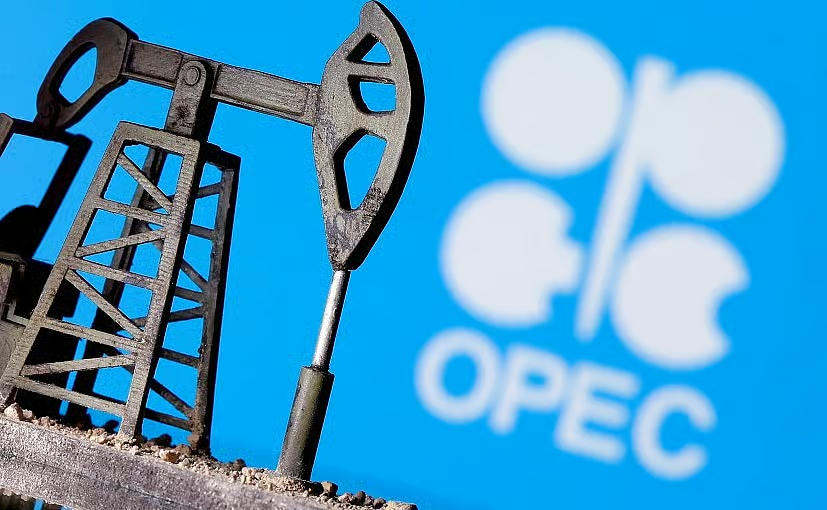
OPEC’s crude production held steady in December as a slump in Venezuela’s output to the lowest in two years was offset by increases in Iraq and some other members, a Bloomberg survey showed.
The Organization of the Petroleum Exporting Countries pumped an average of just over 29 million barrels a day, little changed from the previous month, according to the survey.
Venezuelan output declined by about 14% to 830,000 barrels a day as the US blocked and seized tankers as part of a strategy to pressure the country’s leadership.
Supplies increased from Iraq and a few other nations as they pressed on with the last in a series of collective increases before a planned pause in the first quarter of this year. The alliance, led by Saudi Arabia, aims to keep output steady through the end of March while global oil markets confront a surplus.
World markets have been buffeted this week after President Donald Trump’s administration captured Venezuelan leader Nicolás Maduro, and said it would assume control of the OPEC member’s oil exports indefinitely.
While Trump has said that US oil companies will invest billions of dollars to rebuild Venezuela’s crumbling energy infrastructure, the nation’s situation in the short term remains precarious. Last month, Caracas was forced to shutter wells at the oil-rich Orinoco Belt amid the American blockade.
The shock move is the latest in an array of geopolitical challenges confronting the broader OPEC+ coalition, ranging from forecasts of a record supply glut to unrest in Iran and Russia’s ongoing war against Ukraine, which is taking a toll on the oil exports of fellow alliance member Kazakhstan.
Oil prices are trading near the lowest in five years at just over $60 a barrel in London, squeezing the finances of OPEC+ members. Amid the uncertain backdrop, eight key nations agreed again this month to freeze output levels during the first quarter, halting the dramatic supply revival they implemented last year.
In April, Riyadh and its partners stunned crude traders by rapidly restarting production idled since 2023 despite signs that world markets were comfortably supplied. Several delegates said the move was intended to claw back market share ceded in recent years to rivals like American shale drillers.
The group’s biggest increase in December came from Iraq, which added 80,000 barrels a day to pump an average of 4.37 million barrels a day, according to the survey. That would leave Baghdad considerably above its agreed OPEC+ quota, though data used by the group indicates it’s complying with the target.
Before the latest pause, OPEC+ had formally agreed to restore about two-thirds of 3.85 million barrels a day of output halted since 2023, leaving about 1.2 million barrels-a-day of these tranches left to restart.
The Saudis and seven of their main OPEC+ partners will hold a video conference on Feb. 1 to review output policy for the months ahead.
Bloomberg’s production survey is based on ship-tracking data, information from officials and estimates from consultants Rapidan Energy Group, FGE, Kpler and Rystad Energy.