NMDC, Hindustan Zinc, Other Mining Stocks Hit After Supreme Court's Retrospective Royalty Verdict
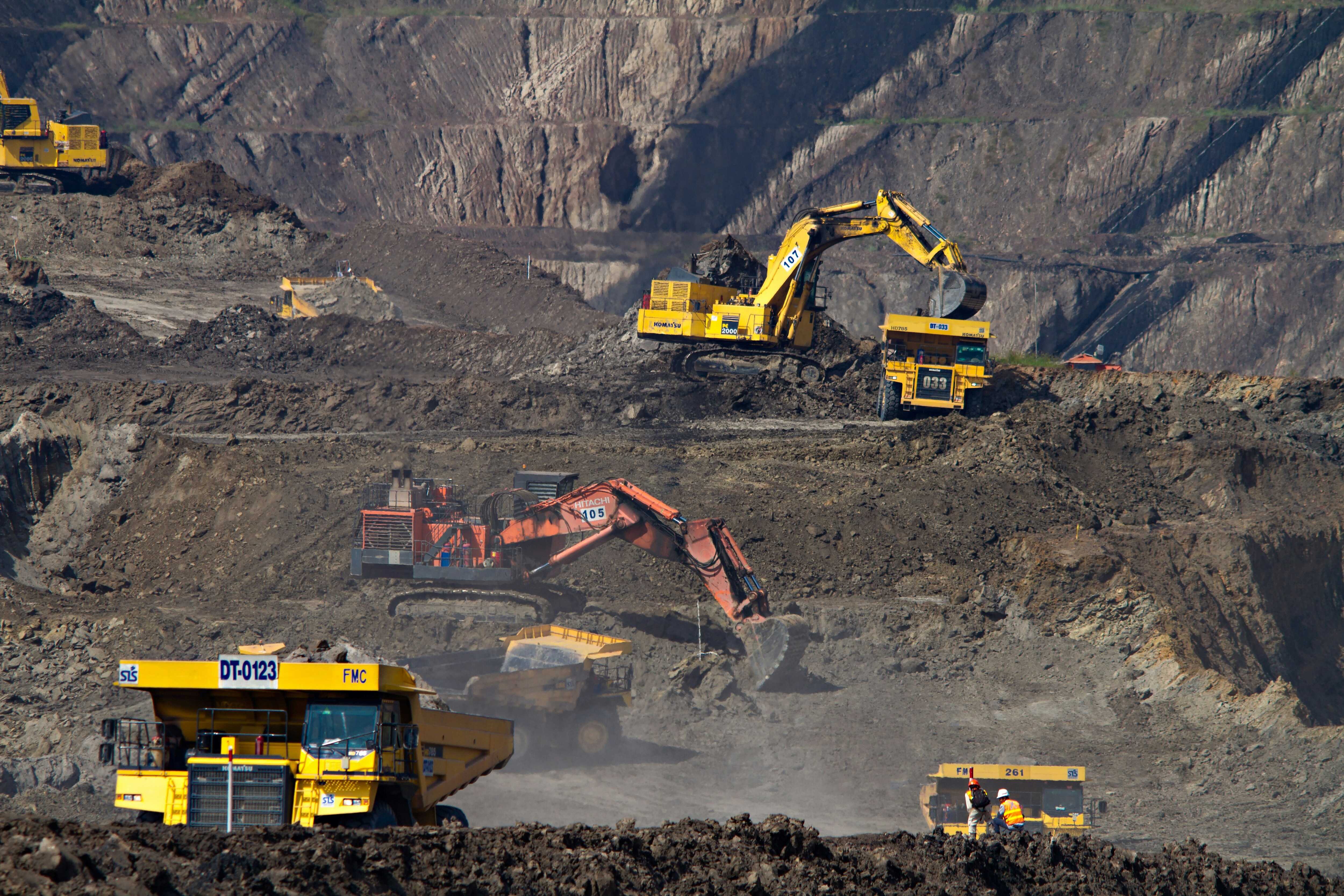
Shares of mining and metal companies fell on Wednesday after the apex court of India allowed states to collect past royalty dues from April 1, 2005, under certain conditions.
The Supreme Court held that its nine-judge bench verdict on the nature of mining royalty and the state's power to tax mineral rights will be given retrospective effect, subject to conditions.
States will not be allowed to tax transactions made prior to April 1, 2005. The tax payment can be staggered over 12 years, commencing from April 1, 2026, it said.
Additionally, interest and penalties on demands for periods prior to July 25, 2024, shall be waived, the apex court said.
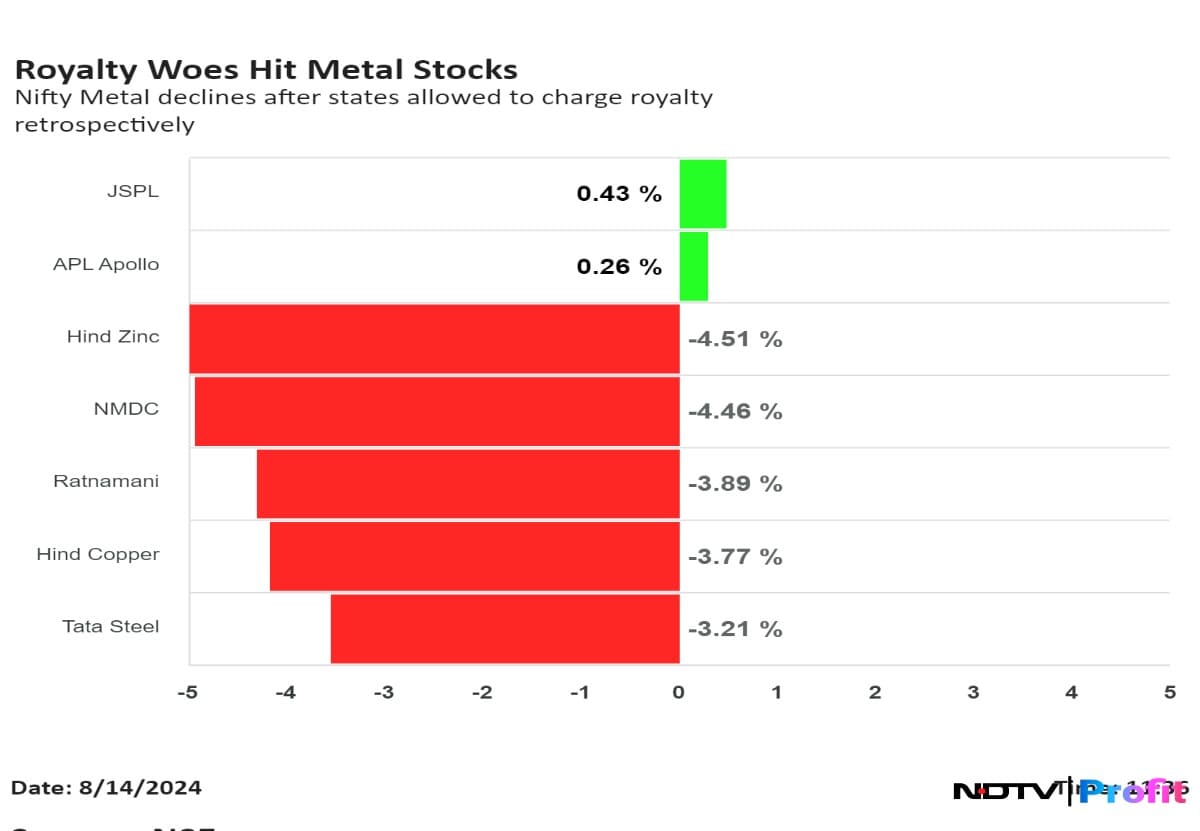
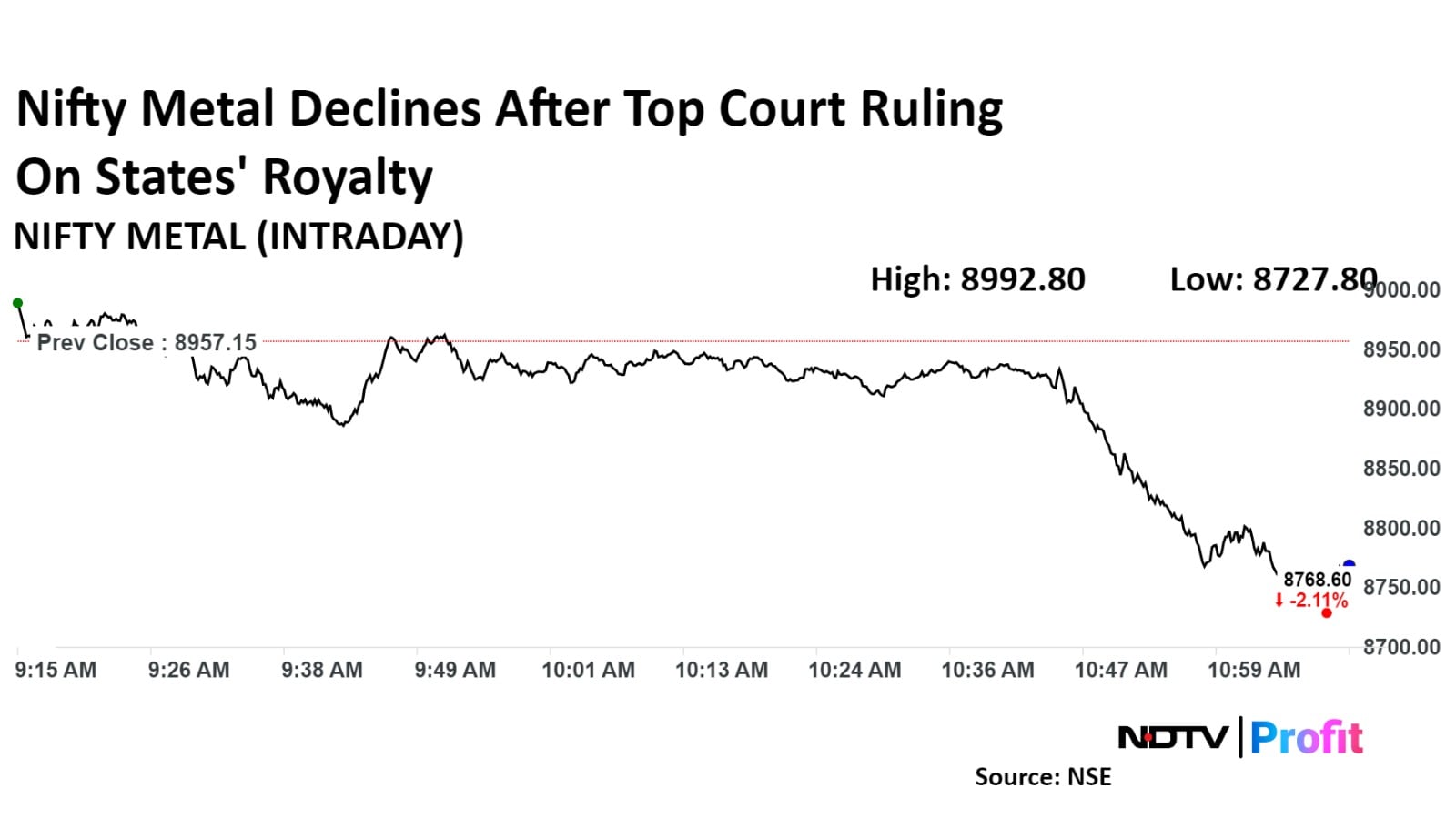
The Nifty Metal index declined as much as 2.5% to a two-month low as investors feared the impact of tax liabilities on companies' balance sheets even as headwinds persist for the sector on demand worries. All 15 constituent companies from private and public sector dragged.
Hindustan Zinc Ltd. and NMDC Ltd. fell over 4%, while Hindustan Copper Ltd., Tata Steel Ltd. and Ratnamani Metals and Tubes Ltd. dropped over 3%.
Axis Securities Ltd analyst Aditya Welekare said the market will asses if companies like Hindalco Industries Ltd, Vedanta Ltd and Nalco Ltd announce contingent liabilities, like Tata Steel did, but more importantly if the court ruling goes for an appeal.
Key Highlights
Tax on mineral wealth to be applied retrospectively.
Companies to pay tax on mineral wealth to states.
To pay taxes liable from 2005 to July 25, 2024.
States will be able to collect tax over a period of 12 years.
Solicitors expect impact of Rs 70,000-80,000 crore. (Note- This includes interest and penalty, which the court has waived on demands for period prior to July 25, 2024)
Negative for Coal India, Hindustan Zinc, NMDC, Hindustan Copper, MOIl, NALCO, NMDC Steel, SAIL.
Advocates expect demand upwards of Rs 1 lakh crore.
Tata Steel has already provided contingent liability of Rs 17,347 crore.
Negative for Vedanta Ltd., Hindalco Industries, JST Steel Ltd., Tata Steel Ltd. and cement firms.
In a landmark judgment delivered last month, a nine-judge bench of the top court ruled that royalty paid by a mining leaseholder to the lessor was not a tax but a contractual consideration for enjoyment of mineral rights. The court said the legislative power to tax mineral rights rests with state legislatures, and the Parliament does not have the legislative competence to tax mineral rights.
The ruling put an end to a 35-year-old controversy regarding the nature of mining royalties paid by the leaseholders. However, as soon as the top court pronounced the judgment, the lawyers questioned the court regarding its applicability, meaning whether the judgment would be applied retrospectively or prospectively.

-
Talking Points This Week: Tech Nerves, FII Buying, And A Faraway Banking Shock

The global markets are not shining this Diwali. The exception in the large markets is, India.
-
Midterm Rally Lasted A Day. The Hard Reality Of A Divided US May Last Two Years | Opinion
Between a contested AI boom, a debt ceiling that arrives in 2027 and a president with every incentive to act alone, the next two years may prove more volatile than the first day's rally suggests.
-
Blue Wave Will Derail the AI Trade but Won't Dismantle the AI Era | Unhedged Position
The Democrats' sweep of the US Congress will see politics collide with economic forces both over the long and short term.
-
It's Time To Take The GST Council's Bet On Trust Global
Payment records can prove India's services exports, and clear, proportionate rules can bring foreign digital sellers into the tax net.
-
Opinion | India at 38: From Innovation Overperformer to Innovation Powerhouse
India now has 453 VC-backed deep science startups, 18 of them late-stage, after 117 percent growth since 2020. Laurus Labs, at USD 9.3 billion, is the most valuable deep science company in any middle-income economy outside China.
-
Navigating Energy Crossroads: S Jaishankar's Call For Diversified Supply Chains At G20 Ministerial Meeting
As geopolitical fault lines continue to test maritime trade routes and commodity flows, Jaishankar's message remains pertinent: true economic resilience requires open markets, protected transit lines, and a genuine commitment to multilateral cooperation rather than coercion.
-
Indians Are Travelling, But Not Every Journey Is A Holiday | The Week In Whys
Pilgrims, patients and working women are the real travellers, and the system hasn't quite caught up with them.
-
Getting To Work Costs Women More | The Reason Why
It is not just about women paying more than men. It is about women paying much more in cities than in villages.
-
AI Bias In Investing Cannot Be Eliminated, But It Can Be Governed
Framing is a particularly important example as identical financial information presented in terms of gains rather than losses can lead an LLM to reach a different assessment.









