

India's Nuclear Bill Spares Suppliers From Accident Liability
The Shanti bill marks a sharp departure from existing regulations that expose operators and suppliers to litigations under various other laws of the nation.



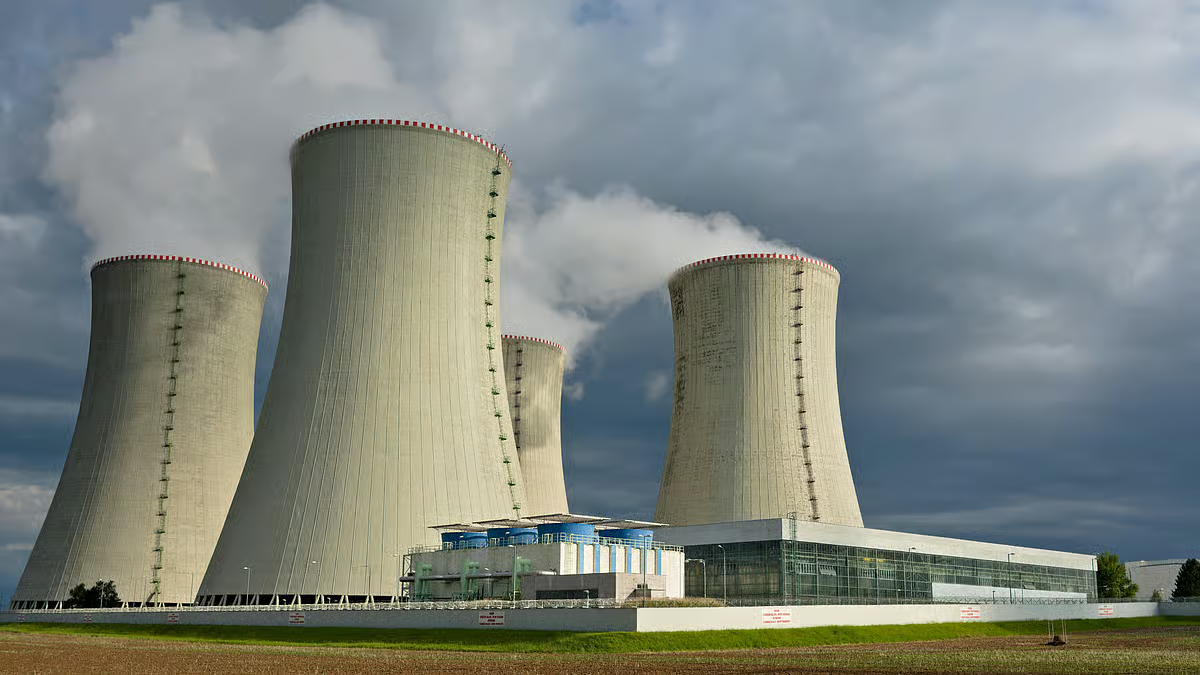
India's new nuclear energy bill will spare equipment suppliers from liability in case of incidents, among other sweeping changes to the sector.
The government introduced the bill in the lower house of parliament, seeking lawmakers’ approval on Monday. The existing two laws governing the industry will be repealed with the passage of the new bill.
The proposed law confines liability to plant operators, which will maintain the right to a legal recourse in case of accidents. The bill does however exclude suppliers from any responsibility and limits the operators’ legal options to individuals who may have intentionally caused damage.
India’s nuclear liability law has been a stumbling block for the sector, impeding its growth despite the nation signing accords with several supplier nations. India currently has about 9 gigawatts of nuclear power capacity, less than 2% of the total energy mix. The government is planning to expand its fleet more than eleven-fold to 100 gigawatts by 2047.
Atomic energy will help the nation increase its clean baseload capacity, boosting efforts to reach net zero by 2070. The country currently depends on coal for nearly 70% of its electricity and is considering a plan to keep adding new plants for about another two decades.
The proposed law called Sustainable Harnessing and Advancement of Nuclear Energy for Transforming India, 2025, marks a sharp departure from the existing regulations that expose operators and suppliers to litigations under various other laws of the nation. It also introduces liability limits depending on the size of the reactors, with units larger than 3.6 gigawatts facing a maximum liability of 30 billion rupees ($331 million) and reactors of 150 megawatts or smaller liable to pay a maximum of 1 billion rupees, according to the published bill.