

US Trade Gap Shrinks To Smallest Since 2009 On Imports Drop
The deficits with Mexico and China widened, while the shortfall with Canada narrowed.




The US trade deficit unexpectedly narrowed in October to the smallest since 2009 on a sharp pullback in imports, notably pharmaceuticals.
The goods and services trade gap shrank 39% from the prior month to $29.4 billion, Commerce Department data showed Thursday. The deficit was smaller than all estimates in a Bloomberg survey of economists. The report was delayed for over a month because of the federal government shutdown.
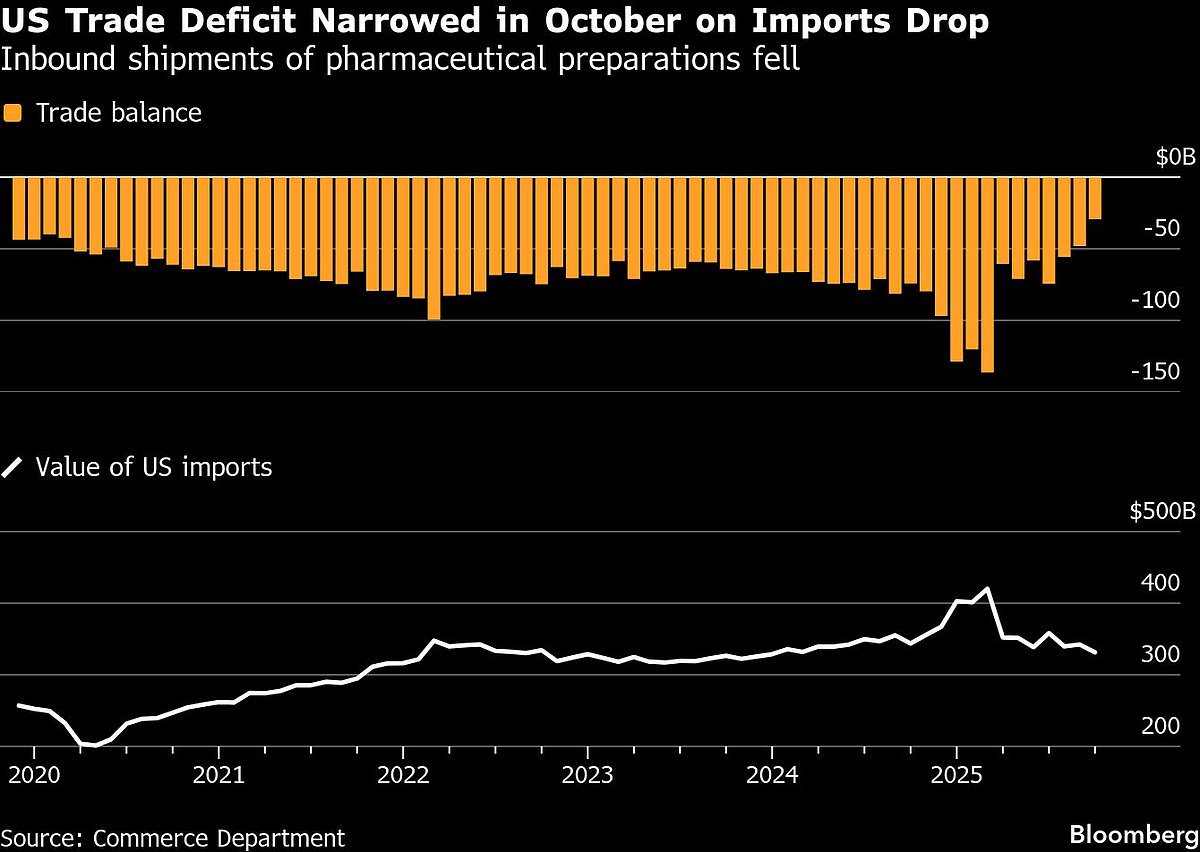
Imports decreased 3.2%, reflecting declines in inbound shipments of medication and nonmonetary gold. Imports of pharmaceutical preparations dropped to the lowest since July 2022. The value of all US goods and services exports rose 2.6% in October. The figures aren’t adjusted for inflation.
Companies frontloaded imports of drugs in September, likely in anticipation of President Donald Trump announcing what would be a 100% tariff on pharmaceutical imports to start Oct. 1, which ended up being delayed. Many companies were able to avoid the duty by striking deals with the administration in exchange for promises to lower drug prices.
There have been large monthly swings in trade this year related to US implementation of tariffs. In particular, there’s been a surge in trade of nonmonetary gold and pharmaceutical preparations in recent months in response to Trump’s vacillating tariff announcements.
In addition to the decline in gold, imports of other industrial supplies and materials such as oil and metals also fell. Inbound shipments of computers and computer accessories picked up, suggesting “there are genuine signs of strength elsewhere in the economy amid the AI buildout,” Bradley Saunders, North America economist for Capital Economics, said in a note.
Separate government figures showed labor productivity accelerated in the third quarter to the fastest pace in two years, which stands to improve even more as companies invest more in artificial intelligence.
The trade volatility has also affected the government’s measure of economic activity — gross domestic product. Before the latest trade report, the Federal Reserve Bank of Atlanta’s GDPNow forecast net exports would subtract 0.3 percentage point from fourth-quarter growth. In the third quarter, they added 1.59 percentage points.
Trade in gold, unless used for industrial purposes such as in the production of jewelry, is excluded from the government’s GDP calculation. On an inflation-adjusted basis, which filters into the real GDP measurement, the merchandise trade deficit narrowed to $63 billion in October, the smallest since February 2020.
What Bloomberg Economics Says...
“Volatile components added noise to the October report, especially the headline trade balance. Excluding the noise, the report shows trade likely boosted US economic growth to start 4Q, despite the government shutdown.”— Troy Durie, economist.
Meanwhile, the goods-trade shortfall with Ireland narrowed sharply. Many of the largest US drug companies, including Eli Lilly & Co. and Pfizer Inc., have outsourced much of their manufacturing to Ireland, lured by the country’s favorable tax environment.
The deficits with Mexico and China widened, while the shortfall with Canada narrowed. The gap with Taiwan widened, likely reflecting the increases in imports of computers and accessories.