US Seizes Bitcoin Worth $15 Billion In ‘Pig-Butchering’ Case
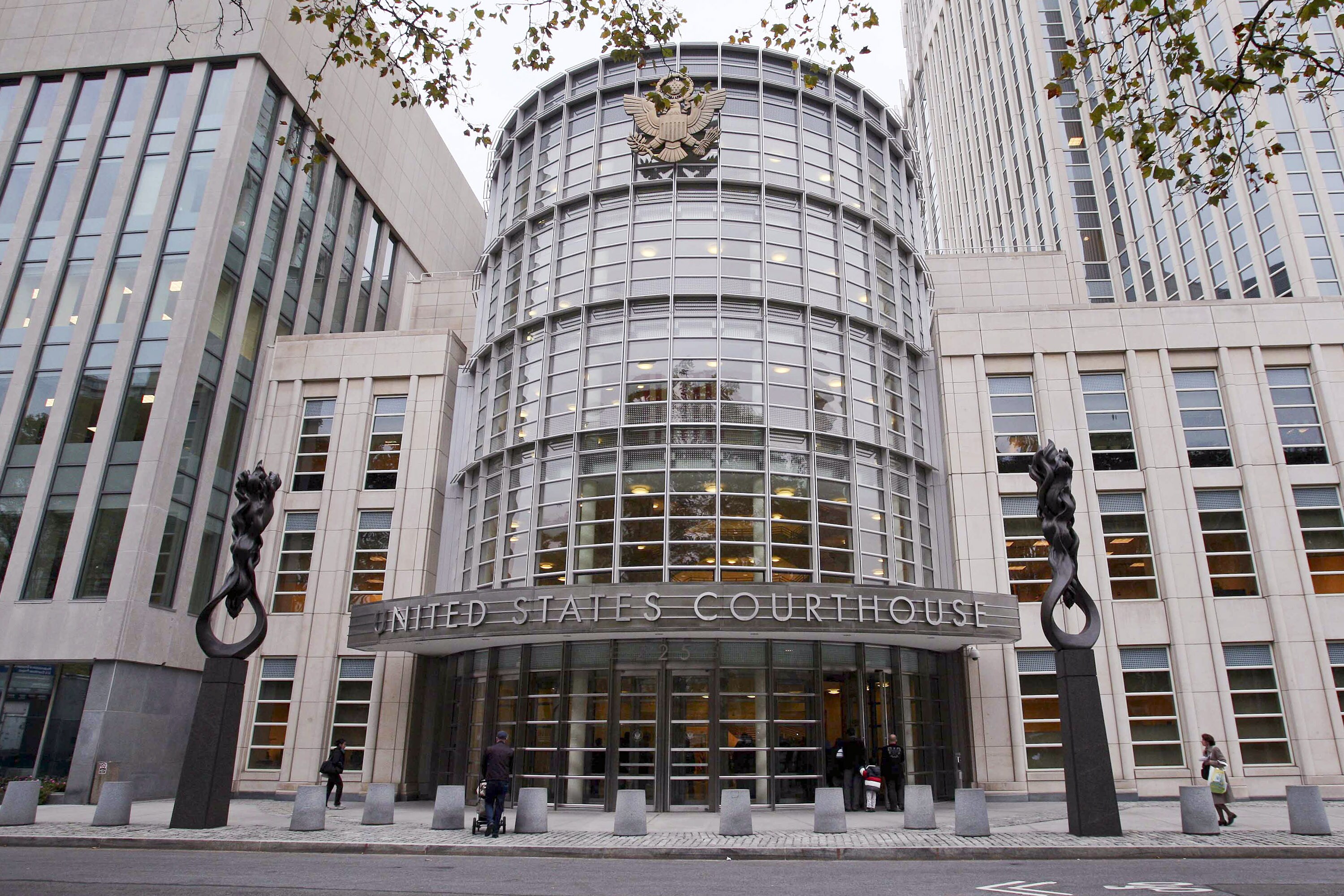
The chairman of Cambodian conglomerate Prince Group was charged Tuesday by the US with running a “sprawling cyber fraud empire” that led to the seizure of Bitcoin worth about $15 billion in what prosecutors called the largest ever forfeiture action.
Chen Zhi, 38, who heads Phnom Penh-based Prince Group, was charged by federal prosecutors in Brooklyn, New York, with engaging in a wire-fraud conspiracy and operating a money-laundering scheme. Chen's operation allegedly used forced-labor in Cambodia to emotionally manipulate thousands of victims in the US and around the world, fattening their accounts and then draining them in a practice known as “pig butchering.”
Such scams likely stole more than $75 billion from victims globally between January 2020 and February 2024, according to a study by a University of Texas at Austin finance professor last year. According to the FBI, cryptocurrency investment fraud caused more than $5.8 billion in reported losses in 2024 alone.
“Prince Group's investment scams have caused billions of dollars in losses and untold misery to victims around the world,” US Attorney Joseph Nocella said in a statement. “This historic indictment and forfeiture complaint send a strong message to fraudsters everywhere that we will pursue you no matter where you are.”
Chen, who was born in China but emigrated to Cambodia, is not in custody and remains at large, said John Marzulli, a spokesman for Nocella.
A lawyer for Chen could not be immediately identified. An email sent to the company's media contact listed on its website was returned with an error message.
The Department of Justice also filed a related civil forfeiture complaint seizing 127,271 Bitcoin, currently worth approximately $15 billion, which the US said are proceeds of Chen's fraud and money laundering schemes.
The Bitcoin were previously stored in unhosted crypto wallets whose private keys the defendant had in his possession. Prosecutors declined to comment how they obtained control of the Bitcoin.
Transnational Criminal Organization
While the Prince Group, which operated dozens of business in at least 30 countries and claimed to focus on legitimate real estate and financial services, prosecutors said Chen and his top executives secretly built the business into “one of the largest transnational criminal organizations in Asia.”
The US alleged that Chen and his co-conspirators engaged in several schemes from 2015 to the present. Chen was “directly involved” in managing the compounds, prosecutors said.
In one scheme, the trafficked foreign workers were confined in “prison-like compounds” and forced to carry out online schemes “on an industrial scale,” said John A. Eisenberg, assistant attorney general for the Justice Department's National Security division.
“The defendant was the mastermind behind a sprawling cyber-fraud empire operating under the Prince Group umbrella, a criminal enterprise built on human suffering,” Eisenberg said. “This indictment and historic forfeiture, the largest in Department history, reflect our commitment to using every tool at our disposal to ensure such crimes do not pay.”
Workers were housed in vast dormitories surrounded by high walls and barbed wire and beaten or threatened with violence if they did not participate, prosecutors said.
The US said Chen and his co-conspirators also operated a “phone farm,” or automated call centers used for crypto fraud. Chen's facilities used 1,250 mobile phones that controlled 76,000 accounts on a social media platform, according to the US. Workers were then forced to build rapport with victims and posed as women using photos of females who were “not too beautiful” so the scheme would seem legitimate.
That fraud reaped more than $30 million a day in 2018, one of Chen's co-conspirators later boasted, according to the US. The group used Prince Group's vast network of businesses to launder criminal proceeds, including through the conglomerate's online gambling businesses and crypto mining operations, according to the indictment.
The company's website describes itself as one of Cambodia's largest conglomerates with more than 100 businesses including real estate development, shopping malls, financial services, tourism and technology.
In a parallel move, the US Treasury Department designated the Cambodian conglomerate as a transnational criminal organization for online scam operations that have victimized people across the US. The move makes the company a pariah internationally as US companies and individuals can't do business with it, and those who do are subject to sanctions.
“The rapid rise of transnational fraud has cost American citizens billions of dollars, with life savings wiped out in minutes,” Treasury Secretary Scott Bessent said in a statement.
UK authorities froze more than £130 million ($172 million) of properties across London as part of the case. Some 19 properties were frozen in total including Chen's £12 million mansion in a luxury residential street in northwest London, the UK government said on Tuesday.

-
Why Amazon And Flipkart Are Struggling To Beat Meesho In India's Smaller Cities

With 274 million users and lowest-cost logistics, Meesho is defending its value commerce crown against giants like Amazon and Flipkart.
-
High US Salaries, No Green Card Certainty: The Financial Calculation Facing Indian H-1B Families
The suspension of PERM processing at eight technology employers does not cancel existing H-1B visas. What it does is force a question many Indian families have been avoiding: is the US salary worth tying your career and family plans to one employer?
-
Swiggy vs Eternal: Food Delivery's Two Rivals Are No Longer In The Same Race
Eternal is building a private AI assistant, dark.ai. Swiggy is still working out how to make Instamart pay, with an operating loss of Rs 895 crore in the July-September quarter while Blinkit stayed profitable.
-
Where You Live Shapes How You Get To Work | The Reason Why
Two-wheelers are the most popular way to get to work in India, accounting for nearly 43% of workplace commutes.
-
Unhedged Position: Can India See An Indonesia-Style Time Correction?
The Nifty is trading below levels it first clocked in 2024. Is there, then, as I have suggested in the headline, potential that the current time correction drags on painfully for the next three-five, even ten years?
-
Navigating Friction And Energy Realities: An Analysis Of Marco Rubio's October Visit To India
Occurring at a critical juncture marked by stalled trade negotiations and escalating geopolitical pressures over global energy supplies, the visit offers a profound window into modern US-India relations.
-
India Exports Capital. Why Not Export Trusteeship?
The big question, then, is whether India can build an institution that global borrowers, investors, banks, and lawyers can trust, even without an Indian connection.
-
France's Economy & Politics Are In Crisis | The Reason Why
Let's look at how the French economy and politics evolved under Nicolas Sarkozy, Franois Hollande and Emmanuel Macron.
-
You May Inherit The Business. You Must Earn Its Credibility.
Succession tests the founder's ability to share authority as much as it tests the next generation's readiness to assume it.
-
Signing Deals Is One Thing; Making Them Work Is Another | The Week In Whys
Sometimes, things don't turn out as planned. Indian companies have lost some bids to rivals, some projects won't produce until 2030.










