US Economy Will Only Get Murkier If Key Data Is Delayed In Shutdown
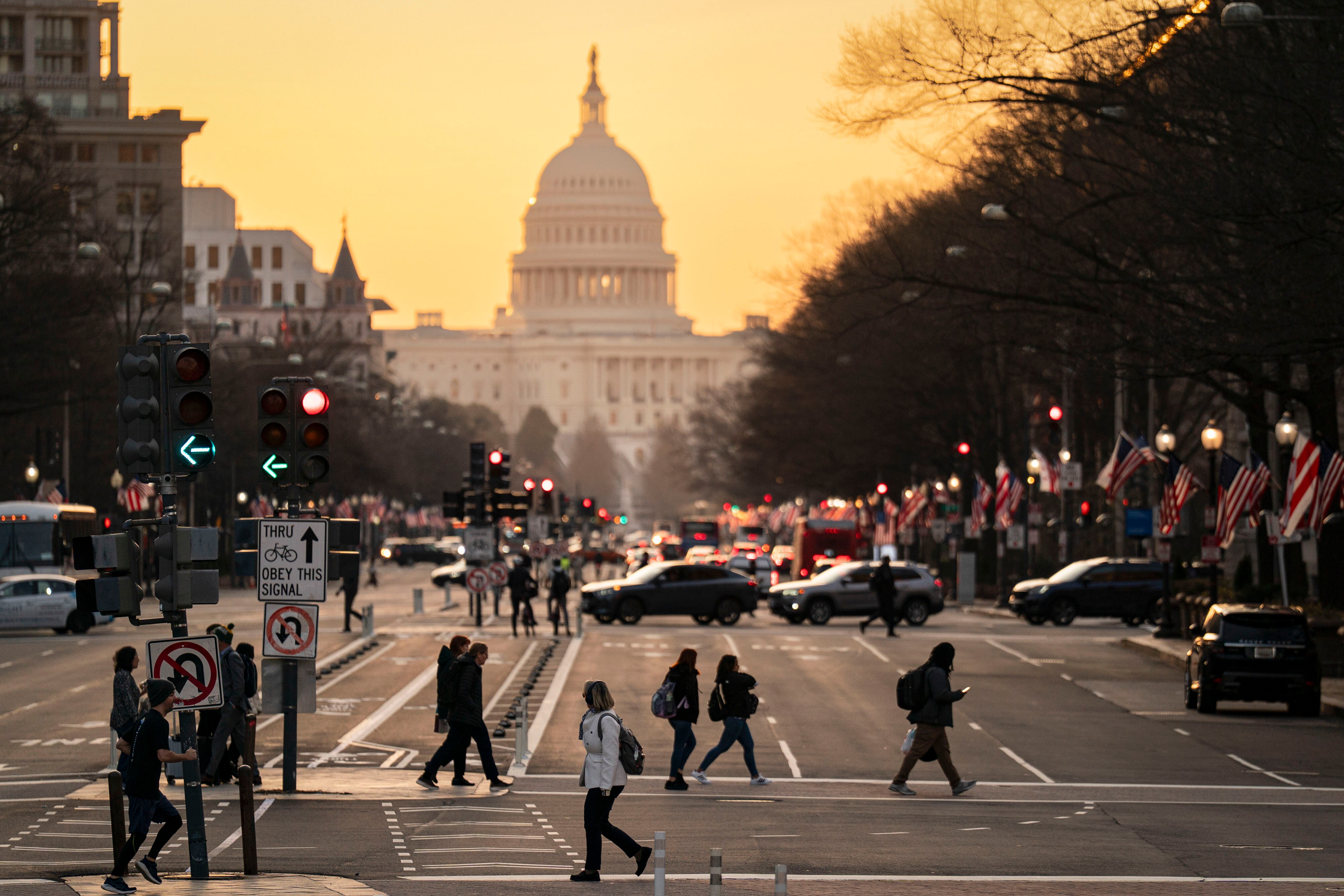
Lawmakers are careening toward a shutdown of the federal government that could deprive policymakers, business leaders and investors of critical data they need to assess the state of the US economy.
Many federal operations will pause and nonessential employees will be furloughed or fired if lawmakers can't reach an agreement by the time the current fiscal year ends on Tuesday. That would likely delay the release of gold standard government economic releases, including — first and foremost — the latest jobs report from the Bureau of Labor Statistics.
Given uncertainty about the impact President Donald Trump's policies are having on the US economy, federal gauges of employment, inflation and spending are all the more important. Any postponement could hamper key policy decisions, such as whether the Federal Reserve should cut interest rates again when it meets next month.
“You don't want to be flying blind in a foggy environment,” said Gregory Daco, chief economist at EY-Parthenon.
Should the government shut down after Sept. 30, the first major release poised to be affected is the BLS employment report, scheduled for Oct. 3. The agency's marquee report on inflation — the consumer price index — would be the next big one on the docket, while reports on retail sales and new residential construction from the Census Bureau are also at risk of being delayed.

Fed officials cut interest rates at their September meeting for the first time this year largely based on evidence of a cooler labor market, and policymakers are keenly watching for any signs of further deterioration. The BLS hasn't said whether it will still release the September jobs report on Friday if the government is shut down, but the latest contingency plan from March indicates all data collections and scheduled releases would cease.
The BLS had to delay publication of the jobs report and CPI when the government was shut down in 2013. There was a shutdown more recently in 2018-2019, but prior funding ensured that BLS could release major data as planned.
There are third-party economic data that, while generally considered not as comprehensive as government data, will still be available. They include measures of private payrolls from ADP Research and existing-home sales from the National Association of Realtors.
The Fed next meets on Oct. 28-29, and it would be harder to justify another interest-rate cut without having the latest government numbers, said Stephen Stanley, chief US economist at Santander US Capital Markets. Some officials are already wary of doing so and want to see more data.
“There's private data and Fed officials can canvas their contacts and at least get a sense of what's going on, but it does get tougher if you don't have the big aggregate data that we tend to depend on,” Stanley said.
A government shutdown isn't going to push the US economy into a recession, but it will have a cost and add to the uncertainty that companies and business leaders are already dealing with, said Neil Bradley, chief policy officer at the US Chamber of Commerce.
“By playing this fight out, let's understand that we're undermining the economy and that we're dampening growth by raising uncertainty,” Bradley said on a Sept. 23 webinar.

-
High US Salaries, No Green Card Certainty: The Financial Calculation Facing Indian H-1B Families

The suspension of PERM processing at eight technology employers does not cancel existing H-1B visas. What it does is force a question many Indian families have been avoiding: is the US salary worth tying your career and family plans to one employer?
-
Unhedged Position: Can India See An Indonesia-Style Time Correction?
The Nifty is trading below levels it first clocked in 2024. Is there, then, as I have suggested in the headline, potential that the current time correction drags on painfully for the next three-five, even ten years?
-
Navigating Friction And Energy Realities: An Analysis Of Marco Rubio's October Visit To India
Occurring at a critical juncture marked by stalled trade negotiations and escalating geopolitical pressures over global energy supplies, the visit offers a profound window into modern US-India relations.
-
India Exports Capital. Why Not Export Trusteeship?
The big question, then, is whether India can build an institution that global borrowers, investors, banks, and lawyers can trust, even without an Indian connection.
-
France's Economy & Politics Are In Crisis | The Reason Why
Let's look at how the French economy and politics evolved under Nicolas Sarkozy, Franois Hollande and Emmanuel Macron.
-
You May Inherit The Business. You Must Earn Its Credibility.
Succession tests the founder's ability to share authority as much as it tests the next generation's readiness to assume it.
-
Signing Deals Is One Thing; Making Them Work Is Another | The Week In Whys
Sometimes, things don't turn out as planned. Indian companies have lost some bids to rivals, some projects won't produce until 2030.
-
FOMC Wall, PERM Suspension, Hospital Stocks | Talking Points This Week
A PERM suspension would directly affect green-card sponsorship rather than H-1B visas, so the near-term earnings impact could remain relatively limited. The key question is whether this marks a new phase in US scrutiny of Indian IT.
-
Everything, Everywhere, All At Once: Dalal Street's Week To Forget | Joining The Dots
Visa curbs, a Starlink spat and cancer drug caps: what connects this week's shocks for Indian markets
-
India Is Going Abroad For Critical Minerals. But It May Take Years To Pay Off | The Reason Why
Although India's steps are in the right direction, they remain modest compared with India's growing dependence.









