Nvidia To Take $1 Billion Nokia Stake, Supply Network AI Chips
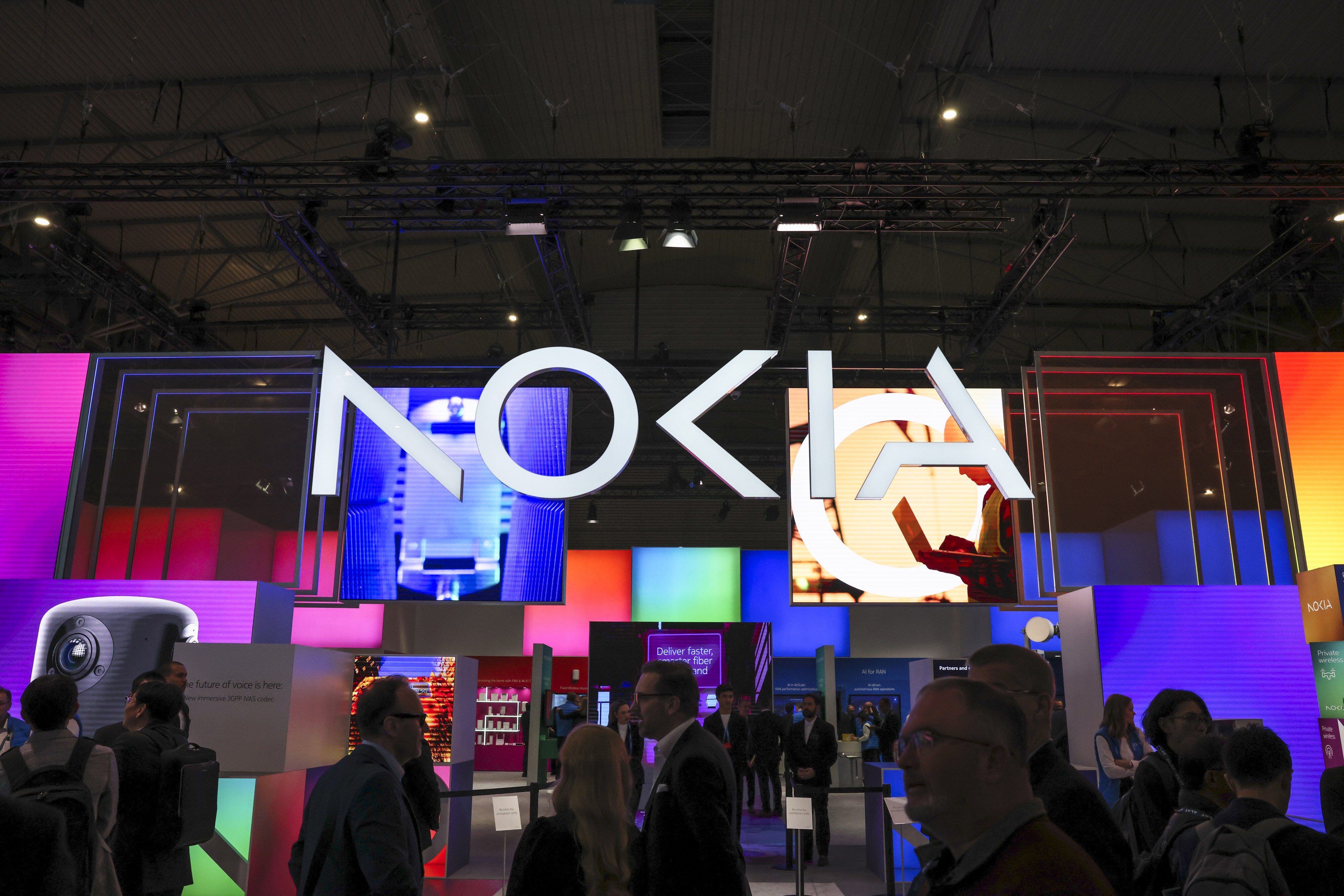
Nvidia Corp. is taking a $1 billion equity stake in Nokia Oyj and plans to supply the telecom company with artificial-intelligence powered computers for wireless networks. Nokia shares jumped the most in more than a decade.
Nokia will issue about 166 million shares to Nvidia at $6.01 each as part of the deal, giving Nvidia a 2.9% stake, the companies said in a statement. Nvidia's chips will be used to accelerate Nokia's software for 5G and 6G networks, and Nvidia will explore ways to use Nokia's data center technology in its own AI infrastructure, they said.
Nokia, best known for selling mobile network parts, has been pushing into data centers — a business that's growing thanks to the artificial intelligence boom driving demand for computing capacity. The move has paid off, helping Nokia beat Wall Street's earnings estimates last quarter. The Espoo, Finland-based company earlier this year bought Infinera Corp. for $2.3 billion to expand into networking products for AI data centers.
Shares of Nokia jumped 21% in Helsinki, the biggest gain since 2013.
Once an iconic 1990s brand that dominated the mobile phone market, Nokia has faded from popular culture after losing ground to rivals and pivoting to network services. Chief Executive Officer Justin Hotard is leading a turnaround of the Nordic company, emphasizing its position as the only Western alternative to Huawei Technologies Co. for supplying the entire portfolio of communications equipment, from 5G radios to fiber optic cables.

In a throwback to the same era, some analysts and academics have begun to draw comparisons between the circular deals that Nvidia has struck in recent months with customers like Nokia and those done in the 1990s leading up to the dot-com bubble's burst. At the time, cross-selling between startups inflated growth projections.
During an interview with Bloomberg TV on Tuesday, Nvidia CEO Jensen Huang said he invested in Nokia because he was excited about the work Nvidia is doing with Nokia and wanted to be “part of this incredible success that we're creating together.” He described his decision to take a stake as “pretty genius.”
As part of the companies' arrangement, Nvidia will supply Nokia with a new product — a programmable computer that's capable of communicating wirelessly, running AI processing and directing mobile traffic at the same time. “Nokia is going to work with us to integrate our technology and rewrite their stack,” Huang said at an Nvidia event in Washington. “It's been a long time since the American telecommunications network has been built on American technology.”
Wireless phone networks are shifting from being built around discrete pieces of hardware to being run by more standard computers defined by software. The next generation of wireless connections – 6G – will be characterized by its AI uses, Nvidia said. The company is working with Nokia to build gear based on new software and chips that it has developed for that market.
T-Mobile US Inc. will begin trials next year, Nvidia said. In a joint interview with Huang on Bloomberg TV, Hotard said that he expects “full commercial production” in 2027.
Nokia's aim is to process data closer to the user, so there's less lag in sending data. Calling the shift a “fundamental redesign of the network,” Hotard wrote in a statement that the move “will accelerate AI-RAN innovation to put an AI data center into everyone's pocket.”
Nvidia has been on a spending spree in recent months. The company said it will invest as much as $100 billion into OpenAI and will fund autonomous vehicle companies Wayve and Oxa, fintech Revolut and AI companies like PolyAI. The company also will invest in a German data center alongside Deutsche Telekom AG, Bloomberg News reported earlier.
Hotard emphasized the Nvidia deal is not exclusive, meaning the chip giant could turn around and sign an agreement with Nokia's competitor Ericsson. “If we're all under pressure to innovate and do our best, it's not exclusive either way, then we're all going to continue to compete and move at pace,” he said in a separate interview with Bloomberg News.
European policymakers and tech executives alike have been talking for months about the need for the bloc to develop its own AI ecosystem and catch up to rivals in the US and China. Huang and other tech industry leaders have criticized Europe for being too slow to develop its own infrastructure and supporting companies that want to use AI while keeping their data within the region.
During US President Donald Trump's first term, his administration raised the possibility of the US government and its allies investing in one of the two Western network vendors. Hotard stressed that Nvidia's investment is not a government-sponsored move.
“This is two private companies coming together yet to build something that we think is going to be beneficial for the ecosystem,” he said.

-
We May Need Another Tukaram Mundhe To Fight Air Pollution | The Reason Why

Developers may install basic measures such as sprinklers and green nets, resume work, and continue violating rules when this equipment stops working.
-
Extracting Value From Battery Scrap Could Be Challenging For India | The Reason Why
A discarded lithium-ion battery still contains valuable materials such as lithium, nickel and cobalt. These can be recovered and reused. When such batteries are crushed and shredded, they produce a dark powder called black mass.
-
One El Nino, India Can Handle. Two Could Break The Granary
India's grain stocks can absorb one bad year, but a second El Nino could drain the buffer in two to three years, economists say.
-
India's Troika Of Good Luck | Joining The Dots
As Jensen Huang's exit drags Nvidia down, a cooling AI trade and resilient earnings have revived investor interest in India. A likely RBI rate hike looms.
-
Talking Points This Week: Leadership Shock At Nvidia, Earnings Strength, And The Fog Over Hormuz
The Anthropic IPO pricing and first trading day, Nvidia's upcoming earnings, and any fresh signals from Iran will set the tone for the following week.
-
Signature Play: The Classic Cocktail Is Dead. Or Is It?
Classic cocktails are disappearing from India's cocktail menus. But they're still being ordered, taught to bartenders and borrowed from. So, who's really having the last drink?
-
A New Samvat Wishlist: Inclusive Prosperity And Human Development
India has strengthened its economic foundations through infrastructure, digital access and enterprise. Its next growth chapter must deepen productivity, create better livelihoods and widen participation in prosperity.
-
Love, Sex Aur Dhokha: The Audacious Plot To Spy On Jensen Huang
A Taipei dinner, a Singapore chip buyer and a suspected Chinese asset: inside the alleged spy operation that got close to NVIDIA's Jensen Huang.
-
Ten Things I Learnt This Samvat
Patience can be a trap. Cheap stocks can stay cheap. Leverage can wipe you out. What did Samvat 2082 teach us? Niraj Shah writes on 10 lessons from the year gone by.
-
Talking Points This Week: Tech Nerves, FII Buying, And A Faraway Banking Shock
The global markets are not shining this Diwali. The exception in the large markets is, India.









