Newest Indian Bank Plans $11.7 Billion Merger to Meet RBI Rules
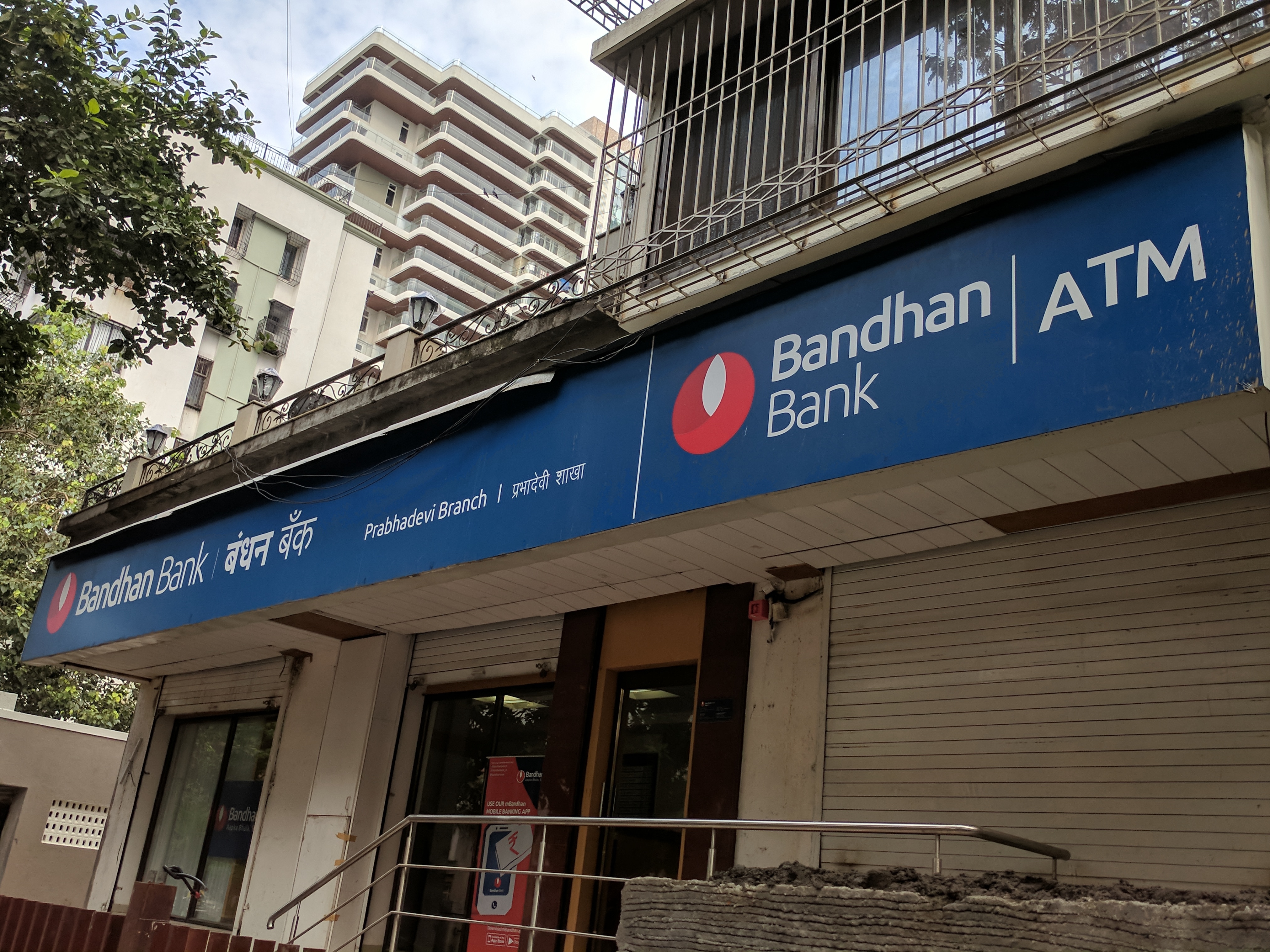
(Bloomberg) -- Bandhan Bank Ltd., India's newest lender, will combine with mortgage financier Gruh Finance Ltd. in a $11.7 billion deal, bringing the bank closer to meeting shareholding rules and helping it accelerate expansion.
Investors in Gruh Finance, controlled by India's biggest mortgage lender, will get 568 shares of Bandhan Bank for every 1,000 they own, according to exchange filings from the companies. The deal is valued at about 818 billion rupees ($11.7 billion), calculations based on closing share prices on Monday showed.
The transaction is meant to help Bandhan Bank founder and Chief Executive Officer Chandra Shekhar Ghosh comply with the Reserve Bank of India's ownership rules, and will also allow the micro lender to expand into a new category of loans. India's regulator has censured lenders for not meeting norms as the central bank tries to clean up an industry that's been plagued by as much as $210 billion of stressed assets.
“Diluting shareholding is just one benefit of this merger; the main purpose is to grow our business in the best way possible,” Ghosh said at a media briefing in Mumbai on Monday. “We have a strong presence in the east of the country, Gruh has a good network in the west. It is good for both of us.”
Read about an Indian court's view on Kotak Mahindra Bank's stake sale
Ghosh's stake in the lender will fall to 61 percent from 82 percent after the combination. The central bank imposed penalties on the Bandhan Bank after it missed a September deadline to bring Ghosh's holding down to 40 percent, in line with bank ownership norms. The RBI froze any further increases in his pay and withdrew the bank's right to open new branches without seeking prior approval.
Bandhan Bank fell 5.8 percent before the announcement, which came after market hours on Monday, while Gruh Finance, a unit of Housing Development Finance Corp., declined 4.1 percent. The deal is be subject to regulatory and shareholder approvals, according to the filings.
“It's positive for Bandhan and negative for Gruh,” Sameer Kalra, founder of Target Investing, said in an email. While Bandhan's dependence on micro loans will fall, Gruh loses support of HDFC, he said.
Here are more details from the deal:
- Combined unit will have a loan book of 500 billion rupees, according to pro-forma data
- Micro loans will make up 58 percent of the total; home loans will be 28 percent
- Merged entity will have 4,182 outlets and 31,000 employees
Kolkata-based Bandhan Bank started as a microfinance firm in 2001 and converted to a bank in 2015 as India approved new licenses in an effort to tap rural savings and improve access to credit.
“This merger will create one of the largest rural and semi-urban lending platforms in India,” said Deepak Parekh, chairman of Gruh's parent HDFC.
--With assistance from Nupur Acharya.
To contact the reporter on this story: Ronojoy Mazumdar in Mumbai at rmazumdar7@bloomberg.net
To contact the editors responsible for this story: Marcus Wright at mwright115@bloomberg.net, Abhay Singh, Arijit Ghosh
©2019 Bloomberg L.P.

-
High US Salaries, No Green Card Certainty: The Financial Calculation Facing Indian H-1B Families

The suspension of PERM processing at eight technology employers does not cancel existing H-1B visas. What it does is force a question many Indian families have been avoiding: is the US salary worth tying your career and family plans to one employer?
-
Unhedged Position: Can India See An Indonesia-Style Time Correction?
The Nifty is trading below levels it first clocked in 2024. Is there, then, as I have suggested in the headline, potential that the current time correction drags on painfully for the next three-five, even ten years?
-
Navigating Friction And Energy Realities: An Analysis Of Marco Rubio's October Visit To India
Occurring at a critical juncture marked by stalled trade negotiations and escalating geopolitical pressures over global energy supplies, the visit offers a profound window into modern US-India relations.
-
India Exports Capital. Why Not Export Trusteeship?
The big question, then, is whether India can build an institution that global borrowers, investors, banks, and lawyers can trust, even without an Indian connection.
-
France's Economy & Politics Are In Crisis | The Reason Why
Let's look at how the French economy and politics evolved under Nicolas Sarkozy, Franois Hollande and Emmanuel Macron.
-
You May Inherit The Business. You Must Earn Its Credibility.
Succession tests the founder's ability to share authority as much as it tests the next generation's readiness to assume it.
-
Signing Deals Is One Thing; Making Them Work Is Another | The Week In Whys
Sometimes, things don't turn out as planned. Indian companies have lost some bids to rivals, some projects won't produce until 2030.
-
FOMC Wall, PERM Suspension, Hospital Stocks | Talking Points This Week
A PERM suspension would directly affect green-card sponsorship rather than H-1B visas, so the near-term earnings impact could remain relatively limited. The key question is whether this marks a new phase in US scrutiny of Indian IT.
-
Everything, Everywhere, All At Once: Dalal Street's Week To Forget | Joining The Dots
Visa curbs, a Starlink spat and cancer drug caps: what connects this week's shocks for Indian markets
-
India Is Going Abroad For Critical Minerals. But It May Take Years To Pay Off | The Reason Why
Although India's steps are in the right direction, they remain modest compared with India's growing dependence.









