NDTV Profit GST Conclave: Key Highlights
The even comes to an end with the dignitaries discussing an array of topics. However, here are the top highlights from the event:
GST reforms are home-grown, not triggered by US tariffs, says Finance Minister Nirmala Sitharaman
GST reforms to touch all Indians, assures Sitharaman. She calls for efficiency to bridge revenue gap.
Liquour coming under GST is entirely dependent on the states, said Finance Minister Nirmala Sitharaman.
Minister of Commerce and Industry, Piyush Goyal said that US tariff will not have a significant impact on India's GDP.
Rate cut will boost disposable income, says Piyush Goyal.
Weaker Rupee can help counter US tariffs for now, says CEA Nageswaran.
Need to create 8-10 million jobs to become a developed economy, Says CEA Nageswaran.
Thank you for staying with us.
NDTV Profit GST Conclave Live: Need To Create 8-10 Million Jobs To Become A Developed Economy, Says CEA Nageswaran
According to V Anantha Nageswaran, Chief Economic Advisor job creation needs to happen for the next 10-15 years to become a developed economy. "Need to generate at least 8-10 million livelihoods every year in order to become a developed economy," he said
He further said that while we can create enough jobs, there is a need to see whether we are generating enough jobs that are also paying well.
NDTV Profit GST Conclave Live: CEA Nageswaran Worried About Second, Third Round Effects Of Reduced Exports
"Worried about the second and third round effects of reduced exports to US," said V Anantha Nageswaran, Chief Economic Advisor.
If GST rate cuts negate US tariff's hit on India's industry only then the GDP might come in at upper end of estimate he said.
NDTV Profit GST Conclave Live: Rate Cut Should Be Able To Negate Effects Of US Tariffs, Says CEA Nageswaran
GST rate cut should be able to negate some of the negative hit that's expected to come in from US tariffs, said V Anantha Nageswaran, Chief Economic Advisor.
He further added that they are not looking at a current account number that will impact the rupee in the near term.
He also pointed that current account deficit may widen an inch towards 2%.
Further, anything more than what the RBI predicted for GDP can be attributed to the GST rate cut.
NDTV Profit GST Conclave Live: Weaker Rupee Can Help Counter US tariffs For Now, Says CEA Nageswaran
When discussing rupee V Anantha Nageswaran, Chief Economic Advisor said that a weaker Rupee is not entirely an undesirable outcome.
"Temporarily, a weaker rupee can help in the face of US tariffs," he said.
He further added that can rely on a weak rupee as a crutch temporarily in the face of US tariffs.
NDTV Profit GST Conclave Live: Top Lines Of Export-Heavy Companies To Be Impacted By Tariff, Says CEA Nageswaran
Top line will be affected for export-heavy companies in the face of tariffs, said V Anantha Nageswaran, Chief Economic Advisor. He further added that some companies will need cash flow and working capital support. In order to address this issue, there is a template from five years ago when the world has been hit by Covid he said.
NDTV Profit GST Conclave Live: Rate Cut Just Cleaning And Has Come At A Great Time, Says CEA Nageswaran
Provide huge compensatory demand pull on the domestic side to whatever we may temporary lose out on the US tariff side, said V Anantha Nageswaran, Chief Economic Advisor. He further added that some sectors will require handholding before they can find alternate source of demand.
This was just spring cleaning and has come at a great time and will create some sort of compensation for the exporters.
NDTV Profit GST Conclave Live: Textile Might See Significant Impact Of US Tariffs, Says Goyal
According to Minister of Commerce and Industry, Piyush Goyal there are two-three sectors that will face significant US tariffs and textile is one such sector.
NDTV Profit GST Conclave Live: US Tariff Will Not Have Significant Impact On GDP, Says Piyush Goyal
When discussing the exports, Minister of Commerce and Industry, Piyush Goyal said that India is an import dependent nation. Additionally, India's GDP is not dependent on exports.
He further said that US tariff will not have a significant impact on India's GDP.
NDTV Profit GST Conclave Live: Trump Is Not Keeping Me Awake, It Is PM's Resolve To Work For The People, Said Goyal
It is not US President Donald Trump that is keeping Minister of Commerce and Industry, Piyush Goyal awake but PM Modi's resolve to work for the people that is keeping him up at night.
US and India are two important nations and good friends. He said that, 'All good things take time.'
NDTV Profit GST Conclave Live: Rate Cut Will Boost Disposable Income, Says Piyush Goyal
GST rate cut will boost disposable income, Says Minister of Commerce and Industry, Piyush Goyal. He further added that Prime Minister Modi has strengthened nation's economy with well-planned efforts in last 11 years.
NDTV Profit GST Conclave Live: Diversified Exports Needed To Avoid Tariff Impact — Maruti Suzuki Exec
Rahul Bharti executive director of Maruti Suzuki said that diversified exports are needed to avoid the impact of the US tariffs, he emphasized on making in India and to take efforts for the same.
NDTV Profit GST Conclave Live: Maruti Suzuki Excited For First Time Buyers
While there is a possibility of upgradation the main point of excitement is the rise in first time buyers, said Rahul Bharti, Executive Director, Maruti Suzuki.
NDTV Profit GST Conclave Live: Inventory Is One Time Issue, Says Maruti Suzuki's Rahul Bharti
Inventory is one time issue said Rahul Bharti, Executive Director, Maruti Suzuki. He explained that the company pulled back on larger cars in order to be more cautious.
Maruti's 70% of volume to fall in 18% rage, while the rest in 40%. The demand for EV to fall in 5% range.
NDTV Profit GST Conclave Live: Amul To Double It’s Production In Next Two Years
Amul to double it’s production in next two years, as market momentum exits said Dr. Jayen Mehta, Managing Director, GCMMF (Amul).
Mehta further added that demand is functions of income and pricing. He further said that milk and dairy is largest item in consumer's home.
NDTV Profit GST Conclave Live: Expect Small Cars Market To Swing 16% Due To Reforms, Says Maruti Suzuki's Rahul Bharti
"Expects small cars market to swing 16% due to reforms," said Rahul Bharti, Executive Director, Maruti Suzuki.
He further said that the net impact to consumer to see cut of 8.5% to 10%.
Talking about the GST reform he added that the budget and income tax structure has been made more favourable.
NDTV Profit GST Conclave Live: Families Agitated With How Money Gaming Apps Are Growing, Says Sitharaman
"We are not against the technology which builds online games, but when betting comes into play many families are losing funds," said Finance Minister Nirmala Sitharaman.
She also added that families have become agitated with the way these money gaming apps are growing, and many states have already banned it, it was not just the government of India.
NDTV Profit GST Conclave Live: Sometimes Compliance Issues Are Due To State Law, Says Nirmala Sitharaman
On concerns of excessive compliance Finance Minister Nirmala Sitharaman said that the state is actively engaged with stakeholders.
"Sometimes the problem is that there are compliance issues due to state law," she added.
She further said that the government is still ready to address any issues.
NDTV Profit GST Conclave Live: Need To Better Negotiate Trade Access With China, Says Nirmala Sitharaman
"We will need to better negotiate trade access for Indian products to China," said Finance Minister Nirmala Sitharaman.
Investments from China will need to be decided by specific departments, she further added on the question on China investment.
She further said that she would continue to remain cautious, but that is not to deter any investments.
NDTV Profit GST Conclave Live: Liquour Coming Under GST Dependent On States, Says Nirmala Sitharaman
Liquour coming under GST is entirely dependent on the states, said Finance Minister Nirmala Sitharaman.
NDTV Profit GST Conclave Live: Not Worried About Immediate Reaction From Markets, Says Nirmala Sitharaman
"I don't think I am worried about the immediate reaction from the markets," said Finance Minister Nirmala Sitharaman.
Markets always react to so many different factors and global uncertainty is definitely dominating the thoughts of investors.
"I do observe the market, but I don't think I can measure the reforms to the way the market reacts," she added.
NDTV Profit GST Conclave Live: India Keeping All Doors Open, Says Nirmala Sitharaman
India is keeping all the doors open she explained Finance Minister Nirmala Sitharaman.
She further added that the diplomatic teams are engaging with the US and the trade negotiations are still on going.
"From our side we do not want to make this difficult for others," she said.
"FDI comes from various sources, tariffs will have a bearing, but we are working on handling the impact," said Sitharaman.
NDTV Profit GST Conclave Live: Government Working To Support Exporters On Tariff, Says Nirmala Sitharaman
"Government is doing some kind of work to support them in some form or other," Finance Minister Nirmala Sitharaman added.
Inputs of designing the scheme will also depend on those hit by the tariffs explaining what losses they face and assessment of the industry that is exposed to the US.
"Some inputs are coming and the government is working on a solution," she further added.
NDTV Profit GST Conclave Live: US Tariffs Hit Those Exporting To Many Other Countries, Says Nirmala Sitharaman
US tariff hits those exporters who export to many other countries, said Finance Minister Nirmala Sitharaman when asked about the tariffs and its effect.
While she is not undermining the impact of a 50% tariff, but it hits exporters who are exposed to the US.
NDTV Profit GST Conclave Live: All FMs Were On Board With Rate Rationalisation, Says Nirmala Sitharaman
"To be fair to state FMs, they were all on board with rate rationalisation," said Finance Minister Nirmala Sitharaman.
She further reiterated that at no point in time there was any acrimony.
But states certainly repeated their concerns at least two times about revenue impact.
NDTV Profit GST Conclave Live: Compensation To States Ended In June 2022, Says Nirmala Sitharaman
"There is no compensation since 2022," said Finance Minister Nirmala Sitharaman when asked about the states complaining of missing out on compensation.
The compensation cess being collected right now will go into repaying the loans availed during Covid, she explained further.
"Better collection efficiency improves overall collections, not as if the center is sitting with a huge suitcase to pay everyone," she clarified.
"There is no compensation since 2022," said Finance Minister Nirmala Sitharaman when asked about the states complaining of missing out on compensation.
The compensation cess being collected right now will go into repaying the loans availed during Covid, she explained further.
"Better collection efficiency improves overall collections, not as if the center is sitting with a huge suitcase to pay everyone," she clarified.
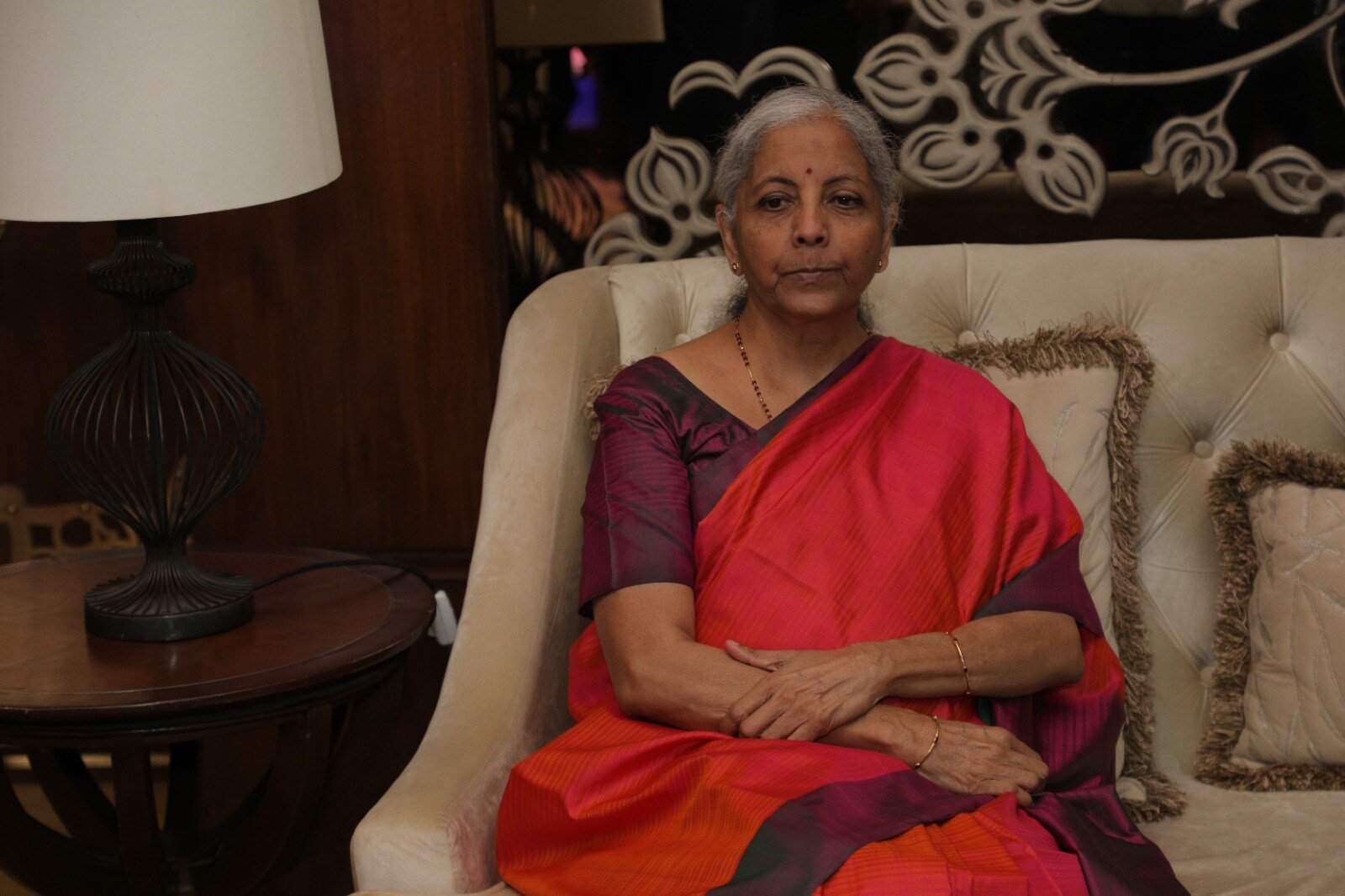
Finance Minister Nirmala Sitharaman at NDTV Profit GST Conclave (Source: NDTV Profit)
NDTV Profit GST Conclave Live: Meeting With States Was Not Acrimonious, Says Nirmala Sitharaman
"First thing I did after the meeting was to thank every finance minister across states," said Finance Minister Nirmala Sitharaman.
The meeting was not at all acrimonious, but there were multiple rounds of views being presented, she said.
"All ministers told us that they were in favour of rate rationalisation, the differences came when states started speaking about "what if their revenues go down?" she said.
NDTV Profit GST Conclave Live: Reforms Not Because Of US Tariff, Says Finance Minister Nirmala Sitharaman
"It was not as if the crisis was on us because of US tariff measures," Finance Minister Nirmala Sitharaman
She further said that it was in May, when she realised there was a worthy pack to present to PM.
NDTV Profit GST Conclave Live: PM Modi Nudged For GST Overhaul When I-T Cuts Were Announced, Says Sitharaman
This was in the making for over one and a half years, said Finance Minister Nirmala Sitharaman. When the major announcements on income tax happened during the budget, the PM reminded me about GST reforms, she said.
NDTV Profit GST Conclave Live: GST Has Been Better Than VAT, Says
GST has been better than VAT, said Piruz Khambatta, CMD, Rasna Group.
He further said that farmer livelihood has become better, and this is the biggest business reform ever seen in the last many years.
NDTV Profit GST Conclave Live: MSME Can't Deal With Complex Regulations, Says CII Director
MSME can't deal with complex regulations, said Chandrajit Banerjee, Director General, CII. He further said that ease of doing GST, will make MSME focus on doing more business.
The benefit goes a lot to the labour intensive sector, he added.
NDTV Profit GST Conclave Live: Rasna Group To Pass Benefits To People
We are committed to pass every benefit to the consumer, said Piruz Khambatta, CMD, Rasna Group.
"We want India to grow, we don't want it to depend on foreigners," he added.
He further said that traders are confused about what to do and there is a need for more clear FAQs.
NDTV Profit GST Conclave Live: Dispute Resolution Could Trigger Inward Investment, Says CII Director
Chandrajit Banerjee, Director General, CII taking the point further said that dispute resolution could trigger inward investment and get more attraction towards India.
Going forward we see more of tickling into trust in states and centres. We are looking at how mature India is getting.
NDTV Profit GST Conclave Live: Classification Disputes Will Come Down, Says CII President
"Classification disputes will come down" as the slabs have been reduced says Rajiv Memani, President, CII.
Further discussing the other benefits he said, registration process have become easier, will now get provisional credits and blocked input credit has been unlocked to nearly 90%.
NDTV Profit GST Conclave Live: People Will Benefit With Lower Cost Of Healthcare, Says Medanta Chairman
"Removing GST Insurance premium is a great job the government has done," said Dr. Naresh Trehan, Chairman and Managing Director, Medanta – The Medicity.
For providers their input cost will be reduced and been brought down, he added.
This has been a favorable move by the government and a big relief for the people. "Once the supply side settled down, we can pass on the benefits to consumers," he said when asked on when the benefits will be passed to the people.
NDTV Profit GST Conclave Live: Wish Swiggy And Zomato Would Let Restaurants Decide Pricing Said Zorarwar Kalra
Whenever there is more money, people will fund it into their wants and desires, Zorarwar Kalra, Founder Massive Restaurants Pvt. Ltd. and Vice President.
Wish platforms like Swiggy and Zomato would let restaurants decide the pricing, he added.
Platforms don't allow us to decide our pricing and offers ourselves; he pointed when discussing the difference in pricing.
NDTV Profit GST Conclave Live: Rs 2,500 Threshold Will Make It A Value-Centric Game, Said DLF Retail's Pushpa Bector
Talking about the regular shoppers, DLF Retail's Pushpa Bector said that Rs 2,500 limit for 12% GST apparel and anything higher being charged at 18% are numbers that should be relooked.
She further added that the Rs 2500 threshold for GST rate in apparels will end up making it a value-centric game.
NDTV Profit GST Conclave Live: Timing Of Rate Cut Is Really Good, Says DLF Retail's Pushpa Bector
"People understand there will be more cash in their wallets, and discretionary spends will increase," Pushpa Bector, Senior ED and Business Head DLF Retail.
She further added that timing of GST rate cut is really good, as this is the onset of the festive season.
NDTV Profit GST Conclave Live: Need To Shutdown All Population Control Programs, Says Sanjeev Sanyal
Need to begin thinking on how to ramp up birth rates in states and pockets where it is slowing down, said Sanjeev Sanyal, Member, EAC-PM when he was asked about Geological Survey of India.
"Need to shut down all population control programs which seem to hang around in our bureaucracy," he said.
NDTV Profit GST Conclave Live: Need Half A Dozen Structural Reforms, But Need Thousand Process Reforms
"We may need to half a dozen structural reforms, but need a thousand process reforms," said Sanjeev Sanyal, Member, EAC-PM.
However, on the policy front, the bulk of big structural changes are probably done, he pointed.
NDTV Profit GST Conclave Live: 'We Cannot Wish China Away,' Says Sanjeev Sanyal
Trade deficit with China has been an issue for a while and we cannot wish China away, says Sanjeev Sanyal, Member, EAC-PM.
Even if we want to become an industrial power, the inputs will come from China for forseeable future, pointed Sanyal.
The idea that we can protect everything and manufacture everything at home may not work out, added Sanyal.
NDTV Profit GST Conclave Live: Tax System Has Now Been Rationalised, Says Sanjeev Sanyal
"We have now taken the system and rationalised it," said Sanjeev Sanyal, Member, EAC-PM. He further added that now, common sense will broadly be able to tell you what falls under which slab.
He further added that cement at 28% wasn't due to some great thinking, but because it was least disruptive.
When you reduce rates and rationalise them, there will be a one-time reduction in tax collection.
Didn't rationalise rates right after COVID because there was a fear that fiscal systems weren't strong enough then, he added.
NDTV Profit GST Conclave Live: Government To Not Lower Tax On Sin Goods, Says CBIC Chairman
Central Government's stand on sin goods is that the tax will not be lowered, Sanjay Kumar Agarwal, Chairman, Central Board of Indirect Taxes and Customs said when asked about posibility of additional levy on sin goods.
"Beyond 40%, there will be an additional levy under constitutional provisions," he added.
NDTV Profit GST Conclave Live: Reform Like Single GST Rate Can Lead To Invesrted Duty Structure, Says CBIC Chairman
Sanjay Kumar Agarwal, Chairman, Central Board of Indirect Taxes and Customs while explaining that another reform that can be carried out is doing away with the merit rate and keeping only the standard rate.
He further added that the single GST rate can lead to many benefits like no inverted duty structure.
NDTV Profit GST Conclave Live: Cess Is Imposed For A Particular Purpose, Explained CBIC Chairman
Cess is imposed for a particular purpose like health, agriculture and education, explained Sanjay Kumar Agarwal, Chairman, Central Board of Indirect Taxes and Customs.
Compensation cess was imposed to ensure there is certain growth in states over a certain period and post 2022, compensation cess was collected to pay back debt collected during that period.
NDTV Profit GST Conclave Live: Supply Chain Entities Are Entitled To Take Full Input Tax Credit, Says CBIC Chairman
Supply chain entities are entitled to take full input tax credit, explained Sanjay Kumar Agarwal, Chairman, Central Board of Indirect Taxes and Customs when talking about the inventroy in transition period.
"If ITC availability is more, then payments can be made from ITC and cash liability will be reduced accordingly in the transition period," he added.
NDTV Profit GST Conclave Live: Anti-Profiteering Provisions Are There In GST Law, Says CBIC Chairman
Anti-profiteering provisions are there in GST law, said Sanjay Kumar Agarwal, Chairman, Central Board of Indirect Taxes and Customs.
He further pointed that not many complaints have been filed under anti-profiteering provisions of GST law.
Governemnt is doing pre and post-cut price monitoring to ensure that rate cuts are passed on, he added.
NDTV Profit GST Conclave Live: Rate Cut Will Lead To More Consumption, Says CBIC Chairman
According to Sanjay Kumar Agarwal, Chairman, Central Board of Indirect Taxes and Customs, GST rate cut will lead to more consumption.
He also hopes that companies will pass the benefit of rate cut to end consumer. He also clarified that only then will there be consumption growth.
NDTV Profit GST Conclave Live: Many Reforms Still In The Pipeline, Says Sanjay Kumar Agarwal
"Lot is still in the pipeline in the processes reform front," said Sanjay Kumar Agarwal, Chairman, Central Board of Indirect Taxes and Customs.
The processes reform is being undertaken to ensure that GST mismatch does not happen, he further added.
NDTV Profit GST Conclave Live: Right Time To Carry Out Reforms, Says CBIC Chairman Sanjay Kumar Agarwal
It is the right time to carry out GST reforms said Sanjay Kumar Agarwal, Chairman, Central Board of Indirect Taxes and Customs. He further added that GST has completed eight years of its journey and as a tax system has stabilised and has seen revenue growth.
NDTV Profit GST Conclave Live: As More People Come Under GST, Collections Will Get Better, Says Delhi Minister
"As more people come under the GST net, we are seeing better collections," said Majinder Singh Sirsa, Minister for Industries, Food & Supplies, Delhi.
Sirsa further said that as collections improve we see rates coming down. He further added that as more reforms come, things will change.
NDTV Profit GST Conclave Live: Jharkhand FM Demands For Compensation To Continue...
Jharkhand Finance Minister Radha Krishna Kishore
demands that the center should pay compensation till their own advisors are able to establish which states do not need support anymore.
Further he added that if the states were capable on their own then there would have been no need for compensation cess for the first five years. He also suggested that the center should see where all the manufacturing stated stand and then take the decision on the compensation cess.
NDTV Profit GST Conclave Live: Consumptions States Showing Better GST Collection, While Producing Seeing A Fall, Says Punjab FM
"Consumption states are showing better GST collection, while those producing are seeing a fall," said Punjab Finance Minister Harpal Singh Cheema.
He further added that the Ministers should have been presented with state level data in the council meeting.
He also pointed that the GST hasnt benefitted the common man as Basmati rice prices have risen from Rs 60-80 to now over Rs 120.
He hopes that the benefits of the GST will come soon as they havent been visible in the last eight years.
NDTV Profit GST Conclave Live: States Failed To Develop Income Sources Ex-GST, Says Delhi Minister
"GST on its own is India's biggest reform in the last 70 years. It came with everyone's consent. GST is the same for everyone, irrespective of state," said Majinder Singh Sirsa, Minister for Industries, Food & Supplies, Delhi.
"It cant be that the states ask for rates to come down, but then demand compensation. The only reason states are facing losses is because states are not able to develop industry and trade. We should see how we can improve resources and have stable policies to invite investments. It should not be the center's responsibility to manage state revenue," he said.
NDTV Profit GST Conclave Live: Premature Decision To Implement GST in 2017
"These disagreements are not just coming after the meeting. We have only asked the centre to repay states on the losses they face after GST reforms. It is only after 8 years the government is realising that rates need to be rationalised. It was a premature decision to implement GST in 2017," said Jharkhand Finance Minister Radha Krishna Kishore.
He also said, "I defended the GST council's decision in front of the Karnataka FM when he was refusing to let things move. If you think we are only talking about these issues because of politics then you can check the facts for yourself. If we had refused to pass the reforms, it would have driven the wrong message."
NDTV Profit GST Conclave Live: Compensate States For Revenue Loss
Punjab Finance Minister Harpal Singh Cheema said all states have flagged the fiscal impact of the GST cuts on their books. He said the Centre will have to provide a clear roadmap to compensate states for the revenue loss.
"In GST's 8 year journey, states and the centre have faced a lot of challenges. Revenue loss to states needed to be compensated. Government of India's commitment was to compensate all states for five years," he said.
NDTV Profit GST Conclave Live: Panel One 'GST 2.0: Matters of States'
The first panel of NDTV Profit GST Conclave has started. The discussio is on the topic: 'GST 2.0: Matters of States.'
Punjab Finance Minister Harpal Singh Cheema, Majinder Singh Sirsa, Minister for Industries, Food & Supplies, Delhi, and Jharkhand Finance Minister Radha Krishna Kishore will be on the panel.
This will be followed by a presentation by Sajan Raj Kurup, Founder and Creative Chairman, Creativeland Asia Group, followed on by a question and answer segment.
The fireside chat sessions will include participation from Sanjay Kumar Agarwal, CBIC Chairman and Sanjeev Sanyal, Member, EAC-PM. Agarwal will speak on reforms for a resurgent India, while Sanyal will speak on 'GST 2.0-The Economics of Tomorrow'.
NDTV Profit GST Conclave Live: Moderators For Today
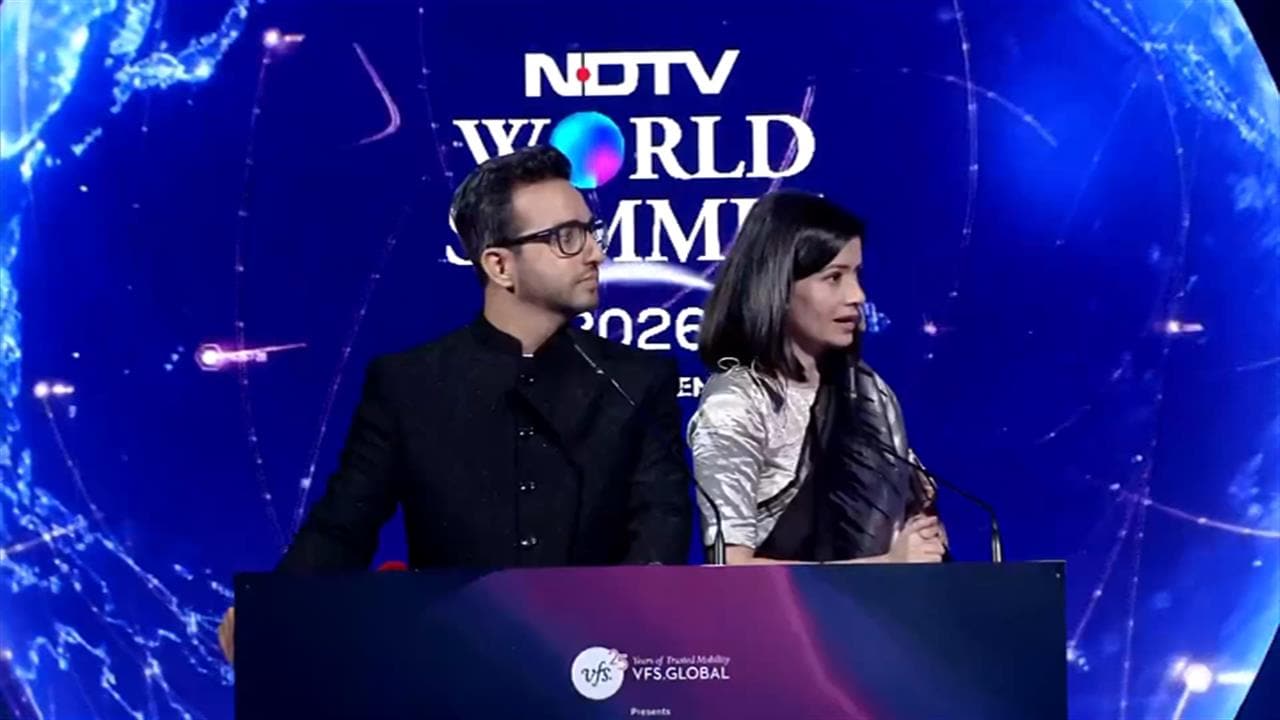
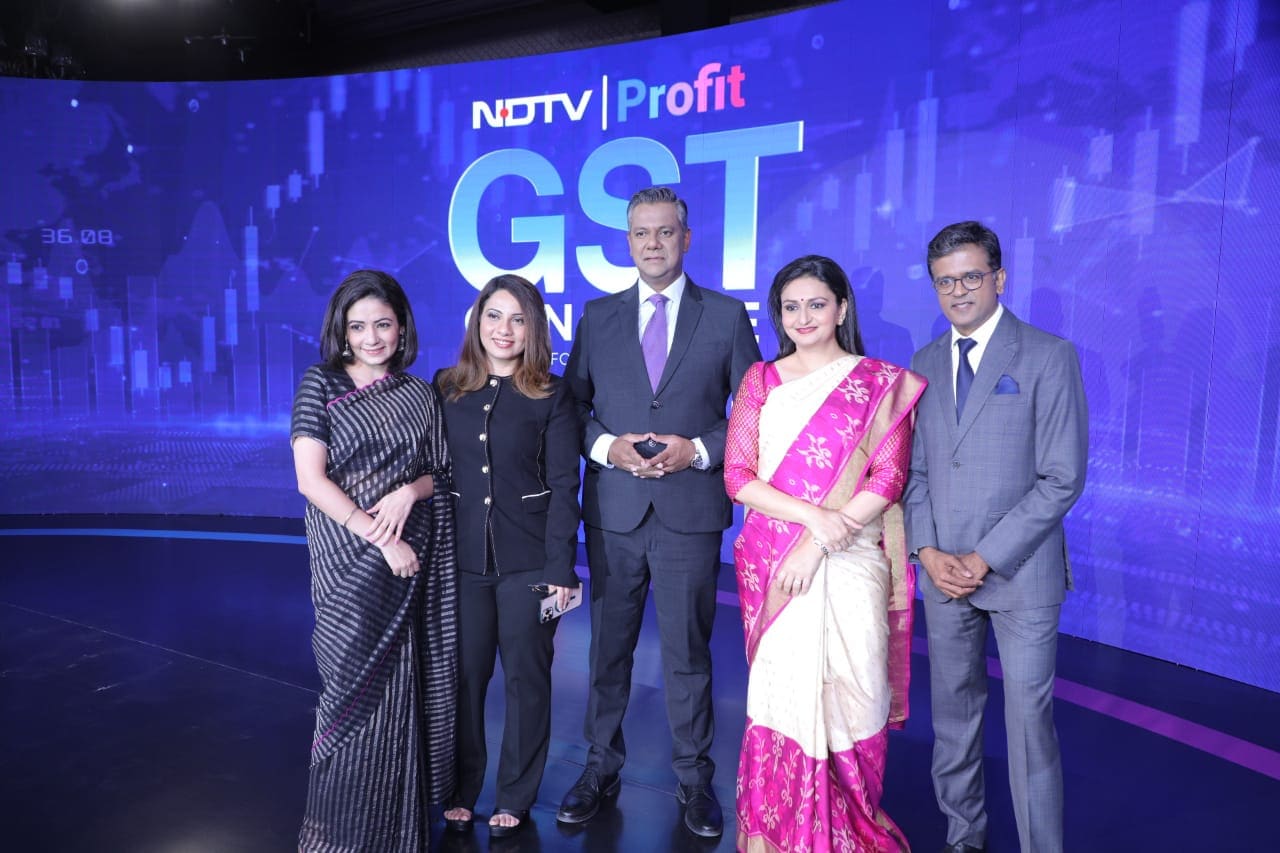
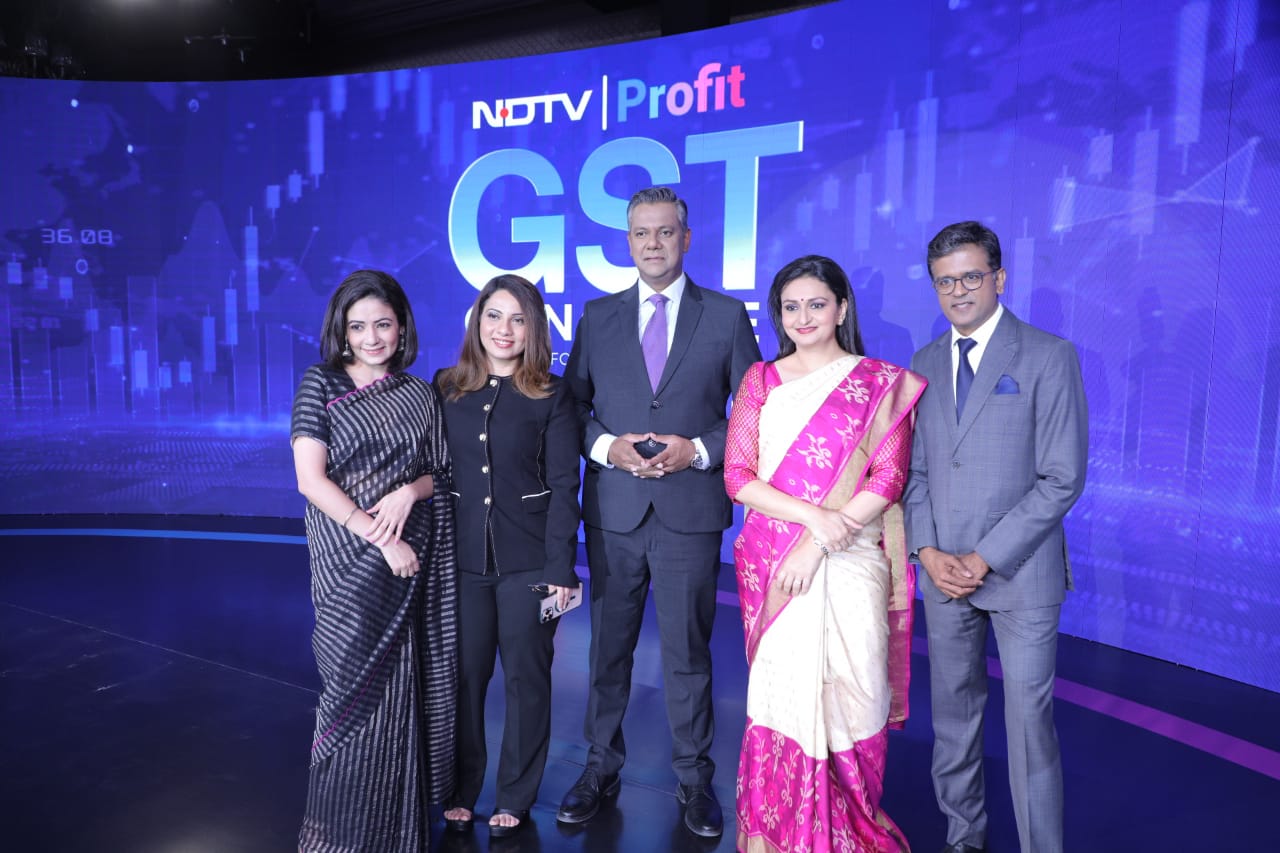
NDTV Network's Niraj Shah, Tamanna Inamdar, Vishnu Som, Gaurie Dwivedi and Vedika Sud gather to start the GST 2.0—The Reform Powering a Viksit Bharat conclave.
NDTV Network's Niraj Shah, Tamanna Inamdar, Vishnu Som, Gaurie Dwivedi and Vedika Sud gather to start the GST 2.0—The Reform Powering a Viksit Bharat conclave.
NDTV Profit GST Conclave Live: Tune In To Decode GST 2.0
Stay tuned as a panel of experts decode GST 2.0: Reforms For A Resurgent India.
Stay tuned as a panel of experts decode GST 2.0: Reforms For A Resurgent India
— NDTV Profit (@NDTVProfitIndia) September 9, 2025
3 PM Onwards On NDTV Profit #NDTVGSTConclave #NDTVProfitGSTConclave @TamannaInamdar @_nirajshah @VishnuNDTV @GaurieD @vedikas pic.twitter.com/aPzMcS9sTX
NDTV Profit GST Conclave Live: To Begin Soon
NDTV Profit GST Conclave too begin soon.
NDTV Profit GST Conclave too begin soon.
(Image: NDTV Profit)
How GST 2.0 Cuts Prices Of M&M, Maruti, Nissan, Toyota And Other Cars
Leading Indian carmakers have announced steep price cuts across their portfolios after the GST Council reduced tax rates on automobiles last week.
Under the next-generation GST reforms, the government has lowered the goods and services tax rate on small cars from 28% to 18%, while luxury vehicles now attract a flat 40% rate.
According to Kotak Institutional Equities, on-road prices are expected to fall 5-8% on average, with passenger vehicles seeing reductions of 2-9% in overall cost. Automakers have moved quickly to pass on the benefit, announcing cuts ranging from thousands to a few lakhs across several models.
Read more through link below.
NDTV Profit GST Conclave Live: Behind The Scene, What Awaits
Are You Ready?#GST reforms, explained like never before.
— NDTV Profit (@NDTVProfitIndia) September 9, 2025
Live & Exclusive | NDTV Network |⏰ 3 PM onwards@tamannainamdar @_nirajshah #NDTVGSTConclave #NDTVProfitGSTConclave pic.twitter.com/C5OepX5SEO
NDTV Profit GST Conclave Live: What's On Agenda
The event will begin with a panel discussion at 3:05 p.m. between Punjab Finance Minister Harpal Singh Cheema, Jharkhand Finance Minister Radha Krishna Kishore and Delhi Minister for Industries, Food & Supplies, Manjinder Singh Sirsa, on 'GST 2.0: Matters of States.'
This will be followed by a presentation by Sajan Raj Kurup, Founder and Creative Chairman, Creativeland Asia Group, followed on by a question and answer segment.
The fireside chat sessions will include participation from Sanjay Kumar Agarwal, CBIC Chairman and Sanjeev Sanyal, Member, EAC-PM. Agarwal will speak on reforms for a resurgent India, while Sanyal will speak on 'GST 2.0-The Economics of Tomorrow'.
The second panel discussion of the evening 'The new consumption curve: Affordable to Aspirational' will include: Raju Antony Pullan, Sr. Vice President and India Head, Samsung; Zorarwar Kalra, Founder - Massive Restaurants Pvt. Ltd. and Vice President (NRAI); Pushpa Bector, Senior ED and Business Head - DLF Retail.
The third panel discussion 'GST 2.0: The Business of Reform' will include: Rajiv Memani, President, CII; Chandrajit Banerjee, Director General, CII; Piruz Khambatta, CMD, Rasna Group; Naresh Trehan, Chairman and Managing Director, Medanta – The Medicity.
The final panel discussion of the evening 'GST 2.0: The Consumption Catalyst' will include: Rahul Bharti, Executive Director, Maruti Suzuki; Sanjeev Bikhchandani, Founder and Executive Vice Chairman, Info Edge India Ltd.; Jayen Mehta, Managing Director, GCMMF (Amul).
The evening will end with a fireside chat with Union Minister Piyush Goyal on 'GST 2.0: Reform to Renewal', and CEA V Anantha Nageswaran will speak on 'GST 2.0: The Reform Dividend'.
The event will begin with a panel discussion at 3:05 p.m. between Punjab Finance Minister Harpal Singh Cheema, Jharkhand Finance Minister Radha Krishna Kishore and Delhi Minister for Industries, Food & Supplies, Manjinder Singh Sirsa, on 'GST 2.0: Matters of States.'
This will be followed by a presentation by Sajan Raj Kurup, Founder and Creative Chairman, Creativeland Asia Group, followed on by a question and answer segment.
The fireside chat sessions will include participation from Sanjay Kumar Agarwal, CBIC Chairman and Sanjeev Sanyal, Member, EAC-PM. Agarwal will speak on reforms for a resurgent India, while Sanyal will speak on 'GST 2.0-The Economics of Tomorrow'.
The second panel discussion of the evening 'The new consumption curve: Affordable to Aspirational' will include: Raju Antony Pullan, Sr. Vice President and India Head, Samsung; Zorarwar Kalra, Founder - Massive Restaurants Pvt. Ltd. and Vice President (NRAI); Pushpa Bector, Senior ED and Business Head - DLF Retail.
The third panel discussion 'GST 2.0: The Business of Reform' will include: Rajiv Memani, President, CII; Chandrajit Banerjee, Director General, CII; Piruz Khambatta, CMD, Rasna Group; Naresh Trehan, Chairman and Managing Director, Medanta – The Medicity.
The final panel discussion of the evening 'GST 2.0: The Consumption Catalyst' will include: Rahul Bharti, Executive Director, Maruti Suzuki; Sanjeev Bikhchandani, Founder and Executive Vice Chairman, Info Edge India Ltd.; Jayen Mehta, Managing Director, GCMMF (Amul).
The evening will end with a fireside chat with Union Minister Piyush Goyal on 'GST 2.0: Reform to Renewal', and CEA V Anantha Nageswaran will speak on 'GST 2.0: The Reform Dividend'.
NDTV Profit GST Conclave Today
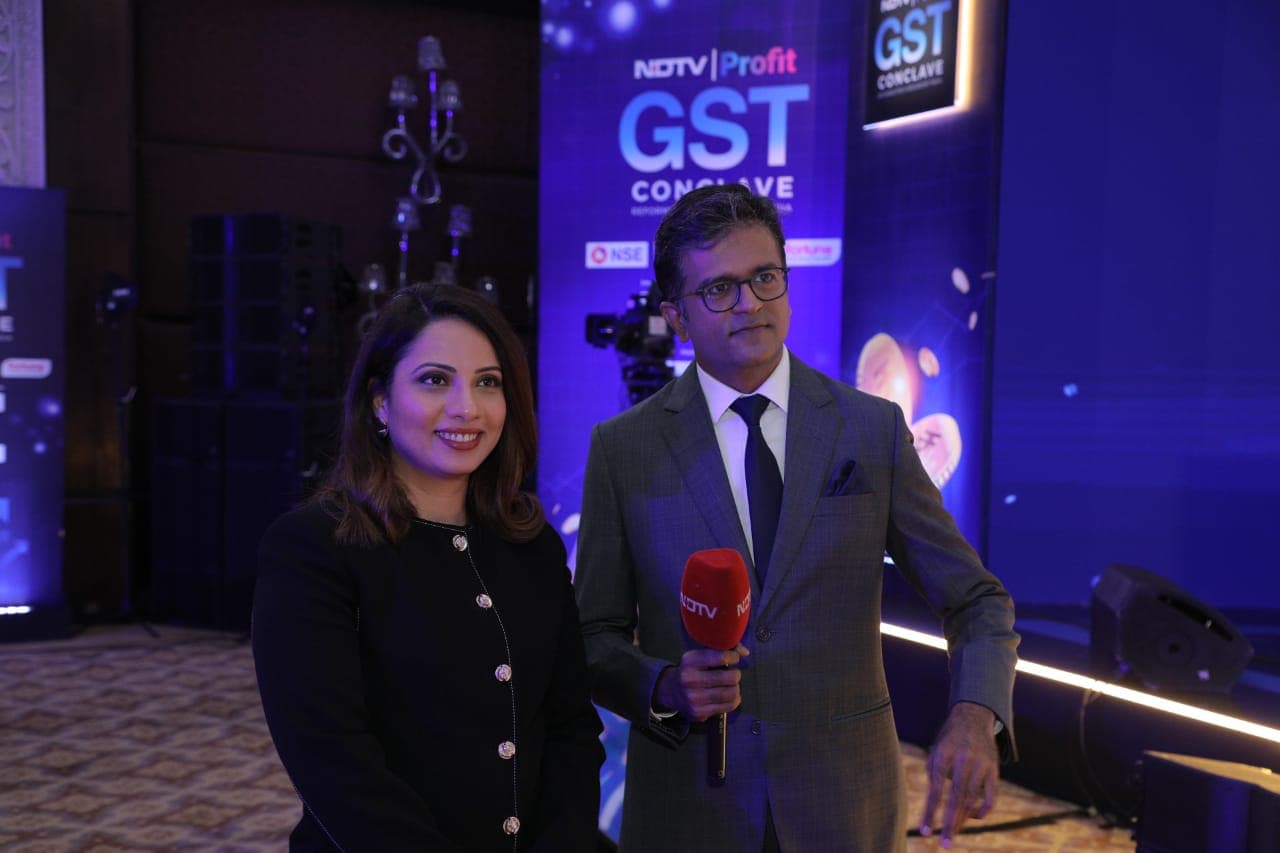
NDTV Profit is all set to host a conclave themed GST Conclave on Tuesday in New Delhi. The event, scheduled from 3 p.m. onwards at New Delhi's Taj Palace, will focus on discussions around GST 2.0—The Reform Powering a Viksit Bharat.
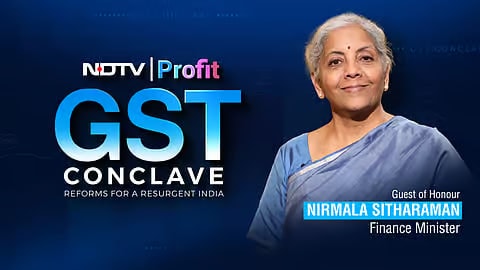
Union Minister of Finance and Corporate Affairs Nirmala Sitharaman will be the Guest of Honour at the event. Sitharaman is slated to hold a townhall session on 'GST 2.0—Reforms for a Resurgent India'.
Other key speakers include Union Minister of Commerce and Industry Piyush Goyal, Chief Economic Advisor V Anantha Nageswaran, and Central Board of Indirect Taxes and Customs Chairman Sanjay Kumar Agarwal among others.
Essential Business Intelligence, Sharp Market Insights, Practical Personal Finance Advice, Daily Fuel, Gold and Silver Prices and Latest Stories — On NDTV Profit.