'India Was Charging 100%': Trump Defends 50% Tariffs; Cites Harley Davidson
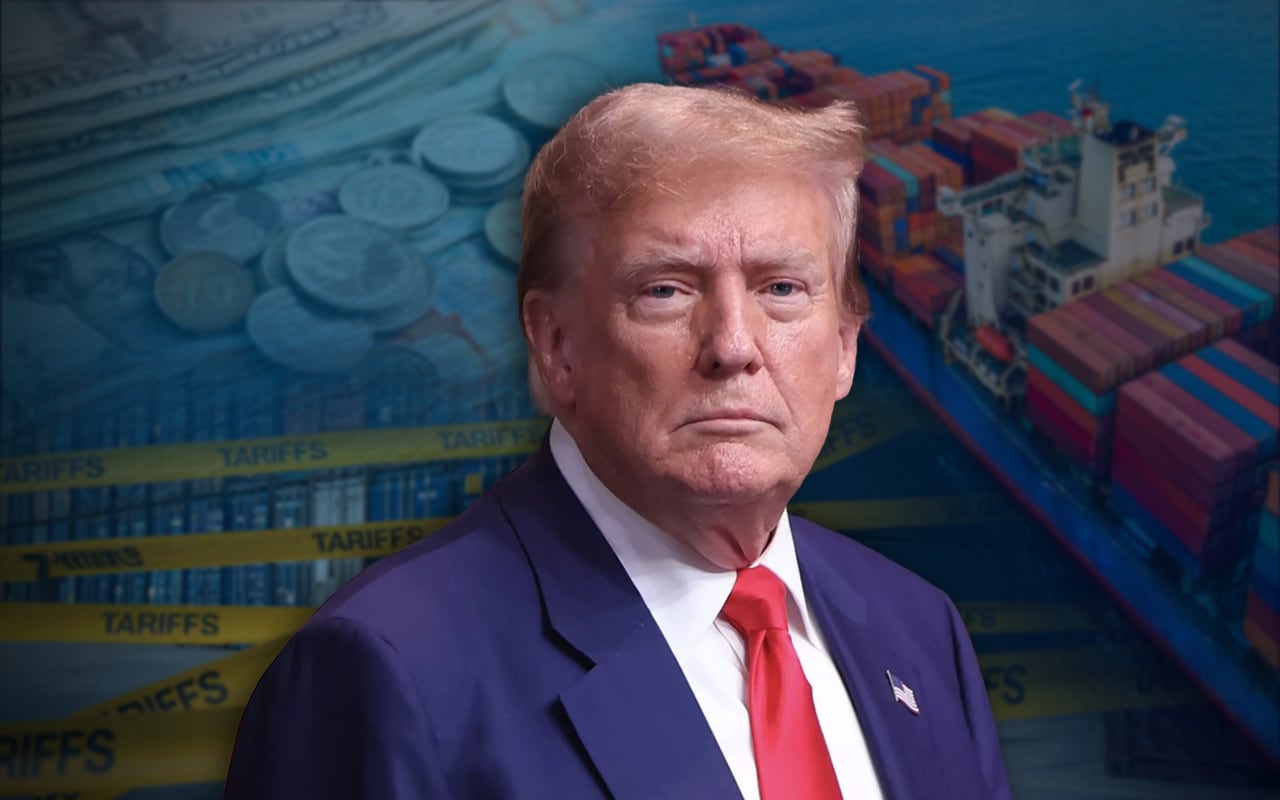
United States President Donald Trump on Tuesday continued his tirade against India, accusing the country of unfairly benefitting from the bilateral trade ties so far.
Trump, while responding to a media query on the tariffs imposed against India, said, "We're getting along with India very well... But for many years it was a one-sided relationship. India was charging us tremendous tariffs, which was about the highest in the world."
"We weren't doing much business with India, but India was doing much business with us because we were not charging them. Foolishly, we weren't charging them," he added.
This allowed India to export all that they made to the US, while American goods could not make its way to the Indian market, Trump said. "We would not send in anything because they were charging us 100% tariffs."
"Harley-Davidson couldn't sell in India": #Trump speaks of US' one-sided relationship with #India until he came along.
September 3, 2025
Read: https://t.co/jqbJ49tjrV pic.twitter.com/nqjO9HwEPDThe US, last month, imposed cumulative levies of 50% on India. This includes so-called reciprocal tariff of 25%, and an additional 25% levy to "penalise" India for its continued purchase of Russian crude oil.
Even as Trump continues to blame India for lopsided bilateral trade ties, it has a significantly higher trade deficit with countries like China and Vietnam. As per US Census Bureau data, the country's trade deficit with India stood at $45.8 billion in 2024, whereas the same with China stood at $295.5 billion, and Vietnam at $123.5 billion.
However, Vietnam faces a much lower tariff of 20%—as per the trade deal with the US announced in July—and China, which is still negotiating a trade pact, faces 30% tariffs.
Trump, while justifying his tariff action against India during the Oval Office address, cited the example of Harley Davidson. "There was a 200% tariff on a motorcycle. So what happens? Harley Davidson went to India and built a motorcycle plant, and now they don't have to pay tariffs, same thing as us," he said.
Notably, India used to levy a custom duty of 50% on import of motorcycles with high engine capacity. This was lowered to 40% in the Union Budget announced in February this year.
India and the US, despite the tariff tensions, are locked in negotiations to hammer out a trade pact. The last round of discussions was held in July in Washington, and the subsequent round of talks were to take place in August-end in New Delhi. However, the talks were delayed with further details yet to emerge.
Union Commerce Minister Piyush Goyal, while speaking at a public event in Mumbai on Tuesday, said the trade deal with the US could be concluded by this fall.
"I do hope that things will get back on track soon and we will conclude a bilateral trade agreement by the fall, November or so, as was discussed by our two leaders in February," Goyal said at the Annual Global Investor Conference 2025 in Mumbai.

-
Unhedged Position: Can India See An Indonesia-Style Time Correction?

The Nifty is trading below levels it first clocked in 2024. Is there, then, as I have suggested in the headline, potential that the current time correction drags on painfully for the next three-five, even ten years?
-
Navigating Friction And Energy Realities: An Analysis Of Marco Rubio's October Visit To India
Occurring at a critical juncture marked by stalled trade negotiations and escalating geopolitical pressures over global energy supplies, the visit offers a profound window into modern US-India relations.
-
India Exports Capital. Why Not Export Trusteeship?
The big question, then, is whether India can build an institution that global borrowers, investors, banks, and lawyers can trust, even without an Indian connection.
-
France's Economy & Politics Are In Crisis | The Reason Why
Let's look at how the French economy and politics evolved under Nicolas Sarkozy, Franois Hollande and Emmanuel Macron.
-
You May Inherit The Business. You Must Earn Its Credibility.
Succession tests the founder's ability to share authority as much as it tests the next generation's readiness to assume it.
-
Signing Deals Is One Thing; Making Them Work Is Another | The Week In Whys
Sometimes, things don't turn out as planned. Indian companies have lost some bids to rivals, some projects won't produce until 2030.
-
FOMC Wall, PERM Suspension, Hospital Stocks | Talking Points This Week
A PERM suspension would directly affect green-card sponsorship rather than H-1B visas, so the near-term earnings impact could remain relatively limited. The key question is whether this marks a new phase in US scrutiny of Indian IT.
-
Everything, Everywhere, All At Once: Dalal Street's Week To Forget | Joining The Dots
Visa curbs, a Starlink spat and cancer drug caps: what connects this week's shocks for Indian markets
-
India Is Going Abroad For Critical Minerals. But It May Take Years To Pay Off | The Reason Why
Although India's steps are in the right direction, they remain modest compared with India's growing dependence.
-
When Everyone Has AI, What Gives You An Edge?
India's young workforce is entering an uncertain world of work where powerful AI tools are becoming widely accessible. The advantage will belong to those who combine deep expertise with digital fluency, and the distinctly human capabilities that technology cannot manufacture.









