

India Beats China To Become World's Largest Rice Producer: Agriculture Minister
Agri minister Chouhan said India’s rice production now exceeds China’s 145.28 million tonnes, calling the milestone “unprecedented”.



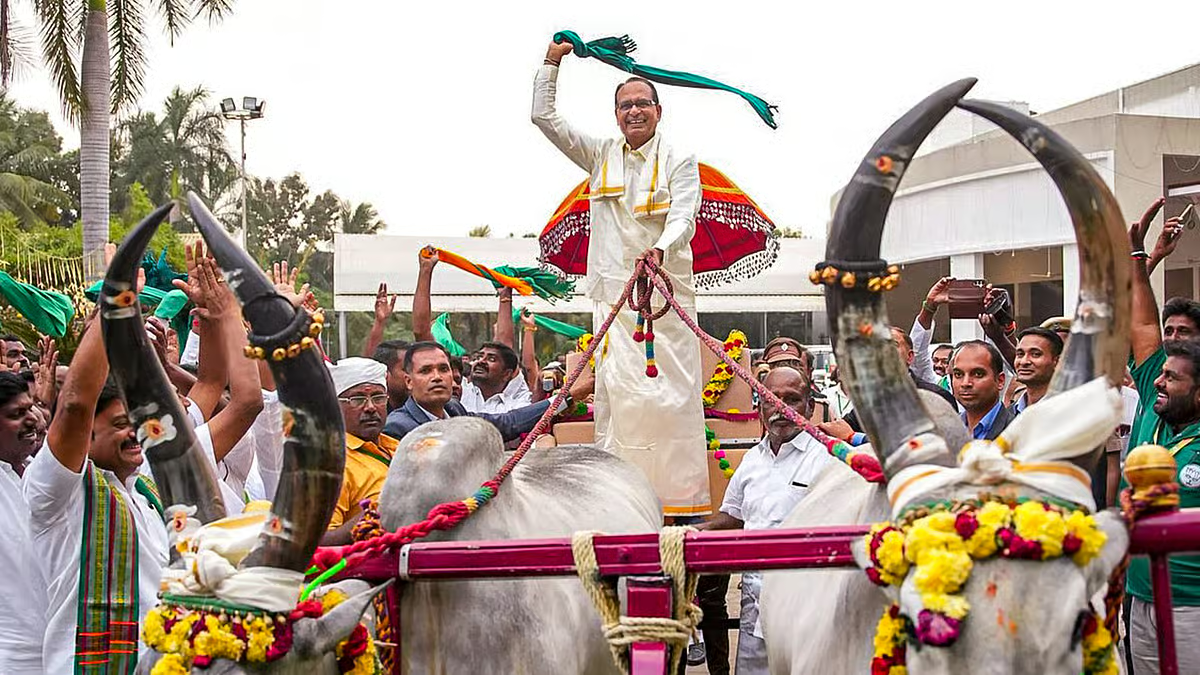
India has overtaken China to become the world’s largest rice producer, with output rising to 150.18 million tonnes, Union Agriculture Minister Shivraj Singh Chouhan announced on Sunday in New Delhi.
Speaking at the release of 184 new crop varieties developed by the Indian Council of Agricultural Research (ICAR), Chouhan said India’s rice production now exceeds China’s 145.28 million tonnes, calling the milestone “unprecedented”.
He said the country is increasingly supplying rice to overseas markets and has sufficient foodgrain stocks to safeguard the domestic food security.
The minister launched 184 improved, high-yielding seed varieties spanning 25 field crops, and instructed officials to ensure the new seeds reach farmers quickly.
He said India has made “great success” in developing high-performing seeds and described the latest releases as key to boosting crop output and farmers’ incomes.
According to an official statement, India has notified 7,205 crop varieties since the gazette notification process began in 1969, covering staples and commercial crops including rice, wheat, maize, sorghum, pulses, oilseeds and fibre crops. Chouhan said 3,236 high-yielding varieties have been approved under the Narendra Modi-led government, compared with 3,969 varieties notified between 1969 and 2014.
Chouhan argued that India’s agricultural journey has shifted dramatically, from food scarcity to what he described as becoming a global food provider. He urged scientists to intensify efforts to raise production of pulses and oilseeds, with the aim of achieving self-sufficiency.
The newly released set includes 122 cereal varieties, six pulses, 13 oilseeds, 11 fodder crops, six sugarcane varieties, 24 cotton varieties (including 22 Bt cotton), and one variety each of jute and tobacco. ICAR said the varieties have been developed by its institutes, state and central agricultural universities, and private seed companies, and are designed to be climate-resilient, high-yielding, and resistant to major pests and diseases.
Agriculture Secretary Devesh Chaturvedi stated that seed multiplication rates have been increased by 1.5 to 2 times to enhance availability, with national and state seed corporations working to supply quality seeds at affordable prices.