Worldwide Recession Likely In 2023: Davos Summit Survey
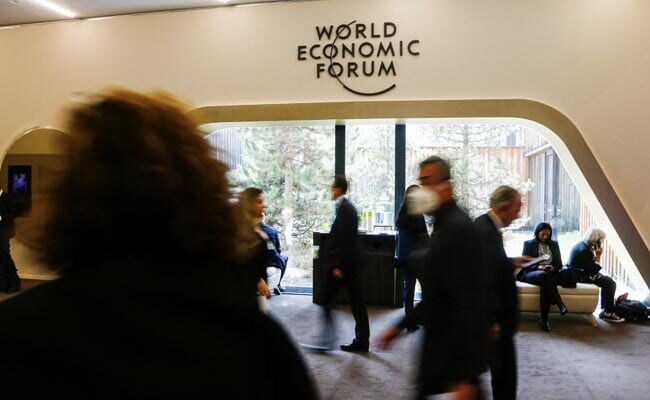
A global recession is likely in 2023, but pressures on food, energy and inflation may be peaking, the World Economic Forum said on Monday in its Chief Economists Outlook survey.
At the same time, some economies in the South Asia region, including Bangladesh and India, may benefit from global trends such as a diversification of manufacturing supply chains away from China, the report said.
The WEF said globally businesses are expected to cut costs significantly in response to economic headwinds, but chief economists are optimistic about inflation and strong balance sheets.
A majority of the World Economic Forum's Community of Chief Economists expect to see geopolitical tensions continuing to shape the global economy, and anticipate further monetary tightening in the United States and Europe.
Almost two-thirds of chief economists believe a global recession is likely in 2023; of which 18 per cent consider it extremely likely - more than twice as many as in the previous survey conducted in September 2022.
A third of respondents consider a global recession to be unlikely this year. There is, however, a strong consensus that the prospects for growth in 2023 are bleak, especially in Europe and the US.
All of the chief economists surveyed expect weak or very weak growth in 2023 in Europe, while 91 per cent expect weak or very weak growth in the US. In China, expectations of growth are polarised, with respondents almost evenly split between those who expect weak or strong growth.
On inflation, the chief economists see significant variation across regions, with the proportion expecting high inflation in 2023, ranging from just 5 per cent for China to 57 per cent for Europe.
"With two-thirds of chief economists expecting a world-wide recession in 2023, the global economy is in a precarious position. The current high inflation, low growth, high debt and high fragmentation environment reduces incentives for the investments needed to get back to growth and raise living standards for the world's most vulnerable," WEF Managing Director Saadia Zahidi said.
"Leaders must look beyond today's crises to invest in food and energy innovation, education and skills development, and in job-creating, high-potential markets of tomorrow. There is no time to lose," she added.
More broadly, the chief economists expect the global landscape to remain challenging for businesses - 100 per cent of respondents expect global geopolitical trends to continue redrawing the map of global economic activity along new geopolitical fissures and fault lines.
This wider economic shift will likely reverberate through trade, investment, labour and technology flows, creating myriad challenges and opportunities for business. One positive signal is that supply chain disruptions are not expected to cause a significant drag on business activity in 2023.
(Except for the headline, this story has not been edited by NDTV staff and is published from a syndicated feed.)

-
The More Food Turns Into Fuel, The Harder It Is To Read Agricultural Markets | The Reason Why

A policy designed to reduce dependence on imported fuel can create new pressures elsewhere in the food economy.
-
Your iPhone Costs 12 Grams Of Gold, A Car About 100. What Does Your Life Weigh?
Measured in rupees, almost everything looks more expensive than it did a generation ago. Measured in grams of gold, a lot of it has become cheaper.
-
Gold Is Rs 22,000 Cheaper Than A Month Ago. Should You Buy Amid The Wedding Season?
Gold's potential slide to $3,500 could save around Rs 4,700 per 10 grams, but a soft inflation print could just as easily push prices back up. One way to split the risk is to buy in parts, some now and the rest after the Fed's Dec. 9 decision.
-
AI Agents Are Gaining Power. Who Governs Them?
Artificial intelligence agents promise to transform productivity by moving machines from assisting decisions to executing them. But as organisations delegate greater authority to these AI-agents, they must first establish who controls that authority and who remains accountable when things go wrong.
-
Why Swapping Your Old Gold Can Trigger A Rs 5 Lakh Tax Bill, And How You Can Avoid It Legally
Swapping old gold for new is taxed as a sale and a fresh purchase. Getting your own gold remade can cut most of that bill, though it has its own costs.
-
The AI Trade is Done. The Real Opportunity for Investors Starts in 2027 | Unhedged Position
As pureplay AI stocks plunge and circular, capex-led financing unwinds, 2027 is set to be a year of reckoning for AI companies. Yet the bust clears the way for a better opportunity for investors in 2027 -- shifting the spotlight from AI builders to the companies using AI.
-
Leadership As Mission: Why The Age Of AI Demands More Human Leadership
Debjani Ghosh examines how AI is changing leadership, arguing that its success must be measured by its impact on people and the accountability of those guiding its use.
-
We May Need Another Tukaram Mundhe To Fight Air Pollution | The Reason Why
Developers may install basic measures such as sprinklers and green nets, resume work, and continue violating rules when this equipment stops working.
-
Extracting Value From Battery Scrap Could Be Challenging For India | The Reason Why
A discarded lithium-ion battery still contains valuable materials such as lithium, nickel and cobalt. These can be recovered and reused. When such batteries are crushed and shredded, they produce a dark powder called black mass.
-
One El Nino, India Can Handle. Two Could Break The Granary
India's grain stocks can absorb one bad year, but a second El Nino could drain the buffer in two to three years, economists say.









