Why India Is Falling Short Of Its Battery Storage Target
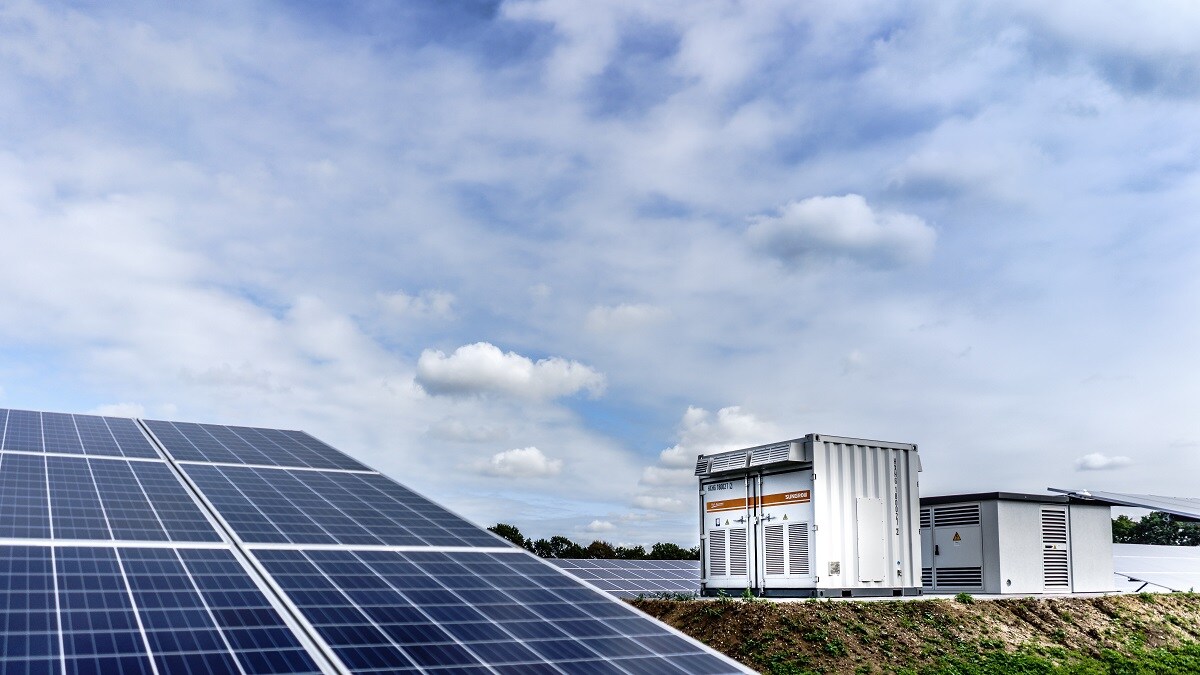
India may struggle to meet its renewable energy target as it is falling short in its annual battery energy storage capacity because of higher tariffs on integrated renewable projects and an import duty on batteries.
The country's renewable energy target of 500 gigawatts by 2030 entails development of battery energy storage systems of over 40 GW to make intermittent renewable power stable and balance the grid.
While this will require 5 GW of annual battery energy storage systems capacity for the next eight years, India falls short by 4.5 GW for 2022—with a mere 500 megawatt installed capacity at present.
Higher tariffs for battery integrated solar and hybrid projects, easy availability of banking or grid storage—where surplus power produced is supplied on the grid with flexibility to sell later at a fixed price—and higher import duty on batteries have turned out to be hurdles for large-scale adoption.
Higher tariffs can only be viable for specific projects as financially weak discoms are not in a position to buy the high-cost power, according to Shubhra Mohanka, director of Gautam Solar, a manufacturer of solar panels and provider of battery storage systems.
"It will be asking too much from financially weak power distribution companies with huge outstanding dues to renewable companies, especially when renewable tariffs are comparatively cheaper to thermal power."
Various kinds of regulatory changes may be needed to boost energy storage deployment in India.
Rules are required to ensure reliability and safety of renewable power-based grid, which will automatically support energy storage deployment, Subhamay Ganguly, assistant general manager–energy storage and innovation, Amp Energy India, told BQ Prime.
It will include levying higher time-of-day tariffs for commercial and industrial consumers and developing an active ancillary services market, he said.
"At present, the peak tariff in India is 15-20% higher than off-peak tariffs, while in other markets including the U.S., Australia and the U.K., this difference can be as high as 200-400%. The ancillary services market should also be opened up further."
Small-scale battery energy storage capacity coupled with small distributed solar plants are ideal applications as the levelised cost of BESS is still high compared to standard grid connected systems.
"The small-scale BESS would allow penetration of stable power to the remotest parts of the country," said Puneet Goyal, founder of SunAlpha Energy. “In flattening the demand and supply curves, battery energy storage capacity will play a vital role."
Incentivising the industry by removing import duty on storage implementation could also enable greater adoption.
It is critical to focus on cost optimisation of BESS integrated renewable energy solutions, according to a senior executive from Amplus Solar, who spoke on condition of anonymity.
Domestic manufacturing is at a nascent stage and reducing taxes on batteries will boost adoption of such systems for renewable energy projects in India, the senior official said.
Ganguly of Amp Energy said, "If we improve the supply of raw materials and invent new battery chemistry technology, it can solve the problem of high cost batteries and low life cycle. Also, we need to spread awareness across the industry about use-cases and requirements for energy storage."

-
Opinion | India at 38: From Innovation Overperformer to Innovation Powerhouse

India now has 453 VC-backed deep science startups, 18 of them late-stage, after 117 percent growth since 2020. Laurus Labs, at USD 9.3 billion, is the most valuable deep science company in any middle-income economy outside China.
-
Navigating Energy Crossroads: S Jaishankar's Call For Diversified Supply Chains At G20 Ministerial Meeting
As geopolitical fault lines continue to test maritime trade routes and commodity flows, Jaishankar's message remains pertinent: true economic resilience requires open markets, protected transit lines, and a genuine commitment to multilateral cooperation rather than coercion.
-
Indians Are Travelling, But Not Every Journey Is A Holiday | The Week In Whys
Pilgrims, patients and working women are the real travellers, and the system hasn't quite caught up with them.
-
Getting To Work Costs Women More | The Reason Why
It is not just about women paying more than men. It is about women paying much more in cities than in villages.
-
AI Bias In Investing Cannot Be Eliminated, But It Can Be Governed
Framing is a particularly important example as identical financial information presented in terms of gains rather than losses can lead an LLM to reach a different assessment.
-
Joining The Dots | Dark Skies, Steady Diya: Why Hope Holds This Diwali
With war, a weak rupee and foreign outflows weighing on sentiment, policymakers at the NDTV World Summit and market veterans at NDTV Profit Ignite: Diwali Edition offered the same advice: stay invested and filter out the noise.
-
The Curious Case of Equitas Small Finance Bank And A CEO Who Quit For Stock
PN Vasudevan believes persistent investor concerns over a perceived conflict of interest had become a governance overhang on Equitas Small Finance Bank's stock, even as the lender improved profitability and asset quality.
-
Talking Points This Week: AI Cash Burn, A Tiger Comeback And An India That Still Finds Its Own Path
India is not immune to higher oil or tighter global liquidity, yet its earnings base is broader, its domestic policy levers are still available.
-
Foreign Investors Own Half Of HDFC Bank and ICICI Bank. An LTCG Cut Could Matter Most Here
Foreign portfolio investors have US$115 billion parked in HDFC Bank, ICICI Bank. If the government cuts long-term capital gains tax, Jefferies says returning foreign money could land here first.










