Starbucks Records Slowest Growth Since Pandemic In India Last Fiscal
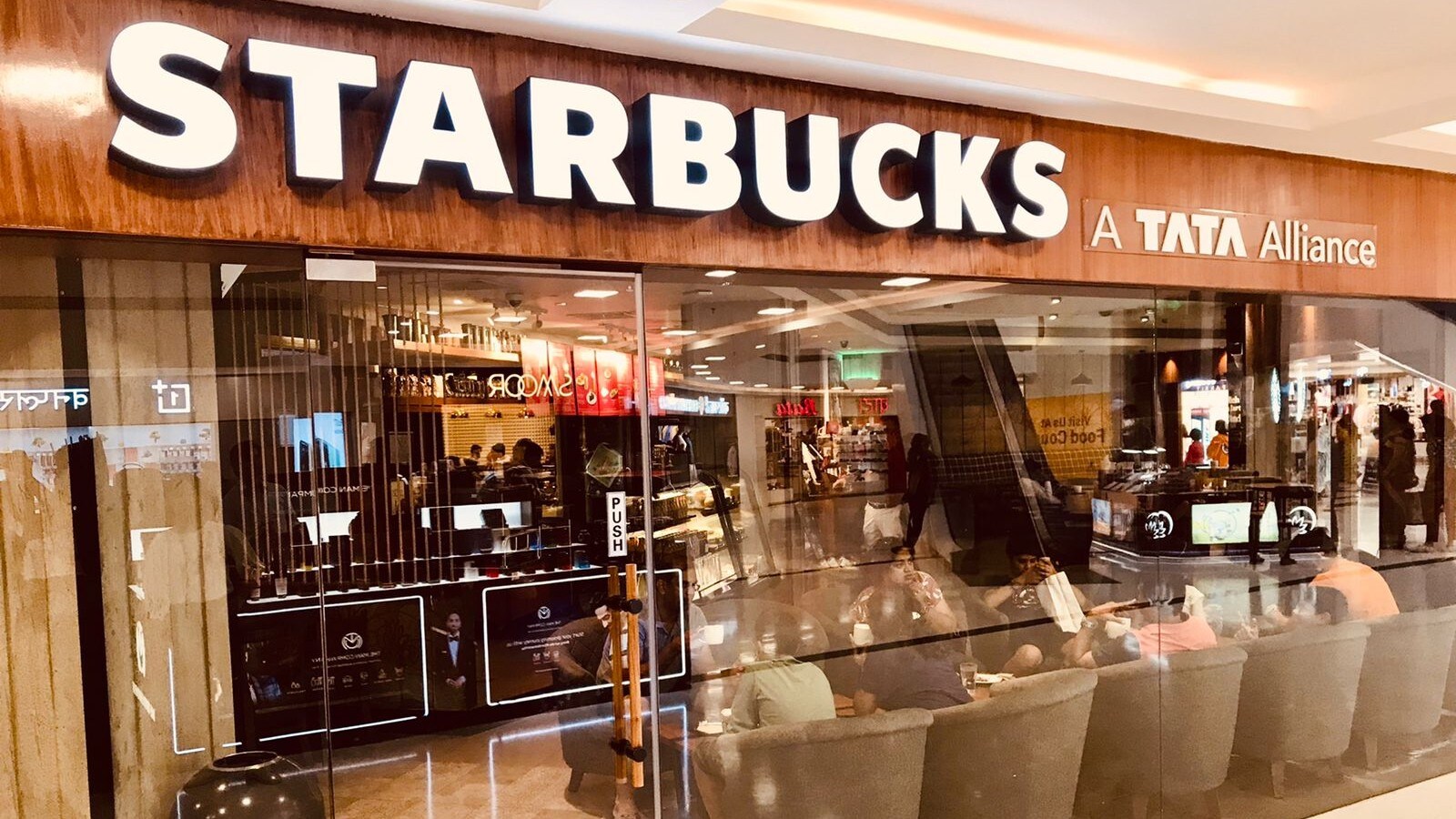
Starbucks Corp., the world's largest coffee chain, posted its slowest sales growth in India since the pandemic. The coffee giant is struggling to bring in as much business as it has in the past as consumers reduce their visits even as it prepares for ambitious store expansion in a tea-drinking nation.
The India unit formed in partnership with the Tata Group clocked net sales of Rs 1,218 crore, a growth of 12%, during the year ended March 2024, according to Tata Consumer Products Ltd.'s latest investor presentation.
The Seattle-based retailer experienced a compounded annual growth rate of 21.89% between FY17 and FY23 in the world's most populous nation. The only exception to this trend was in FY21, when sales plunged by 33% as shops were forced to shut down due to the impact of Covid-19.
"Tata Starbucks had a subdued quarter given the overall trends that we're seeing in the QSR [quick service restaurants] business," said Sunil D'Souza, managing director and chief executive officer at Tata Consumer Products.
He, however, indicated that March was an improvement over February, and April was even better than March. "So, we see a better trend right now, and we remain focused on the larger India opportunity."
Tata Starbucks Pvt. took 11 years to scale its operations to a revenue of over Rs 1,000 crore. It continues to be a loss-making unit. In the year-ended March 2024, Tata Starbucks' losses widened to Rs 82 crore from Rs 25 crore a year ago, according to filings with the Registrar of Companies.
The coffee chain has seen its popularity take a major hit over the last two quarters, ending in March and December, with a meagre 7% increase in sales during each period. This is a marked shift from its historical track record of double-digit growth, suggesting that consumers are now looking for more budget-friendly cafe experiences.
"Consumers have turned slightly more conservative with their spends, which is affecting both the frequency and value of transactions," according to Devangshu Dutta, head of retail consultancy Third Eyesight.
According to him, new store openings rather than an increase in sales at the existing ones could drive growth.
The other reason is that the coffee market is more competitive today, with most local peers selling at price points lower than Starbucks, Dutta said.
Starbucks competes with Bengaluru-based Cafe Coffee Day and foreign entrant Barista, among others, in the country's $400 million market. It also faces competition from private equity-backed Third Wave and Blue Tokai, which have opened about 200 stores between them in the last three years.
Since opening its first cafe in October 2012, Tata Starbucks' store count has grown to 421, implying that on average, each outlet generated roughly Rs 3 crore in revenue from coffee, snacks, and merchandise sales in FY24.

Source: TCPL investor's presentation.
The dwindling sales come at a time when the company plans to open 1,000 cafes in India. To meet the target, it seeks to open one new store every three days.
Starbucks added 29 net new stores between January and March, achieving a record of 95 stores opening in a year, according to the presentation.
The coffee chain had earlier said it plans to enter tier-2 and tier-3 cities in the country and increase the number of its drive-through, airport-based and 24-hour cafes. It also aims to double its headcount to 8,600.
To lure consumers back after a rough start to the year, the coffee giant is launching new products like a boba-inspired summer beverage.
India, the heat is on, but so are we!
May 3, 2024
The coolest summer party kicks off today, so get ready for refreshing sips, celeb appearances & fun with your favourite influencers. ☀️😎#RSVPToSummer“Over the past 11 years, the India market has grown to become one of Starbucks' fastest-growing markets in the world," Laxman Narasimhan, chief executive officer, Starbucks, said in a statement during his India visit earlier this year. "With a growing middle class, we are proud to help cultivate the evolving coffee culture while honouring its rich heritage.”
Starbucks faces challenges not only in India but also globally. A disastrous fourth quarter that saw a slowdown in store visits promoted Starbucks Corp. to lower its expectations for its full-year sales and profit. Its revenue for the January–March period dropped 2%, the first since the end of 2020.

-
Navigating Energy Crossroads: S Jaishankar's Call For Diversified Supply Chains At G20 Ministerial Meeting

As geopolitical fault lines continue to test maritime trade routes and commodity flows, Jaishankar's message remains pertinent: true economic resilience requires open markets, protected transit lines, and a genuine commitment to multilateral cooperation rather than coercion.
-
Indians Are Travelling, But Not Every Journey Is A Holiday | The Week In Whys
Pilgrims, patients and working women are the real travellers, and the system hasn't quite caught up with them.
-
Getting To Work Costs Women More | The Reason Why
It is not just about women paying more than men. It is about women paying much more in cities than in villages.
-
AI Bias In Investing Cannot Be Eliminated, But It Can Be Governed
Framing is a particularly important example as identical financial information presented in terms of gains rather than losses can lead an LLM to reach a different assessment.
-
Joining The Dots | Dark Skies, Steady Diya: Why Hope Holds This Diwali
With war, a weak rupee and foreign outflows weighing on sentiment, policymakers at the NDTV World Summit and market veterans at NDTV Profit Ignite: Diwali Edition offered the same advice: stay invested and filter out the noise.
-
The Curious Case of Equitas Small Finance Bank And A CEO Who Quit For Stock
PN Vasudevan believes persistent investor concerns over a perceived conflict of interest had become a governance overhang on Equitas Small Finance Bank's stock, even as the lender improved profitability and asset quality.
-
Talking Points This Week: AI Cash Burn, A Tiger Comeback And An India That Still Finds Its Own Path
India is not immune to higher oil or tighter global liquidity, yet its earnings base is broader, its domestic policy levers are still available.
-
Foreign Investors Own Half Of HDFC Bank and ICICI Bank. An LTCG Cut Could Matter Most Here
Foreign portfolio investors have US$115 billion parked in HDFC Bank, ICICI Bank. If the government cuts long-term capital gains tax, Jefferies says returning foreign money could land here first.
-
'Never Seen This Level Of Negativity': Sandeep Tandon Says The Next Rally May Be Closer Than You Think
Veteran investor Sandeep Tandon says foreign selling is easing, large-caps are due a comeback and mid-caps are crowded, while he turns positive on gold, power and pharma this Diwali.
-
Indians Stay With Family, Not In Hotels | The Reason Why
India still lacks enough clean, reliable and affordable hotels for budget-conscious travellers.










