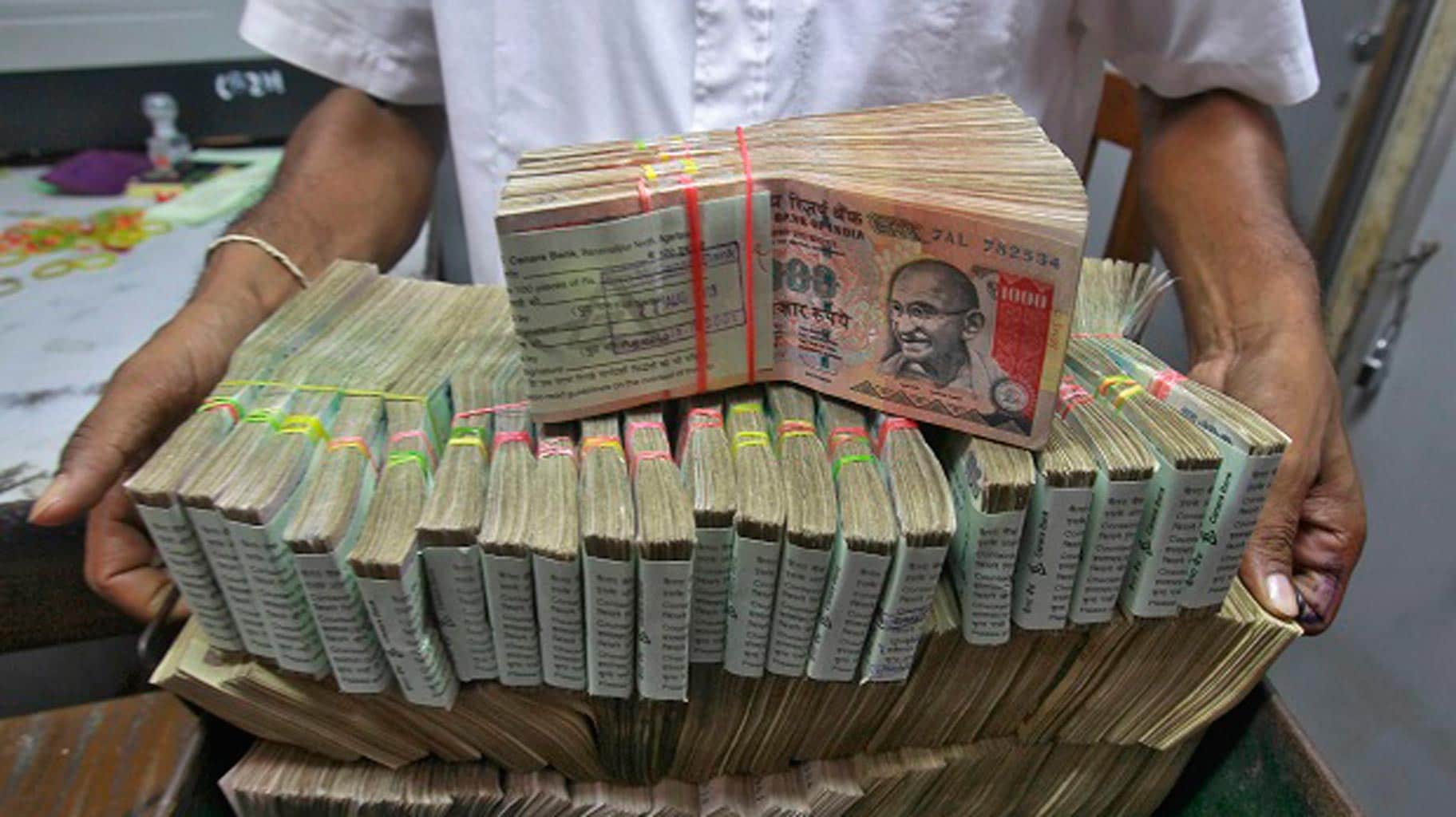
Providing relief to citizens as well as business owners, the Reserve Bank of India (RBI), on Monday, decided to do away with cash withdrawal limits placed on current accounts, overdraft accounts and cash credit accounts with immediate effect. The central bank said the decision was taken post a review of the “pace of remonetisation”.
Withdrawal restrictions had been put in place after the government's decision to withdraw Rs 500 and Rs 1000 notes from circulation on November 8. Since then, as new notes have replaced the scrapped currency, withdrawal restrictions have been slowly eased.
Until today, the limit for withdrawals from current accounts was set at Rs 1 lakh per week.
Limits On Savings Account Remain; ATMs Freed Up
The limits on withdrawals from savings accounts, however, have been kept in place for now.“The limits on Savings Bank accounts will continue for the present and are under consideration for withdrawal in the near future,” the RBI said in a statement.
Currently, savings account have a withdrawal limit of Rs 24,000 per week per account. This limit is likely to also kick in when customers try to withdraw cash from the ATMs starting Feb 1.
In the case of ATM withdrawals, the RBI has lifted the restriction of withdrawals only upto Rs 10,000 per day per card. This, however, is supplemented by a caveat that banks shall remain free to place their own limits depending upon the cash situation.
Limits vide the circulars cited above placed on cash withdrawals from ATMs stand withdrawn from February 01, 2017. However, banks may, at their discretion, have their own operating limits as was the case before November 8, 2016.Reserve Bank of India
Sustain Move Towards Digital Payments
Moreover, the central bank urged banks to help the economy move away from cash and towards the digitisation of payments. The government has been urging citizens to move to digital payments in the aftermath of demonetisation.
Even as the RBI has not released new data on currency printed in recent weeks, it is expected that the currency-to-GDP ratio will be brought down from the earlier levels of nearly 12 percent.
As per the last available RBI data, currency in circulation stood at Rs 9.87 lakh crore as on January 20. Before the demonetisation, Rs 17.87 lakh crore in currency was in circulation.
According to January 27 report from Nomura Global Markets Research, currencu in circulation has risen for two straight weeks to 6.5 percent of GDP as of 20 January. This suggests that remonetisation is progressing well, said the report.
At the current pace, we believe the currency-to-GDP ratio will rise to ~9 percent by end-March. In our view, this will be sufficient to stabilise activity since some part of the earlier cash was hoarded and partly due to a larger digital footprint.Nomura Global Markets Research
Essential Business Intelligence, Continuous LIVE TV, Sharp Market Insights, Practical Personal Finance Advice and Latest Stories — On NDTV Profit.