Scan to Download
Banks have been cautious in participating in RBI's variable rate auctions, so much so that the lenders are cutting their deposit and lending rates.
"Bank are free to decide their rates, but if they are doing it in anticipation of action taken by RBI, that would be wrong," the central bank says. Banks are cautious ahead of imminent advance tax outflows, it says.
The Reserve Bank of India has received comments from all stakeholders on expected credit loss guidelines.
"It's not correct that June 30 is the date when expected credit loss guidelines will be implemented. There is no need for panic on implementation of expected credit loss guidelines," RBI says.
"We are mindful of the fact that banks will need time to apply expected credit loss guidelines," the central bank says.
The Reserve Bank of India has so far received Rs 2,000 notes amounting to Rs 1.8 lakh crore, Governor Shaktikanta Das says. As on March 31, around Rs 3.62 lakh crore of Rs 2,000 notes was in circulation.
Around 85% of the notes received so far have been in deposits.
The Reserve Bank of India has decided to make the QR code associated with its central bank digital currency (CBDC) interoperable with the unified payments interface (UPI). That's aimed at achieving one million users in the shortest possible time.
RBI Governor Shaktikanta Das has provided a snapshot of the latest monetary policy, in six points:
RBI MPC decided to pause on rate action
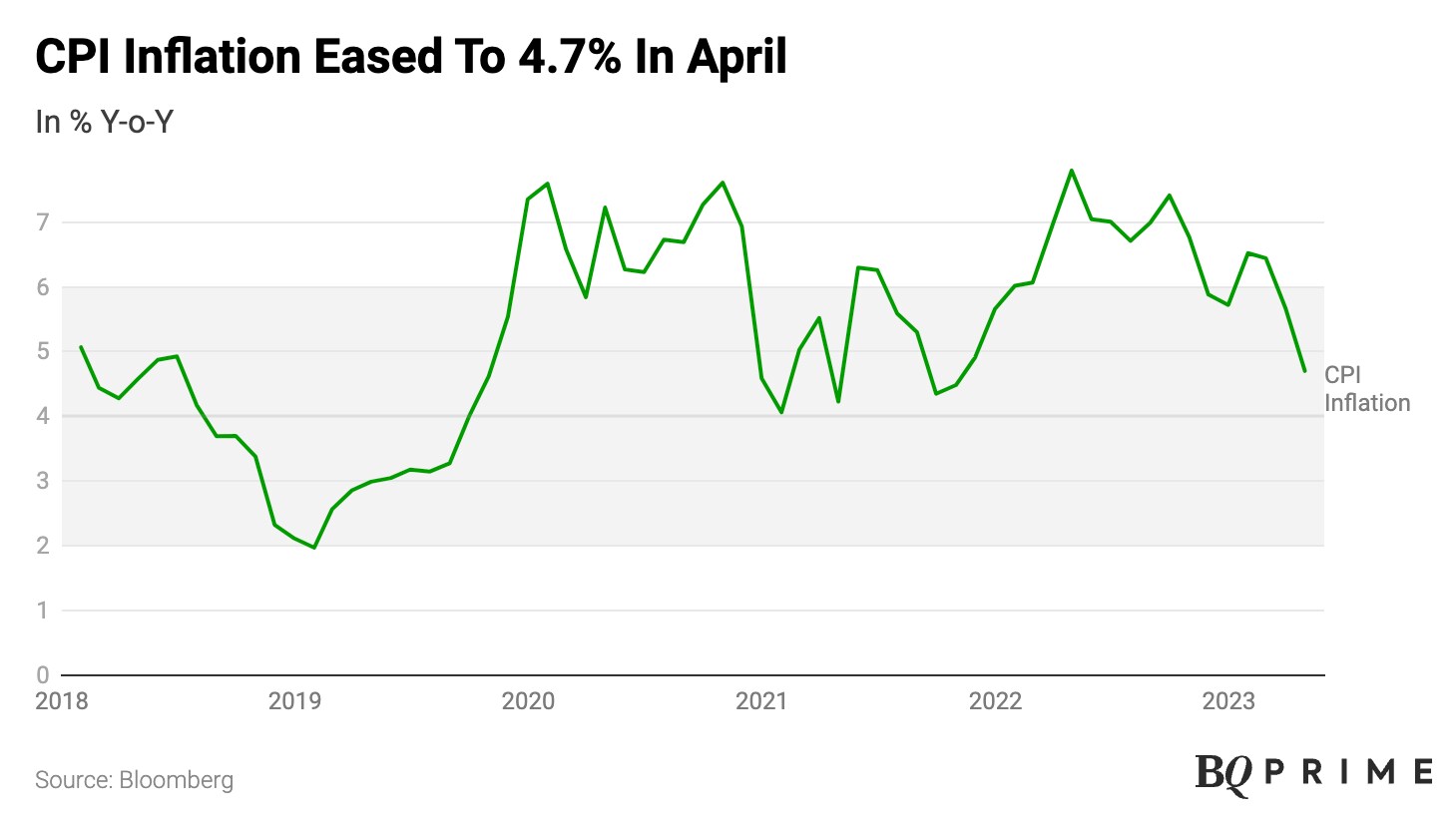
Headline inflation has eased, including all components
Indian economy presents story of resilience. The prospects for growth steadily improving, becoming broad-based.
Healthy twin balance sheets augur well for GDP growth.
External sector eminently viable as reflected in current account situation, stability of Rupee, build up of forex reserves.
RBI’s liquidity management will be nimble, two-sided.
India's retail infaltion needs to move towards the RBI's primary target of 4%, Governor Shaktikanta Das says.
"We have made good progress in containing inflation, supporting growth, and maintaining financial sector stability," Das says. "India’s growth has bounced back, headline inflation is easing. This gives us confidence that our policies are on the right track."
The last leg of the journey is always the toughest, he says.
"We need to ensure that long-term inflation remains firmly anchored. RBI is watchful, proactive in dealing with emerging risks to price and financial stability."
The Reserve Bank of India will soon issue new guidelines for handling of stressed loans, Governor Shaktikanta Das says.
Guidelines to be issued for settlements and write-offs.
Guidelines to be issued for default loss guarantee for digital lending.
Timeframe for achieving priority sector lending targets extended by two years for urban cooperative banks.
India's current account deficit should be eminently manageable in FY24, RBI Governor Shaktikanta Das says.
As on June 6, 2023, Net FPI inflows stood at $8.4 billion, as against net outflows in preceding two years. Net FDI flows were $28 billion in FY23 vs $38.6 billion in the previous year.
"Preliminary data shows that FDI inflows have improved in FY24," Das says. "India's forex reserves stood at $595.1 billion, as on June 2."
The rupee will remain stable in the current financial year, he says.
Here's what RBI Governor Das said on banking liquidity:
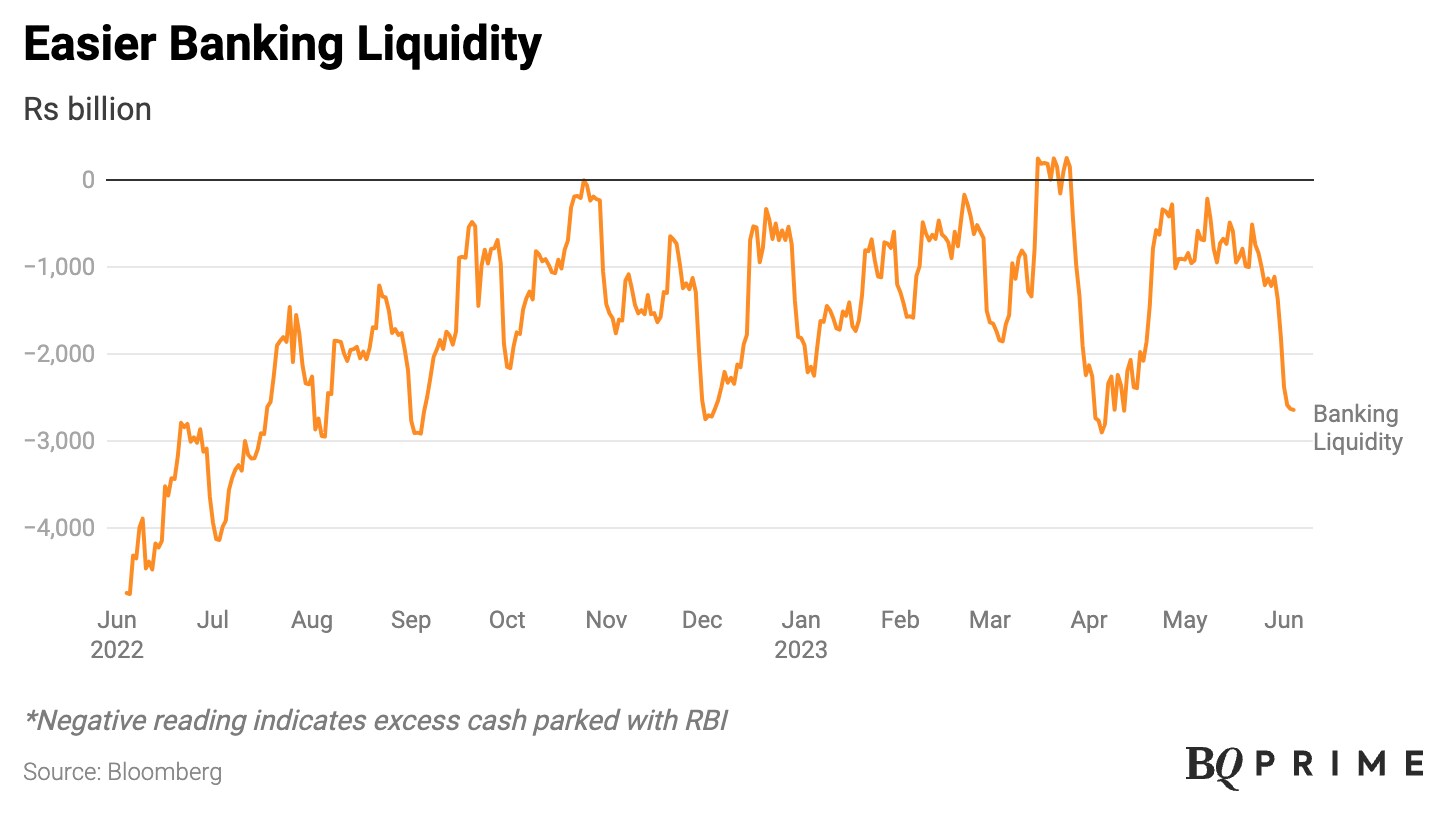
Prevalence of surplus liquidity even as some banks access MSF shows a skewed liquidity scenario.
The VRRR auctions were conducted recently considering the surplus of liquidity.
The response from the banks has been fairly cautious for these VRRR auctions.
Short-term rates had spiked recently but have since come down to below repo levels.
Long-term rates have remained broadly stable, leading to sharp compression of term spreads in recent periods.
The Reserve Bank of India sees India's retail inflation rate at 5.1% in the fiscal ending March 31, 2024, Governor Shaktikanta Das says.
Q1 inflation seen at 4.6%, Q2 at 5.2%, Q3 at 5.4% and Q4 at 5.2%.
According to Das,
The risks to near-term inflation have moderated, but pressures remain during second half of FY24.
Inflation expectations for households for three months to one year have moderated by 60-70 basis points.
Headline inflation remains above the target and remaining within the tolerance band is not enough.
Uncertainty remains with regard to the spatial distribution of the annual monsoon, impact of El Nino
All categories of headline inflation witnessed easing of pressure. A durable disinflation in core component would be critical for sustained alignment of headline inflation with target.
India is likely to clock a real GDP growth rate of 6.5% in FY24, Das says.
The Q1 GDP growth rate is seen at 8%, Q2 GDP growth at 6.5%, Q3 at 6% and Q4 at 5.7%, with risks evenly balanced.
The IHS Markit Manufacturing has seen sustained expansion, rising to 58.7 in May. A print above 50 indicates expansion.
The high frequency indicators suggest services remain on expansionary trajectory, Das says. The higher rabi crop production, a likely normal monsoon, buoyancy in services should support household conditions.
"Given the healthy twin balance sheets, conditions are now favourable for capex cycle to gain momentum," Das says.
The demand conditions remains supportive of economic growth in Asia's third largest economy, RBI Governor Shaktikanta Das says.
India's real GDP growth rate stood at 7.2% in FY23, higher than estimated, as urban demand remained resilient.
Car sales, air passenger traffic and credit card usage have grown in double digits year-on-year in April. The rural demand is on a revival path with two- and three-wheeler sales robust, though tractor sales are still muted.
India's monetary policy committee has decided to remain focused on withdrawal of accommodation, RBI Governor Shaktikanta Das says.
The real policy rate continues to be positive, he says, as does the average liquidity in the banking system. The liquidity could increase further due to the withdrawal of Rs 2,000 notes from circulation.
India's headline retail inflation is still above target and expected to stay so in the fiscal ending March 31, 2024, RBI Governor Shaktikanta Das says.
"The pace of monetary tightening across economies has slowed in recent months, but uncertainty remains as inflations continues to rise," he says.
The full-year projected inflation is seen at just above 5%.
"The RBI will take monetary policy action as required to keep inflation expectations firmly anchored," Das says.
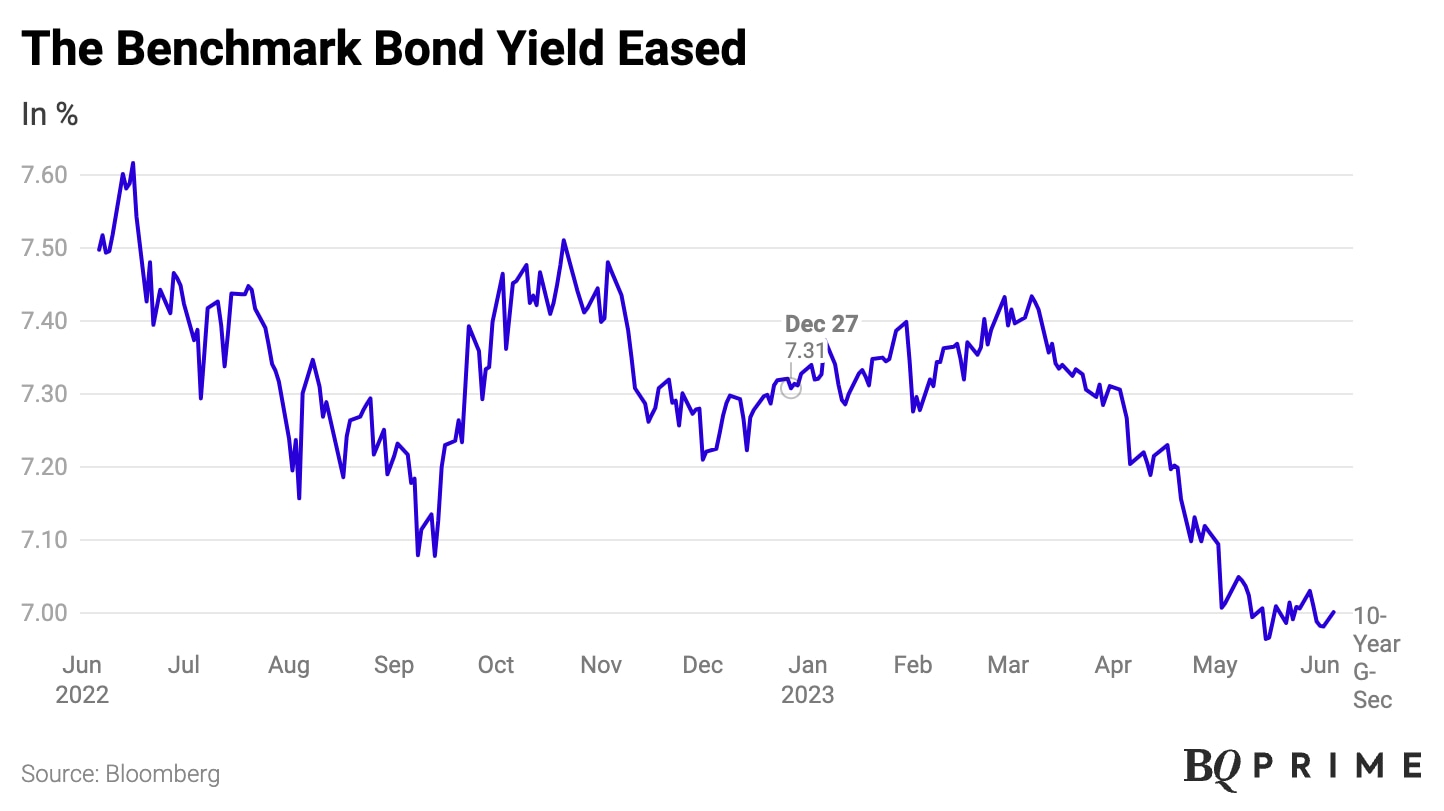
The Indian Rupee opened weak on Thursday, depreciating as much as 3 paise to Rs 82.58 against the US dollar. The local currency had closed at 82.55 on Wednesday. The bond yield, meanwhile, was flat at 6.99%.
Essential Business Intelligence, Continuous LIVE TV, Sharp Market Insights, Practical Personal Finance Advice and Latest Stories — On NDTV Profit.