Green Is Where The Money Is: Budget Expectations Of Renewable Energy Sector
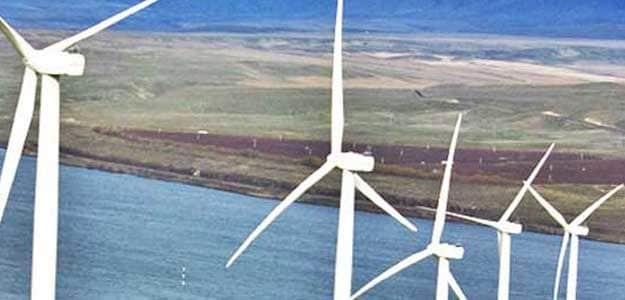
The world is fast gravitating towards renewable energy. From electric vehicles to solar cells, there is a realisation that excessive dependence on fossil fuels to power economies may not be sustainable in the longer run, making “green” the buzzword. India is also making efforts to reduce its dependence on fossil fuels and boost its green energy generation, launching projects to harness the power of wind, solar, and water.
When Finance Minister Nirmala Sitharaman presents the Union Budget 2022-23, companies will be eagerly watching if there are incentives to move towards greener technologies.
Industry body FICCI has sought tax relaxations and credit guarantees for companies operating in the renewable energy sector to accelerate technology adoption.
FICCI has said that in order to realise the objective of making India a green economy, an environment for rapid adoption of technology is required to make use of renewable energy. It mentioned China as an example, stating that the country provided free land, discounted power, and funding at a low-interest rate to companies to develop green technologies.
Others such as Taiwan, Malaysia, and Vietnam, too, emerged as centres of solar modules and components with the support of their government, FICCI added.
For tax-related concessions, it asked for extending the tax rate of 15 percent to companies investing in green technologies, and also sought full deductions towards investment or purchase of green technology assets. The second suggestion is expected to encourage firms to replace obsolete technology with newer and green options.
Another major recommendation of the industry body is to tap the residential sector for creating rooftop solar capacity. It said formulating a credit guarantee scheme will go a long way in making solar roofs attractive and mitigating risk factors. So far, most of the rooftop solar capacity has come from industrial, commercial, and institutional sectors.
Prime Minister Narendra Modi has often emphasised the need to make India a clean and green economy, most recently in his address to the World Economic Forum. At the World Economic Forum's (WEF) Davos Agenda 2022, PM Modi announced the “P3 (Pro-Planet People) initiative”, which highlights India's climate change commitments.
India is also leading the world in adopting solar energy through its flagship International Solar Alliance. The ISA's framework stresses delivering local benefits to all countries through collaborations and innovative financing instruments. The efforts seem to have started bearing fruits with sales of electric vehicles picking up late last year. Some studies have pegged the EV market in India to touch a whopping $206 billion by 2030. But this would also require a total investment of $180 billion in production and charging infrastructure.
India is aiming to generate 450GW of renewable energy by 2030. The last budget emphasised expanding domestic manufacturing for solar cells and panels and proposed to reduce dependence on imports. The production-linked incentive scheme for battery manufacturing was one example of this. Additionally, the National Hydrogen Mission was announced to help achieve a sustainable energy mix and support energy storage.

-
Foreign Investors Own Half Of HDFC Bank and ICICI Bank. An LTCG Cut Could Matter Most Here

Foreign portfolio investors have US$115 billion parked in HDFC Bank, ICICI Bank. If the government cuts long-term capital gains tax, Jefferies says returning foreign money could land here first.
-
'Never Seen This Level Of Negativity': Sandeep Tandon Says The Next Rally May Be Closer Than You Think
Veteran investor Sandeep Tandon says foreign selling is easing, large-caps are due a comeback and mid-caps are crowded, while he turns positive on gold, power and pharma this Diwali.
-
Indians Stay With Family, Not In Hotels | The Reason Why
India still lacks enough clean, reliable and affordable hotels for budget-conscious travellers.
-
The Economic Imperative: Analysing The Material Driving Force Behind India-Canada Strategic Reset
This economic complementarity is further reinforced by deep institutional investment ties and talent mobility, which form the bedrock of the bilateral framework.
-
Medicine Pricing: Where Must Profit Stop?
India must confront excessive margins, hidden incentives and regulatory gaps that threaten the integrity of medicine.
-
Why Amazon And Flipkart Are Struggling To Beat Meesho In India's Smaller Cities
With 274 million users and lowest-cost logistics, Meesho is defending its value commerce crown against giants like Amazon and Flipkart.
-
High US Salaries, No Green Card Certainty: The Financial Calculation Facing Indian H-1B Families
The suspension of PERM processing at eight technology employers does not cancel existing H-1B visas. What it does is force a question many Indian families have been avoiding: is the US salary worth tying your career and family plans to one employer?
-
Swiggy vs Eternal: Food Delivery's Two Rivals Are No Longer In The Same Race
Eternal is building a private AI assistant, dark.ai. Swiggy is still working out how to make Instamart pay, with an operating loss of Rs 895 crore in the July-September quarter while Blinkit stayed profitable.
-
Where You Live Shapes How You Get To Work | The Reason Why
Two-wheelers are the most popular way to get to work in India, accounting for nearly 43% of workplace commutes.
-
Unhedged Position: Can India See An Indonesia-Style Time Correction?
The Nifty is trading below levels it first clocked in 2024. Is there, then, as I have suggested in the headline, potential that the current time correction drags on painfully for the next three-five, even ten years?










