Indri And Amrut To Stranger & Sons: India's Premium Liquor Market On A High Before The Party Begins
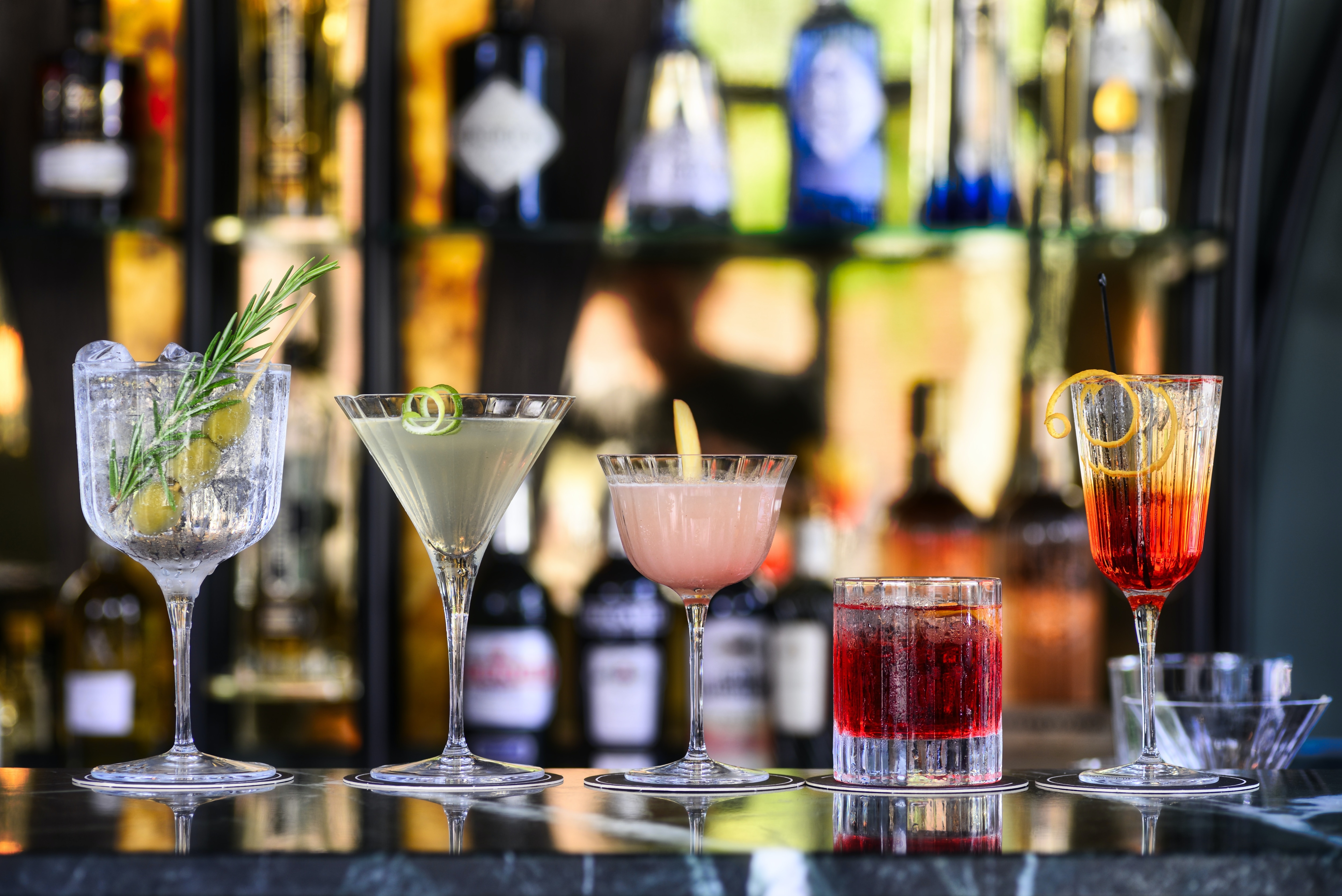
India's alcohol demand is set to spike as the Christmas and New Year party season kicks in. And spirits are already high for a swelling list of premium brands from the best-rated Indri and Amrut single malts to Somke Saffron Vodka.
Alcohol consumption is surging on demand for premium liquor—priced over Rs 1,000 for a 750 ml bottle. But the mainstay low-cost liquor market, contributing 75% of the volumes, is slowing.
The world's fastest-growing alcobev market, according to Statista, is estimated to cross consumption of 6.21-billion litres by 2024. Younger, well-travelled Indians with growing incomes are experimenting with newer upmarket brands, fuelling consumption.
Strong demand and premiumisation will help the organised liquor industry's revenue grow 12-13% this fiscal to about Rs 4.45 lakh crore, after a 15-16% jump in the previous year, Crisil estimates. According to the Confederation of Indian Alcoholic Beverage Companies, the category reported a remarkable 48% growth in FY23.
Crisil forecasts the premium segment to grow at over 20%, partly on a lower base. By contrast, the price-sensitive market of liquor priced below Rs 700 per 750 ml bottle is forecast to expand 5-7%.
The numbers lay bare the two-paced consumption in India, even as the economy grows at the fastest pace among large peers. While affluent Indians are buying more cars to luxury homes, demand is yet to fully recover from a prolonged pandemic- and inflation-induced slowdown at the bottom end.
Premium liquor is outpacing overall growth for Diageo Plc-owned United Spirits Ltd., the maker of Johnnie Walker scotch and Smirnoff vodka; Mansion House owner Globus Spirits Ltd. and Blue Lagoon gin producer Tilaknagar Industries Ltd.
A Flurry Of Whiskies, Gins And Vodkas
Whisky remains the most consumed premium alcohol, followed by gin, which witnessed a reversal in consumption trends, according to the Confederation of Indian Alcoholic Beverage Companies. So much so, that India in February 2023 overtook France as the biggest consumer of U.K.'s scotch whiskies. Local brands are catching up as well.
Indri Diwali Collector's Edition 2023, a peated single malt from Haryana-based Piccadilly Distilleries, was ranked the world's best at Whiskies of the World Award earlier this year. It joins the league of famous Indian names including Amrut, Paul John and Rampur No. 1 that now have a dedicated following worldwide. GianChand, a single malt launched by DeVANS last year, and Woodburns from Goa-based Fullarton Distilleries are other brands on this growing list.
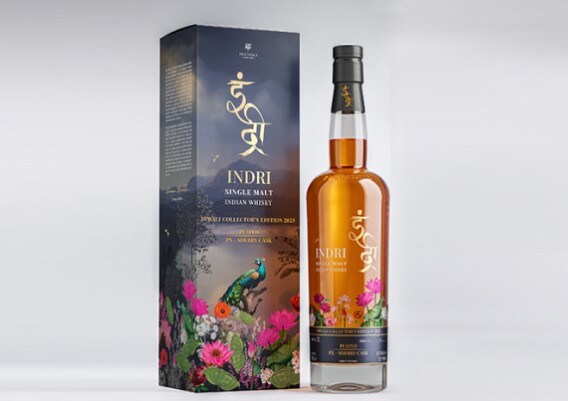
Indri Diwali Collector's Edition 2023. (Photo: Piccadilly Distilleries)
But it's not just the Indian whisky that is drawing fans. Piccadily's Camikara rum; Spaceman Spirits Lab Pvt.'s Samsara pink gin; Third Eye Distillery's Stranger & Sons gin; NV Distilleries & Breweries' Somke Saffron Vodka; Kasturi Banerjee's Maka Zai rum; Nao Spirits' Greater Than Gin; and the epynomous agave spirit from Maya Pistola Agavepura are some of the new hot-selling alcoholic brands.
India's top liquor makers, too, are planning to launch newer blends and categories to tap the demand.
"The premium segment is showing very strong prospects," Paramjit Singh Gill, chief executive officer of consumer division at Globus Spirits Ltd., the maker of Mansion House, told NDTV Profit. The company plans to launch new super-premium malt whisky and premium rum brands in the next six months.
According to Abhishek Khaitan, managing director at Radico Khaitan Ltd., margins are showing sustained improvement due to the rising premiumisation. "Prestige and above-category brands are growing 22% year-on-year."
The maker of Rampur Indian single malt plans to launch a unique and premium pink vodka, made from 100% natural ingredients, under the Magic Moments umbrella.
Paramjit Singh Gill, chief executive officer of consumer division at Globus Spirits, was quoted as saying in the company's investor presentation that it plans to launch new brands in the super-premium malt whiskey and premium rum in the next six months.
To 'Make The World Take Notice'
United Breweries Ltd., whose premium segment is not growing as fast as peers, said it is working "towards stronger plans" to strengthen the portfolio. The company expects the growth of the premium category to accelerate from the existing 10%, driven by Heineken Silver and Kingfisher Ultra brands, Radovan Sikorsky, chief financial officer, said in an investor presentation.
Tilaknagar Industries is looking to expand its premium portfolio, banking on its "strong innovation pipeline in brandy" to make spirits that "would make the world take notice". The company produces Madison House and Courier Napoleon brandy. Amit Dahanukar, managing director of the company, said, "We still see a great amount of headroom from a premiumisation perspective within brandy as a category."
Big Opportunity In Teetotallers' Market
Sula Vineyards Ltd., which chose to experiment with wine in a market dominated by whisky in the early 1990s, advises getting the pricing strategy right.
With premium wines priced between Rs 1,100 and Rs 1,400 a bottle, the company has positioned itself just below imported options and above most other domestic peers, co-founder Rajeev Samant told NDTV Profit in an interview. That has proven successful as the share of premium wines has risen from 50% to 65–70% in five years.
Samant said wine has now become an integral part of social gatherings. "No party is complete without wine being served." But the category is still tiny with 1% per capita consumption among alcohol.
India "boasts of the highest number of teetotallers", Samant said, and he is betting on the opportunity to convert them.

-
Why Swapping Your Old Gold Can Trigger A Rs 5 Lakh Tax Bill, And How You Can Avoid It Legally

Swapping old gold for new is taxed as a sale and a fresh purchase. Getting your own gold remade can cut most of that bill, though it has its own costs.
-
The AI Trade is Done. The Real Opportunity for Investors Starts in 2027 | Unhedged Position
As pureplay AI stocks plunge and circular, capex-led financing unwinds, 2027 is set to be a year of reckoning for AI companies. Yet the bust clears the way for a better opportunity for investors in 2027 -- shifting the spotlight from AI builders to the companies using AI.
-
Leadership As Mission: Why The Age Of AI Demands More Human Leadership
Debjani Ghosh examines how AI is changing leadership, arguing that its success must be measured by its impact on people and the accountability of those guiding its use.
-
We May Need Another Tukaram Mundhe To Fight Air Pollution | The Reason Why
Developers may install basic measures such as sprinklers and green nets, resume work, and continue violating rules when this equipment stops working.
-
Extracting Value From Battery Scrap Could Be Challenging For India | The Reason Why
A discarded lithium-ion battery still contains valuable materials such as lithium, nickel and cobalt. These can be recovered and reused. When such batteries are crushed and shredded, they produce a dark powder called black mass.
-
One El Nino, India Can Handle. Two Could Break The Granary
India's grain stocks can absorb one bad year, but a second El Nino could drain the buffer in two to three years, economists say.
-
India's Troika Of Good Luck | Joining The Dots
As Jensen Huang's exit drags Nvidia down, a cooling AI trade and resilient earnings have revived investor interest in India. A likely RBI rate hike looms.
-
Talking Points This Week: Leadership Shock At Nvidia, Earnings Strength, And The Fog Over Hormuz
The Anthropic IPO pricing and first trading day, Nvidia's upcoming earnings, and any fresh signals from Iran will set the tone for the following week.
-
Signature Play: The Classic Cocktail Is Dead. Or Is It?
Classic cocktails are disappearing from India's cocktail menus. But they're still being ordered, taught to bartenders and borrowed from. So, who's really having the last drink?
-
A New Samvat Wishlist: Inclusive Prosperity And Human Development
India has strengthened its economic foundations through infrastructure, digital access and enterprise. Its next growth chapter must deepen productivity, create better livelihoods and widen participation in prosperity.









