India's Rice Export Curbs To Stoke Food Inflation Worries, Lift Asian Prices
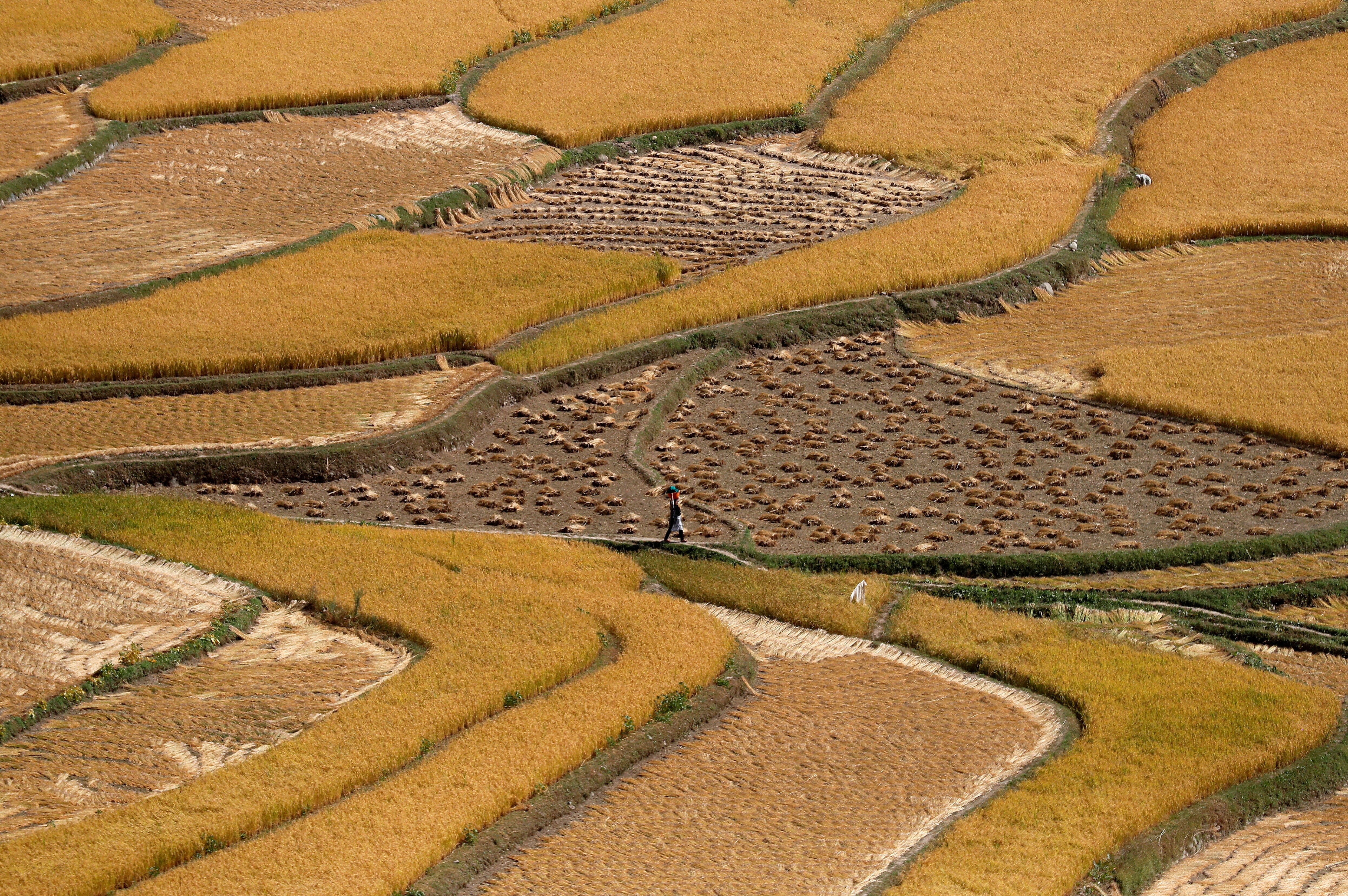
India's decision to curb rice exports is expected to lift world prices of the staple and trigger a rally rival in wheat and corn markets, deepening concerns over food inflation.
Rice prices in key exporters India, Thailand, Vietnam and Myanmar are set to rise, traders and analysts said, hitting food importers already suffering from higher costs due to adverse weather and the Russia-Ukraine war.
India banned exports of broken rice and imposed a 20% duty on exports of various grades of rice on Thursday as the world's biggest exporter of the grain tries to augment supplies and calm local prices after below-average monsoon rainfall curtailed planting.
"There is going to be substantial stresses on food security across many countries," said Phin Ziebell, agribusiness economist at National Australia Bank. "Global fundamentals could see further upside across the grains complex."
Chicago wheat prices rose on Friday, poised for a third straight weekly gain, as India's move and talk about Russia's restrictions on Ukrainian grain shipments underpinned the market.
"This is an inflationary move for food prices," said Ole Houe, director of advisory services at agriculture brokerage IKON Commodities in Sydney. "This could trigger a rally in wheat and corn prices."
India accounts for more than 40% of global rice shipments and competes with Thailand, Vietnam, Pakistan and Myanmar in the world market.
"Myanmar prices should go up by $50 a tonne while suppliers in Thailand and Vietnam will be quoting higher prices," said one Singapore-based trader.
Five percent broken rice in Myanmar was quoted around $390-$395 a tonne, free on board, before India's decision on export restrictions. In India, 5% broken white rice prices were quoted around $348 a tonne.
Top Buyers China, Philippines To Suffer
The world's top rice importers China and the Philippines are likely to take an immediate hit with higher rice prices.
China, one of the biggest importers of Indian broken rice for use in animal feed, is expected to shift to corn, traders said.
"We expect import volumes will decrease with this ban...the new Chinese corn crop is coming to market soon and there are large volumes of other imported grains," said Rosa Wang, analyst at Shanghai JC Intelligence Co Ltd.
"In fact there is news already about an alliance of Thailand and Vietnam planning to increase export prices. We are analysing the possible impact of these possible moves," Mercedita Sombilla, undersecretary for policy, planning and regulations at the Philippines' Department of Agriculture, told Reuters.
Thailand and Vietnam have agreed to cooperate on raising prices, a move aimed at increasing their leverage in the global market and boosting farmers' incomes.

-
Why Swapping Your Old Gold Can Trigger A Rs 5 Lakh Tax Bill, And How You Can Avoid It Legally

Swapping old gold for new is taxed as a sale and a fresh purchase. Getting your own gold remade can cut most of that bill, though it has its own costs.
-
The AI Trade is Done. The Real Opportunity for Investors Starts in 2027 | Unhedged Position
As pureplay AI stocks plunge and circular, capex-led financing unwinds, 2027 is set to be a year of reckoning for AI companies. Yet the bust clears the way for a better opportunity for investors in 2027 -- shifting the spotlight from AI builders to the companies using AI.
-
Leadership As Mission: Why The Age Of AI Demands More Human Leadership
Debjani Ghosh examines how AI is changing leadership, arguing that its success must be measured by its impact on people and the accountability of those guiding its use.
-
We May Need Another Tukaram Mundhe To Fight Air Pollution | The Reason Why
Developers may install basic measures such as sprinklers and green nets, resume work, and continue violating rules when this equipment stops working.
-
Extracting Value From Battery Scrap Could Be Challenging For India | The Reason Why
A discarded lithium-ion battery still contains valuable materials such as lithium, nickel and cobalt. These can be recovered and reused. When such batteries are crushed and shredded, they produce a dark powder called black mass.
-
One El Nino, India Can Handle. Two Could Break The Granary
India's grain stocks can absorb one bad year, but a second El Nino could drain the buffer in two to three years, economists say.
-
India's Troika Of Good Luck | Joining The Dots
As Jensen Huang's exit drags Nvidia down, a cooling AI trade and resilient earnings have revived investor interest in India. A likely RBI rate hike looms.
-
Talking Points This Week: Leadership Shock At Nvidia, Earnings Strength, And The Fog Over Hormuz
The Anthropic IPO pricing and first trading day, Nvidia's upcoming earnings, and any fresh signals from Iran will set the tone for the following week.
-
Signature Play: The Classic Cocktail Is Dead. Or Is It?
Classic cocktails are disappearing from India's cocktail menus. But they're still being ordered, taught to bartenders and borrowed from. So, who's really having the last drink?
-
A New Samvat Wishlist: Inclusive Prosperity And Human Development
India has strengthened its economic foundations through infrastructure, digital access and enterprise. Its next growth chapter must deepen productivity, create better livelihoods and widen participation in prosperity.









