Defence Pivot: India Swivels To Europe For High-Stakes Military Projects Worth $14 Billion
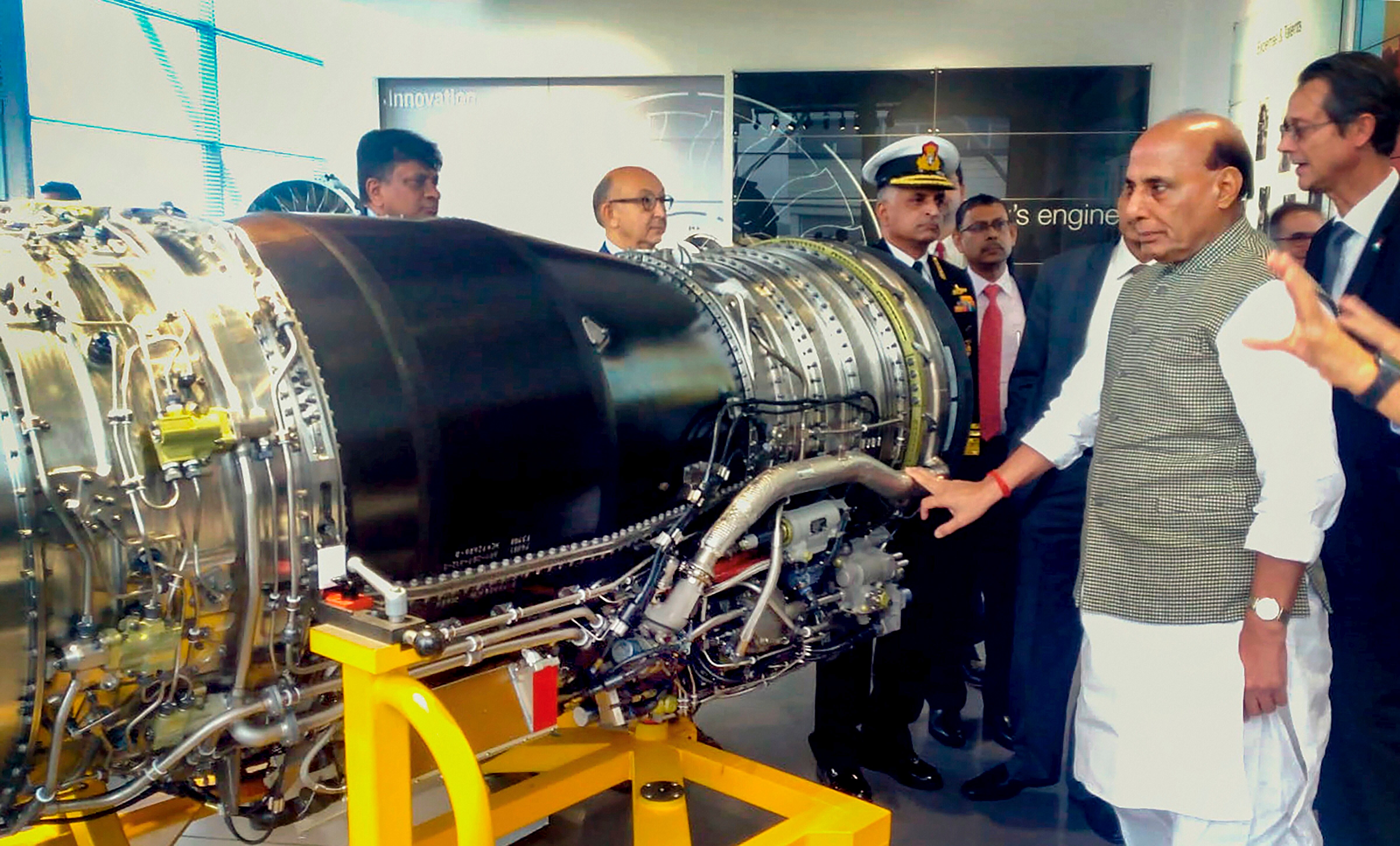
The Trump administration's aggressive economic leverage has forced India to pivot to trusted European partners for its high stakes submarine and next generation fighter jet projects.
The move comes as India moves forward with the next generation Project 75-I which looks to develop and manufacture six submarines of Kalvari Class for the Indian Navy, and the fifth generation Advanced Medium Combat Aircraft project, both projects expected to induct the machines by 2035.
Two key components are essential for these projects — Air Independent Propulsion Systems in submarines and 120KN Engines for the fifth-generation aircraft.
India will collaborate with the Germans and French to ensure that these marquee projects are implemented as per timelines.
The agreement will be executed between Safran and DRDO's arm GTRE (Gas Turbine Research Establishment).
Both the projects valued at over $14 billion will see Indigenous development of submarine and aircraft with an elevated level of domestic content and collaboration with Indian companies in the manufacturing of the systems in India, including transfer of technology and using India as export market for global orders.
India will also be building two nuclear submarines under Project 77 under the strategic submarine category in collaboration with its trusted ally Russia. This project is worth over Rs 40,000 crore.
While nuclear submarines do not require Air Independent Propulsion as they have constant source of power that allows continuous recharge of batteries unlike conventional submarines that require to surface to recharge batteries and are equipped with Air Independent Propulsion systems. The AIP will allow the submarines to stay undersea for longer periods.
Defence Strategy Changing?
The moving away from the US for engine is seen as a pivot by India to safeguard its indigenous development program for next-generation aircraft against any geopolitical roadblock imposed by the US against India. The recent aggressive economic leverage that has been imposed by the US on India for Russian oil is seen as big deterrent against any collaboration in these high-stakes defence projects.
India has faced frequent delays from the US when it comes to engine and other technologies during the development of the LCA project.
The Indian Navy is looking at additional submarines under P-75 and six P-75-I submarines contract to be signed in this fiscal year.
Project 75I is a program by the Indian Navy to acquire six diesel-electric attack submarines with advanced features like Air Independent Propulsion, aiming to enhance indigenous submarine building capabilities.
These projects will go to Mazagon Docks. Both these projects are expected to increase the order book for Mazagon Docks from Rs 32,000 crore to Rs 1.25 lakh crore.
Mazagon has already enhanced its shipbuilding capacity to build 11 submarines and ten major warships simultaneously.
Mazagon's collaboration with ThyssenKrupp for the P-75-I project will see significant amount of transfer of technology and indigenisation. The contours of the contract with ThyssenKrupp will significantly transfer technology in the design and construction of these conventional submarines and thereby allowing the Mazagon Docks to service such in-service submarines and construct future submarines in India for global markets.
The indigenous content in Project 75-I will be more than 60%, much higher than the Scorpene Class project or Project 75.
The bigger blow to the US companies is on the engine for its next generation aircraft - AMCA. India has decided to go with Safran over UK's Rolls Royce and American GE for engine dependency. GE is supplying GE 404 engines for the LCA Mk-1Alpha and GE 414 engines for LCA Mk2 aircraft that are expected to go into production in the next two years. Currently India is in the finalising phase for its prototype for LCA Mk2. The prototype is expected to be tested in the first half of 2026. While it is expected that the initial AMCA flights will involve GE-414 engines, it will transition to Safran engines subsequently.
The $7 billion dollar deal will see Safran transfer 100% technology for design, developing, testing and production of 120 kilonewtons engines for AMCA and future platforms. Safran is already producing engines for the Indian defence helicopters in India.
India is looking at safeguarding its national security interest by ensuring that it is fully hedged against any aggressive leverage by any country when it comes to the manufacturing of critical components involving high stakes future security projects.

-
High US Salaries, No Green Card Certainty: The Financial Calculation Facing Indian H-1B Families

The suspension of PERM processing at eight technology employers does not cancel existing H-1B visas. What it does is force a question many Indian families have been avoiding: is the US salary worth tying your career and family plans to one employer?
-
Swiggy vs Eternal: Food Delivery's Two Rivals Are No Longer In The Same Race
Eternal is building a private AI assistant, dark.ai. Swiggy is still working out how to make Instamart pay, with an operating loss of Rs 895 crore in the July-September quarter while Blinkit stayed profitable.
-
Where You Live Shapes How You Get To Work | The Reason Why
Two-wheelers are the most popular way to get to work in India, accounting for nearly 43% of workplace commutes.
-
Unhedged Position: Can India See An Indonesia-Style Time Correction?
The Nifty is trading below levels it first clocked in 2024. Is there, then, as I have suggested in the headline, potential that the current time correction drags on painfully for the next three-five, even ten years?
-
Navigating Friction And Energy Realities: An Analysis Of Marco Rubio's October Visit To India
Occurring at a critical juncture marked by stalled trade negotiations and escalating geopolitical pressures over global energy supplies, the visit offers a profound window into modern US-India relations.
-
India Exports Capital. Why Not Export Trusteeship?
The big question, then, is whether India can build an institution that global borrowers, investors, banks, and lawyers can trust, even without an Indian connection.
-
France's Economy & Politics Are In Crisis | The Reason Why
Let's look at how the French economy and politics evolved under Nicolas Sarkozy, Franois Hollande and Emmanuel Macron.
-
You May Inherit The Business. You Must Earn Its Credibility.
Succession tests the founder's ability to share authority as much as it tests the next generation's readiness to assume it.
-
Signing Deals Is One Thing; Making Them Work Is Another | The Week In Whys
Sometimes, things don't turn out as planned. Indian companies have lost some bids to rivals, some projects won't produce until 2030.
-
FOMC Wall, PERM Suspension, Hospital Stocks | Talking Points This Week
A PERM suspension would directly affect green-card sponsorship rather than H-1B visas, so the near-term earnings impact could remain relatively limited. The key question is whether this marks a new phase in US scrutiny of Indian IT.









