

India On Track For 500 GW Non-Fossil Power, Data Centres To Drive Overshoot: MNRE Secy — Profit Exclusive
India currently has about 260 GW of non-fossil capacity. Of the remaining 240 GW needed, around 160 GW will come from solar power and about 30 GW from wind energy.



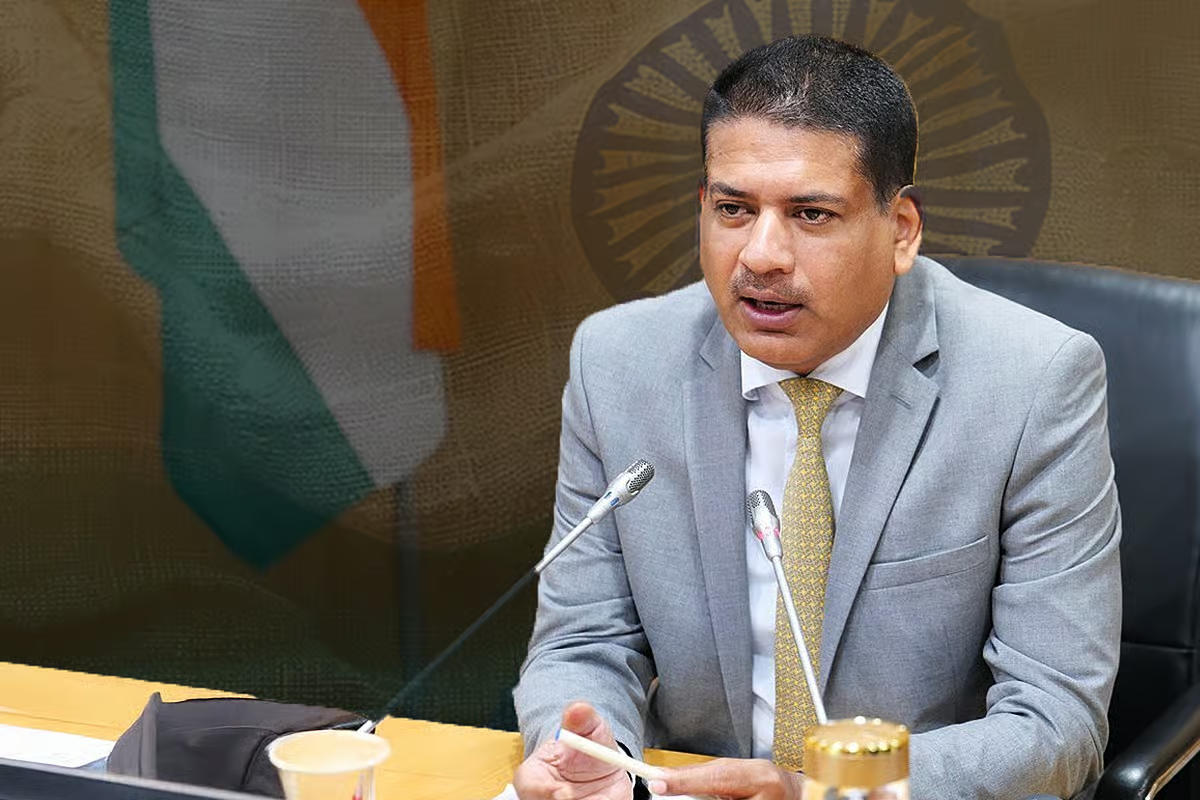
India is firmly on track to meet its 500-gigawatt non-fossil fuel capacity target by 2030, with a strong pipeline of solar, wind, hydro and nuclear projects already under development, said Ministry of New and Renewable Energy (MNRE) Secretary Santosh Sarangi.
India currently has about 260 GW of non-fossil capacity. Of the remaining 240 GW needed, around 160 GW will come from solar power and about 30 GW from wind energy, Sarangi said. Additional capacity will be added through small and large hydro projects, along with 8–10 GW of nuclear power.
ALSO READ
Government Targeting 50% Of Energy From Non-Fossil Fuels, Says Union Minister Prahlad Joshi
"There is a possibility of overshooting the 500 GW target if data centre plans materialise," Sarangi said, pointing to rising electricity demand from data centres and carbon-intensive industries seeking to decarbonise.
Global climate commitments, including stricter carbon border measures, are expected to accelerate renewable energy deployment in sectors such as steel, aluminium and cement. Sarangi said data centres will initially rely on solar and wind power combined with battery storage, as nuclear power projects have a longer gestation period of five to seven years due to regulatory approvals, fuel sourcing and reactor testing.
On energy storage, Sarangi said India is projected to install 41 GW of battery storage capacity by 2030, according to the Central Electricity Authority. Backed by support from the Ministry of Power, about 43 GWh of battery storage is expected to be installed over the next 12–18 months.
ALSO READ
Digital Connexion To Invest $11 Billion By 2030 To Build 1 GW Data Centres In Andhra Pradesh
Providing an update on the National Green Hydrogen Mission, Sarangi said India has discovered the world’s lowest prices for green ammonia through recent tenders for fertiliser plants, covering nearly one-third of earlier ammonia imports. He said projects by companies such as L&T, Greenko and ACME, including export-linked offtake agreements, signal strong global competitiveness, with supplies expected from 2028–29.
On domestic manufacturing, Sarangi said India’s solar module capacity stands at 122 GW and is expected to rise to 150 GW by June 2026, making it the second-largest globally after China.
Solar cell manufacturing capacity is set to expand from 27 GW to about 65 GW over the same period, supported by policy measures beyond production-linked incentives, including import duties, approved manufacturer lists and domestic content norms.
Addressing the project delays, Sarangi said MNRE is working with states to speed up land acquisition and right-of-way clearances, citing Karnataka’s move to allow deemed land-use conversion for renewable projects as a model for other states.