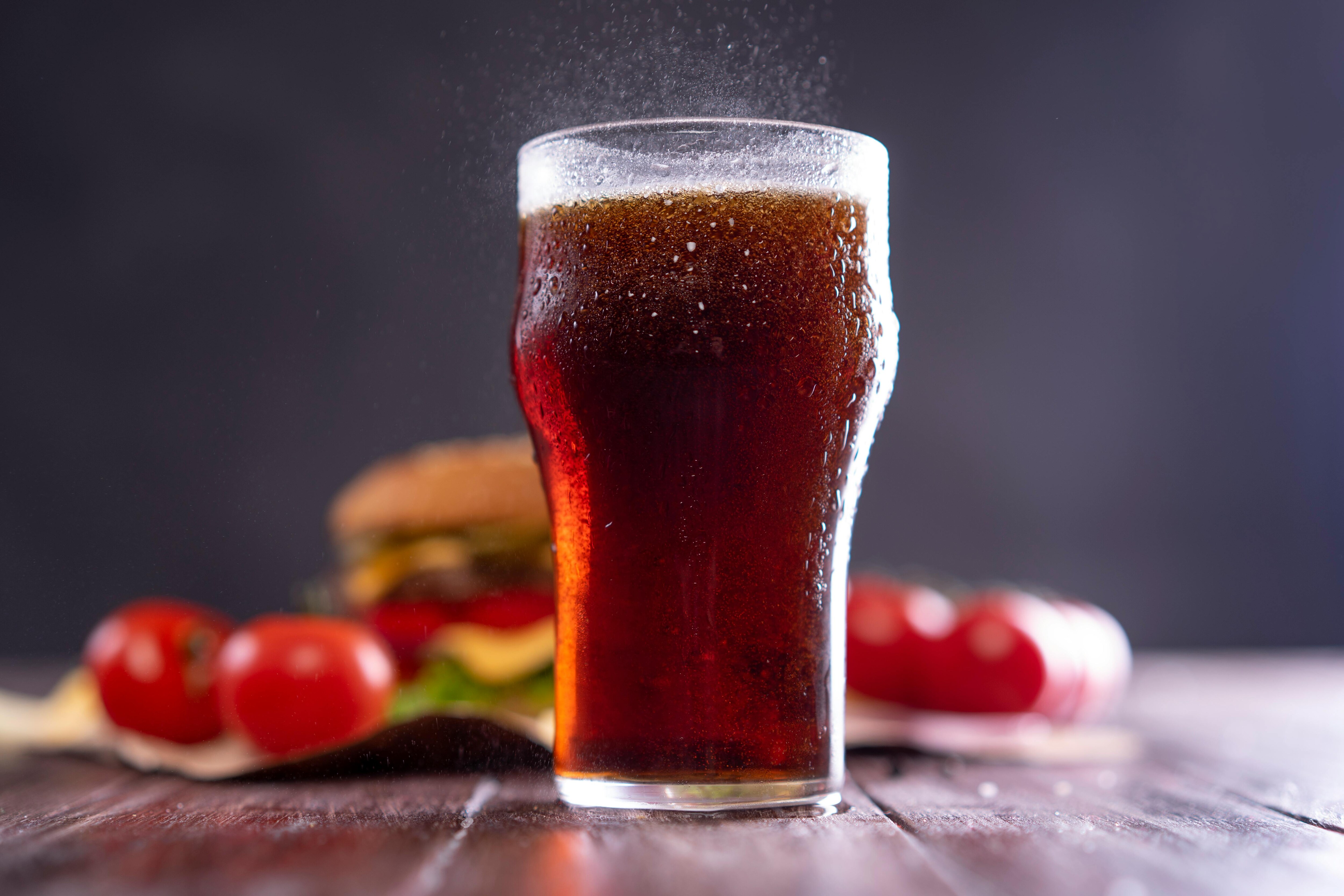
Carbonated soft drinks segment in India is unable to reach its potential in terms of scale expansion due to barriers such as high taxation under the GST regime despite government's initiatives like 'Make in India' and 'Aatmanirbhar Bharat', according to a report by economic think tank ICRIER.
The cross-country comparative data on sugar-sweetened beverages taxes collated by the World Bank shows that India has one of the highest tax rates for carbonated soft drinks at a total tax rate of 40% as of 2023.
Over 90% of countries that tax SSBs have a lower tax rate than India, as per the report titled 'Carbonated Beverages Industry in India: Tax Policy to Promote Growth, Innovation and Investment'.
Also Read | Layoffs Are Rising In Tech, But These Skills Are Helping People Unlock Better Pay
Consumers, globally and in India, are shifting towards low-sugar and no-added sugar varieties of beverages amid heightened health awareness.
"The CSD market is also changing from its traditional high sugar carbonated beverages to low-sugar and fruit-based and/or flavoured carbonated drinks to zero-sugar aerated water, catering to changes in consumers' choice for healthier options and government policies like layered-sugar-based taxes," the report said.
Producers, across the globe, are reformulating their products to meet consumer demand, and these are supported through government policies and both fiscal and non-fiscal incentives. In India too, producers are re-examining their product portfolios and coming up with products like zero-calorie, low/no sugar content.
"However, despite government initiatives like 'Make in India' and 'Aatmanirbhar Bharat', the CSD segment is unable to reach its potential in terms of scale expansion due to barriers such as the high tax brackets and compensation cess under the GST regime, implemented since 2017," it said.
Currently, carbonated or aerated beverages are placed in the highest GST slab of 28% with a compensation cess of 12%, irrespective of their sugar or fruit content.
"The high tax of 40%, irrespective of sugar content, is making it difficult for innovative firms to come up with low-sugar varieties and scale up and existing firms to invest in product reformulation," the ICRIER report said.
Citing cross-country comparative data on SSB taxes collated by the World Bank, the report said India has one of the highest tax rates for CSDs at a total tax rate of 40% as of 2023. Over 90% of countries that tax SSBs have a lower tax rate than India.
The Indian CSDs market is relatively small. It generated revenue worth $18.25 billion in 2022, and grew at a CAGR of 19.8% between 2017 and 2022.
Pointing out that India is one of the largest global producers of fruits such as mango, banana, guava, papaya, sapota, pomegranate, and lime, and sugar, which in some cases are used in the CSD category, the report said, "It has the potential to be used in greater capacity, if the right policies promote their uses in CSDs."
However, India is not among the top global manufacturers of CSDs, and the processing of CSD products in the country is much below its potential. The varieties are also much fewer than is available in other developing countries such as Thailand or the Philippines, it added.
"While the Indian consumer wants to experiment with different products such as low-sugar CSDs or fruit-based CSDs, and startups are trying to come up with new products, investment, product varieties and innovation is much lower in CSDs in India," it said.
Thus, India lags behind several other developing countries in terms of the revenue generated by the CSD market. Consequently, the sector's potential to attract investment and create jobs, especially in Tier 2 and 3 cities, remains unexplored, it noted.
"This is primarily because of treatment of this sector as a high tax revenue earner previously by the states through their state excise and now by the Goods and Services Tax (GST) Council, which has recommended a high tax and cess on CSDs," the report said.
Essential Business Intelligence, Sharp Market Insights, Practical Personal Finance Advice, Daily Fuel, Gold and Silver Prices and Latest Stories — On NDTV Profit.