Govt May Okay More Quantity In Rs 5, Rs 10 Packs As Price Cuts Under GST 2.0
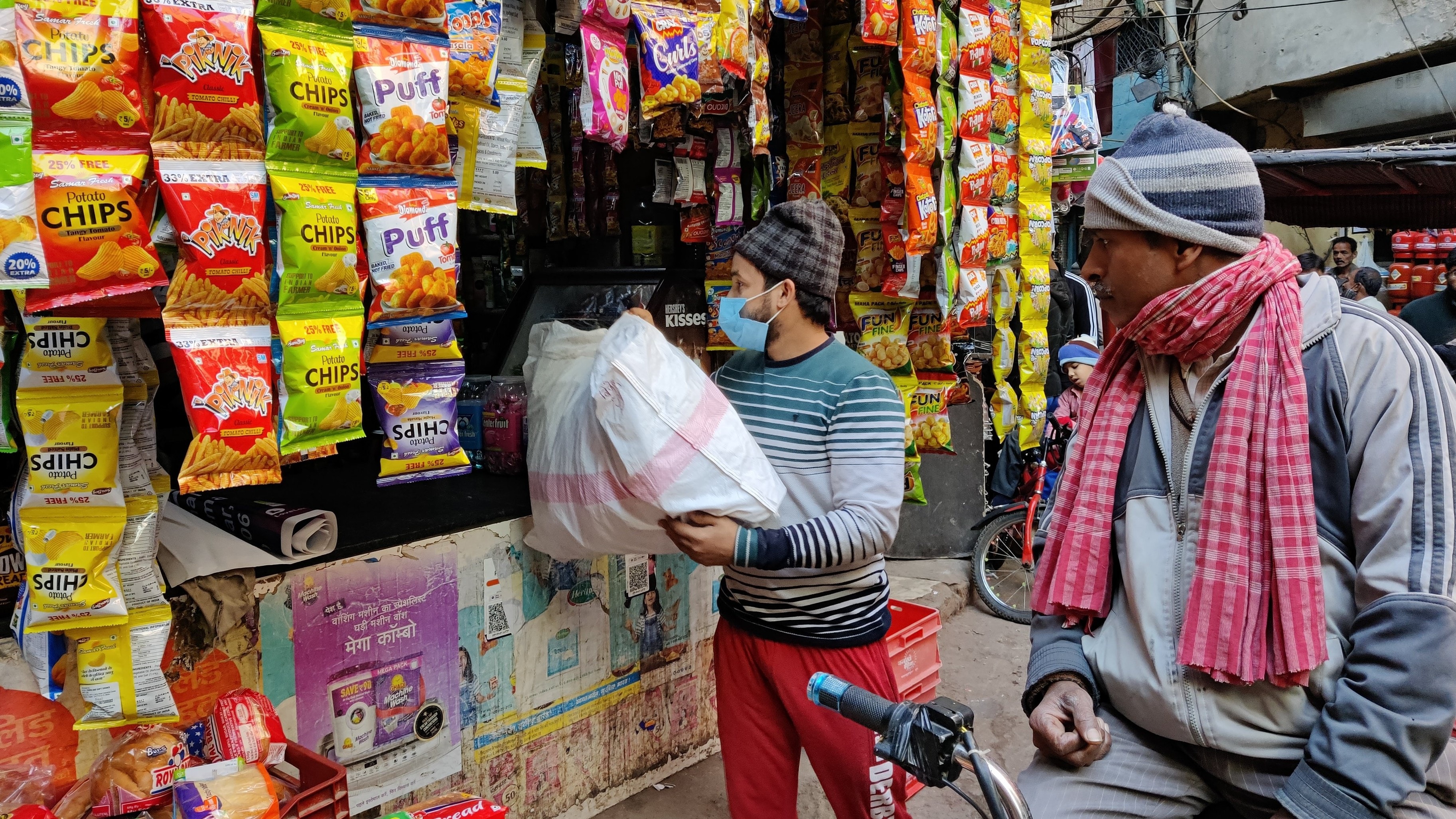
In a potential relief for fast-moving consumer goods companies, the government is likely to consider increased grammage in low-unit packs — such as Rs 5, 10 and Rs 20 — as a legitimate form of price reduction post-Sept. 22 when the revamped goods and services tax kicks off.
This follows a meeting on Friday between representatives of several FMCG firms, industry bodies and senior officials of the Central Board of Indirect Taxes and Customs, during which businesses sought a key clarification: can offering more product at the same price qualify as a "price cut", especially for small packs of shampoos to biscuits, where price revisions are difficult.
"The government appeared open to the idea that grammage increases, especially in low-priced packs, could count as price relief,” said a senior industry executive present at the meeting. “This could be a win-win—it maintains psychological price points for consumers while technically increasing the price per gram or per ml. A guideline is awaited in 2-3 days.”
While the government is keen to see visible price relief for consumers, the packaged goods makers have flagged the challenges of reducing maximum retail prices across product lines—particularly for popular packs.
Instead, companies are exploring grammage-based adjustments, where they increase the quantity of product while maintaining the existing MRP — a tactic long used in reverse during periods of inflation.
Companies argue that for products like biscuits, snacks, soaps, and detergents—where Rs 5 and Rs 10 packs dominate rural and lower-income urban markets—maintaining price points is critical. A reduction in MRP could disrupt pricing architecture and promotional strategies, they said.
Another industry executive said that the government is unlikely to issue a one-size-fits-all directive but may accept grammage gains as evidence of compliance with the GST cut mandate, provided companies can show a genuine reduction in unit pricing. "Still, an official directive is awaited to avoid any inadvertent anti-profiteering complications," the person said.
FMCG companies are racing to pass on GST cuts on essentials — from soaps to snacks — but price drops may not hit all shelves by Sept. 22.
Industry executives cite a potential delay of 15-20 days due to several factors including policy ambiguity around implementing the GST reductions and the mammoth task of re-stickering the large volume of stocks lying across the supply chain — from factories to distributors.
While consumer firms have publicly pledged to pass on the GST benefits to consumers to spur demand, the challenge lies in monitoring price changes across India's 13 million kirana stores, especially in small cities, and ensuring GST benefits reach the end consumer in both letter and spirit.
"Stocks that dealers and companies are sitting on today are at higher MRPs, so simply passing on money to trade does not guarantee that it reaches consumers directly," said Sudhir Sitapati, managing director and CEO, Godrej Consumer Products.
"It will take a little time before new MRPs flow into the market. By early or mid-next month, consumers will start seeing reduced prices on products. September may therefore be somewhat choppy, with pipeline changes and stock adjustments," said Sitapati, who is also chairman, CII National Committee on FMCG.
Most companies have shifted their production to new MRPs and have also begun stuffing more in small packs to pass on the benefit of price cuts.
"Consumers will get price benefit of 6-7% on account of tax reduction in products from 12% to 5%," Rishabh Jain, chief financial officer, Bikaji Foods International Ltd. told NDTV Profit. "For larger packs, this will translate into a direct reduction in MRPs, while for smaller, on-the-go packs, the benefit is likely to be passed on through more grammage at existing price points."
"For existing stocks, revised stickers will be used reflecting lower prices to pass on the benefit of GST cut to consumers, but for new stocks we have requested the government to consider grammage increase especially in small packs," said Mayank Shah, vice-president at Parle Products. “This approach gives us operational breathing room and consumers also benefit, especially at the bottom of the pyramid. We await the final guidelines.”
The Centre has reduced the number of slabs under the GST system, retaining only the 5% and 18% slabs. As part of the rationalisation, the GST on most daily essentials have been slashed to 5% from 12% or 18% earlier.
While the tax rate on butter, cheese, confectionery and salty snacks has been cut to 5% from 12%, that on chocolates, biscuits, coffee, ice-cream, bottled water, hair oil, shampoo, soaps, shaving cream and toothpaste has been slashed to 5% from 18%. These tweaks, part of “Deepavali gift” from the Centre, is expected to boost consumption, driving up volumes at a time when the FMCG sector has been facing a moderate growth trend.

-
Where You Live Shapes How You Get To Work | The Reason Why

Two-wheelers are the most popular way to get to work in India, accounting for nearly 43% of workplace commutes.
-
High US Salaries, No Green Card Certainty: The Financial Calculation Facing Indian H-1B Families
The suspension of PERM processing at eight technology employers does not cancel existing H-1B visas. What it does is force a question many Indian families have been avoiding: is the US salary worth tying your career and family plans to one employer?
-
Unhedged Position: Can India See An Indonesia-Style Time Correction?
The Nifty is trading below levels it first clocked in 2024. Is there, then, as I have suggested in the headline, potential that the current time correction drags on painfully for the next three-five, even ten years?
-
Navigating Friction And Energy Realities: An Analysis Of Marco Rubio's October Visit To India
Occurring at a critical juncture marked by stalled trade negotiations and escalating geopolitical pressures over global energy supplies, the visit offers a profound window into modern US-India relations.
-
India Exports Capital. Why Not Export Trusteeship?
The big question, then, is whether India can build an institution that global borrowers, investors, banks, and lawyers can trust, even without an Indian connection.
-
France's Economy & Politics Are In Crisis | The Reason Why
Let's look at how the French economy and politics evolved under Nicolas Sarkozy, Franois Hollande and Emmanuel Macron.
-
You May Inherit The Business. You Must Earn Its Credibility.
Succession tests the founder's ability to share authority as much as it tests the next generation's readiness to assume it.
-
Signing Deals Is One Thing; Making Them Work Is Another | The Week In Whys
Sometimes, things don't turn out as planned. Indian companies have lost some bids to rivals, some projects won't produce until 2030.
-
FOMC Wall, PERM Suspension, Hospital Stocks | Talking Points This Week
A PERM suspension would directly affect green-card sponsorship rather than H-1B visas, so the near-term earnings impact could remain relatively limited. The key question is whether this marks a new phase in US scrutiny of Indian IT.
-
Everything, Everywhere, All At Once: Dalal Street's Week To Forget | Joining The Dots
Visa curbs, a Starlink spat and cancer drug caps: what connects this week's shocks for Indian markets









