Bitcoin Ecosystem: Factors Behind Its Distribution, Concentration & Ownership
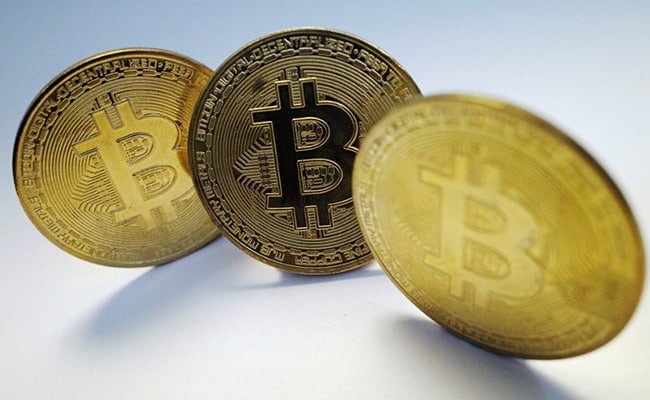
Bitcoin is, without a doubt, the most widely used cryptocurrency today. It was designed as a reward for the “mining” process, which involves a global network of computers competing to solve difficult algorithms. Miners have been rewarded 12.5 Bitcoins for adding one block to the network. The payout will be cut in half every four years, according to the Bitcoin system. In Bitcoin ecosystem, miners who earn the coins are at top of the chain. Traders, the second link in the chain, strive to profit from the Bitcoin-to-fiat cycle by controlling it. The final link in the ecosystem is consumers who spend the coins to buy goods or services.
A typical Bitcoin transaction includes a list of senders and recipients represented by pseudonymous addresses, the total amount of coins given and received, and the transaction's timestamp.
Distribution, ownership, and concentration
The US National Bureau of Economic Research (NBER) revealed three components of the Bitcoin ecosystem to comprehend the essential variables underlying the digital asset's distribution, ownership, and concentration in a report titled ‘Blockchain Analysis of the Bitcoin Market' by Igor Makarov and Antoinette Schoar.
Here we take a look at the three components:
1) Transaction volume and network structure
The authors wrote that about 90 per cent of transaction volumes on the Bitcoin blockchain were not related to economically meaningful activities but were a “byproduct of the Bitcoin protocol design as well as the preference of many participants for anonymity”. Their findings also revealed that since 2015, exchanges or exchange-like institutions such as online wallets, OTC desks, and major institutional traders accounted for about 75 per cent of genuine Bitcoin volume. Third, cross-exchange flows — a result of the current market structure — account for a considerable portion of exchange volume. The exchanges' “strong interconnectedness” has significant consequences for transaction transparency and traceability, as well as the implementation of Know Your Customer regulations across the network.
2) Composition of Bitcoin miners
Bitcoin transactions are processed and verified on the basis of the regional composition of miners. In the previous five years, Bitcoin's mining capacity has been very concentrated, according to the report. The top 10 per cent of miners controlled roughly 90 per cent of mining. Around 50 miners controlled half of the mining capacity. With the rise in cryptocurrency prices, the concentration of mining capability was seen to be decreasing.
3) Bitcoin ownership
Since Bitcoin came into existence, there has been a lot of curiosity about the largest owners of the cryptocurrency and their holdings. Dedicated websites track the addresses of the “rich list,” which, according to the paper, is “one of the most well-known and widely followed lists in the crypto community”. The paper states that most large addresses are of “cold wallets of exchanges and online wallets, which hold Bitcoin on behalf of many investors”. Individual investors held 8.5 million Bitcoins at the end of 2020. The “top 1,000 investors control about 3 million BTC and the top 10,000 investors own around 5 million Bitcoins”, according to the paper.

-
We May Need Another Tukaram Mundhe To Fight Air Pollution | The Reason Why

Developers may install basic measures such as sprinklers and green nets, resume work, and continue violating rules when this equipment stops working.
-
Extracting Value From Battery Scrap Could Be Challenging For India | The Reason Why
A discarded lithium-ion battery still contains valuable materials such as lithium, nickel and cobalt. These can be recovered and reused. When such batteries are crushed and shredded, they produce a dark powder called black mass.
-
One El Nino, India Can Handle. Two Could Break The Granary
India's grain stocks can absorb one bad year, but a second El Nino could drain the buffer in two to three years, economists say.
-
India's Troika Of Good Luck | Joining The Dots
As Jensen Huang's exit drags Nvidia down, a cooling AI trade and resilient earnings have revived investor interest in India. A likely RBI rate hike looms.
-
Talking Points This Week: Leadership Shock At Nvidia, Earnings Strength, And The Fog Over Hormuz
The Anthropic IPO pricing and first trading day, Nvidia's upcoming earnings, and any fresh signals from Iran will set the tone for the following week.
-
Signature Play: The Classic Cocktail Is Dead. Or Is It?
Classic cocktails are disappearing from India's cocktail menus. But they're still being ordered, taught to bartenders and borrowed from. So, who's really having the last drink?
-
A New Samvat Wishlist: Inclusive Prosperity And Human Development
India has strengthened its economic foundations through infrastructure, digital access and enterprise. Its next growth chapter must deepen productivity, create better livelihoods and widen participation in prosperity.
-
Love, Sex Aur Dhokha: The Audacious Plot To Spy On Jensen Huang
A Taipei dinner, a Singapore chip buyer and a suspected Chinese asset: inside the alleged spy operation that got close to NVIDIA's Jensen Huang.
-
Ten Things I Learnt This Samvat
Patience can be a trap. Cheap stocks can stay cheap. Leverage can wipe you out. What did Samvat 2082 teach us? Niraj Shah writes on 10 lessons from the year gone by.
-
Talking Points This Week: Tech Nerves, FII Buying, And A Faraway Banking Shock
The global markets are not shining this Diwali. The exception in the large markets is, India.









