Davos WEF 2022 | ReNew Power's Sumant Sinha On Financial Viability Of Renewable Power
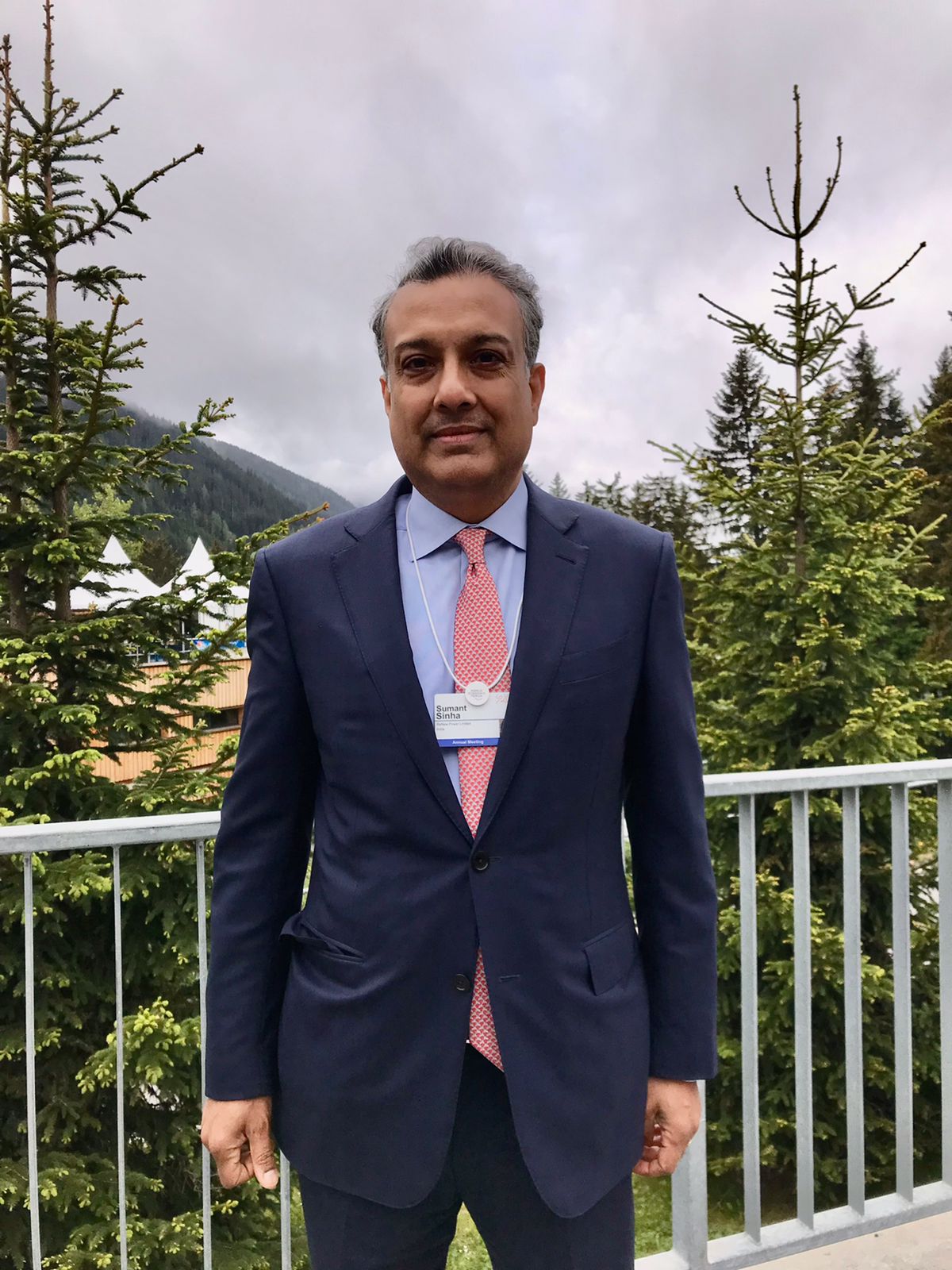
The focus on renewable energy will continue to grow despite short-term push to fossil fuels amid geopolitical crisis-led supply constraints in Europe, according to ReNew Power's Sumant Sinha.
There is a large focus on "energy security" as the conflict between Russia and Ukraine continues with Europe pushing to ramp up fossil fuel capacities to make up for the shortfall from Russian gas, Sinha, chairman and managing director of ReNew Power, told BQ Prime's Menaka Doshi on the sidelines of World Economic Forum 2022 at Davos.
“The effort right now is to push forward wherever there is excess capacity without too much capex in fossil fuels; and in the medium term, figure out how to push forward on renewables even faster," he said. “I don't think companies will make long-term bets on fossil fuels right now because the payback on oil investment is 20-25 years.”
Sinha said Europe is looking to ramp up solar and wind energy sources in the long term. Green hydrogen (produced from electrolysis of water), he said, also has a large addressable market with uses in mobility and other sectors.
Challenges
Sinha underscored the supply challenges faced by the world that depends solely on one country: China. However, India has an opportunity to become the "plus one" of the world by setting up capacities and supply globally.
The head of the largest renewable energy company by operational capacity also highlighted the risk and returns in the business.
"Renewable energy ultimately is an infrastructure business which creates hard assets and in those kinds of businesses, you don't make 40-50% returns," he said. "You make maybe 16-17 or 20% returns if you are very lucky and you execute very well. And if you don't execute well, you make less than 10%." he said. "That's the range most companies will tend to operate."
He said the risk involves making the "wrong bets" and getting into large investments that "don't yield more that cost of capital or even below the cost of capital".
Higher input prices and a GST levy have pushed bids for solar power plants to Rs 2.30 and above, after a period of declining prices. For now, rock bottom pricing has stopped, he pointed out.
Another critical aspect of viability is revenue collection from state-owned power distribution companies, many of which are highly indebted and with dues piling. In the case of solar, public sector unit SECI does the collection for producers, Sinha said. 50% of ReNew Power's solar supply collects payments from SECI. Only in the case of old solar power contracts signed directly with discoms are producers subject to irregular payments, he pointed out.
Watch the full conversation here:

-
Talking Points This Week: Tech Nerves, FII Buying, And A Faraway Banking Shock

The global markets are not shining this Diwali. The exception in the large markets is, India.
-
Midterm Rally Lasted A Day. The Hard Reality Of A Divided US May Last Two Years | Opinion
Between a contested AI boom, a debt ceiling that arrives in 2027 and a president with every incentive to act alone, the next two years may prove more volatile than the first day's rally suggests.
-
Blue Wave Will Derail the AI Trade but Won't Dismantle the AI Era | Unhedged Position
The Democrats' sweep of the US Congress will see politics collide with economic forces both over the long and short term.
-
It's Time To Take The GST Council's Bet On Trust Global
Payment records can prove India's services exports, and clear, proportionate rules can bring foreign digital sellers into the tax net.
-
Opinion | India at 38: From Innovation Overperformer to Innovation Powerhouse
India now has 453 VC-backed deep science startups, 18 of them late-stage, after 117 percent growth since 2020. Laurus Labs, at USD 9.3 billion, is the most valuable deep science company in any middle-income economy outside China.
-
Navigating Energy Crossroads: S Jaishankar's Call For Diversified Supply Chains At G20 Ministerial Meeting
As geopolitical fault lines continue to test maritime trade routes and commodity flows, Jaishankar's message remains pertinent: true economic resilience requires open markets, protected transit lines, and a genuine commitment to multilateral cooperation rather than coercion.
-
Indians Are Travelling, But Not Every Journey Is A Holiday | The Week In Whys
Pilgrims, patients and working women are the real travellers, and the system hasn't quite caught up with them.
-
Getting To Work Costs Women More | The Reason Why
It is not just about women paying more than men. It is about women paying much more in cities than in villages.
-
AI Bias In Investing Cannot Be Eliminated, But It Can Be Governed
Framing is a particularly important example as identical financial information presented in terms of gains rather than losses can lead an LLM to reach a different assessment.









