China Factory Activity Returns To Expansion But Trade Risks Grow
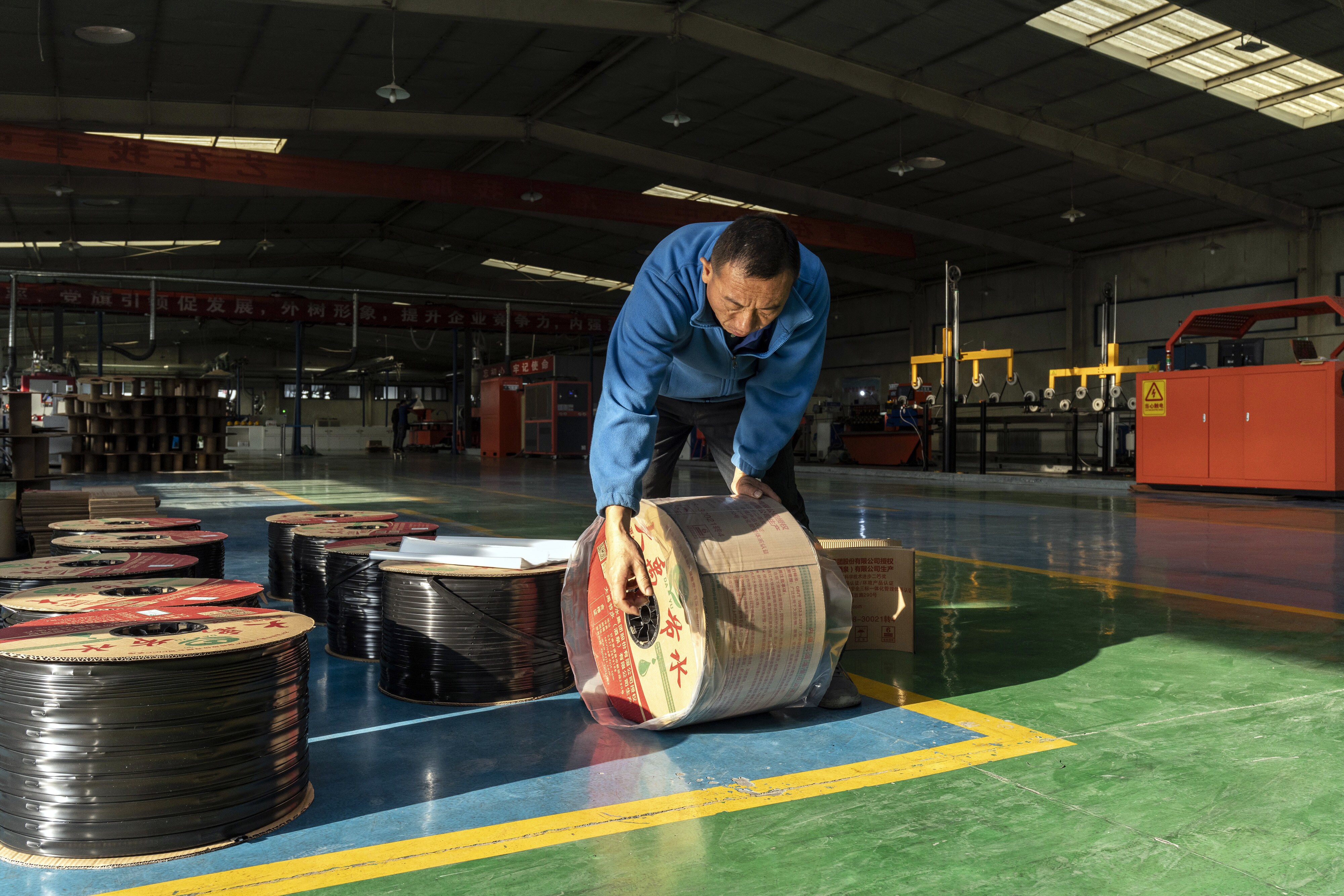
China's factory activity returned to expansion in February, a sign of resilience in an economy hit by higher US tariffs and suffering from weak domestic demand.
The official manufacturing purchasing managers' index was 50.2, versus 49.1 in January, the National Bureau of Statistics said Saturday. The median forecast of economists surveyed by Bloomberg was 49.9. A number above 50 points signals growth.
The non-manufacturing measure of activity in construction and services rose to 50.4 from 50.2 last month, the statistics office said. That's in line with the forecast of 50.4.
The PMI figures are the first official data available each month to provide a snapshot of the health of the Chinese economy, whose outlook is in flux as the trade war intensifies with the US. The stabilization of factory activity in February means less pressure on China's government to speed up stimulus measures on the manufacturing sector when top officials meet in Beijing this week for an annual parliamentary meeting.
The Trump administration has taken aim at China with a series of moves involving investment, trade and other issues, and most recently threatened an additional 10% tariff that would take effect March 4.
President Xi Jinping urged officials to stay composed amid domestic and global challenges, signaling Beijing will take a measured approach to the new restrictions imposed by the US.
Xi recently hosted a meeting with tech bosses including Alibaba Ltd. co-founder Jack Ma, in a bid to restore confidence in the private sector. Some economists expect the upcoming national parliament meeting to introduce measures to drive consumption.
China's economy grew more than expected in 2024, thanks to a late blitz of supportive policies and an export boom. But the recovery has remained uneven, with manufacturing at times a bright spot while consumption has been weighed down by a weak job market and a prolonged real estate crisis.
China's trade surplus soared to near an unprecedented $1 trillion last year. The growing imbalance has spooked the nation's trade partners, who accuse Beijing of building excess capacity in its industries through state subsidies and increasingly look to erect new barriers that may hold back sales of key products like electric vehicles.

-
Talking Points This Week: Tech Nerves, FII Buying, And A Faraway Banking Shock

The global markets are not shining this Diwali. The exception in the large markets is, India.
-
Midterm Rally Lasted A Day. The Hard Reality Of A Divided US May Last Two Years | Opinion
Between a contested AI boom, a debt ceiling that arrives in 2027 and a president with every incentive to act alone, the next two years may prove more volatile than the first day's rally suggests.
-
Blue Wave Will Derail the AI Trade but Won't Dismantle the AI Era | Unhedged Position
The Democrats' sweep of the US Congress will see politics collide with economic forces both over the long and short term.
-
It's Time To Take The GST Council's Bet On Trust Global
Payment records can prove India's services exports, and clear, proportionate rules can bring foreign digital sellers into the tax net.
-
Opinion | India at 38: From Innovation Overperformer to Innovation Powerhouse
India now has 453 VC-backed deep science startups, 18 of them late-stage, after 117 percent growth since 2020. Laurus Labs, at USD 9.3 billion, is the most valuable deep science company in any middle-income economy outside China.
-
Navigating Energy Crossroads: S Jaishankar's Call For Diversified Supply Chains At G20 Ministerial Meeting
As geopolitical fault lines continue to test maritime trade routes and commodity flows, Jaishankar's message remains pertinent: true economic resilience requires open markets, protected transit lines, and a genuine commitment to multilateral cooperation rather than coercion.
-
Indians Are Travelling, But Not Every Journey Is A Holiday | The Week In Whys
Pilgrims, patients and working women are the real travellers, and the system hasn't quite caught up with them.
-
Getting To Work Costs Women More | The Reason Why
It is not just about women paying more than men. It is about women paying much more in cities than in villages.
-
AI Bias In Investing Cannot Be Eliminated, But It Can Be Governed
Framing is a particularly important example as identical financial information presented in terms of gains rather than losses can lead an LLM to reach a different assessment.









