Borosil Renewables: Can India's Only Solar Glass Maker Shine Bright Again?
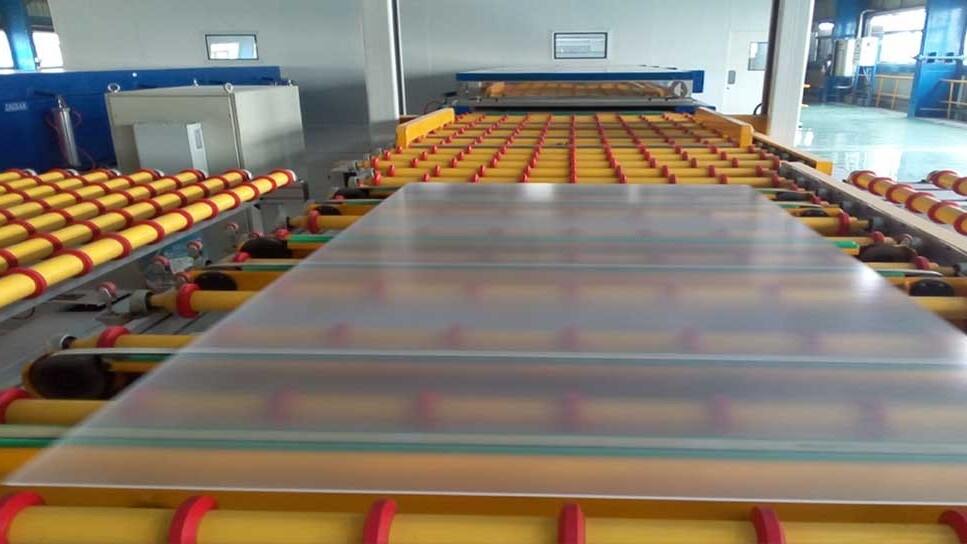
Borosil Renewables Ltd. is the only Indian manufacturer of solar glass—a key component in solar panels.
Despite enjoying domestic monopoly for over a decade now, the company's financial performance has weakened over the last two years, due to global competition, potential future domestic entrants, rising debt and pricing pressures.
Financials
Except for fiscal 2020 due to the impact of Covid-19, Borosil Renewables saw consistent year-on-year revenue growth from fiscal 2017 to fiscal 2022. During this period, the company's Ebitda margin increased 2,720 basis points and its net profit showed a 5.2% compound annual growth rate over six years.
In the last fiscal, revenue grew 59%, but the company's Ebitda fell 49%, with the margin shrinking 2,591 bps in just a year. The company's net profit also fell 52% YoY.
In the April–December period, the company's financial performance followed a similar trend. While revenue increased 52% year-on-year, margins contracted by 1,380 basis points. The company reported a net loss of Rs 3.79 crore, compared to net profit of Rs 76.2 crore in the same period the previous fiscal.
What Caused The Downfall?
Anti-Dumping Import Duty
The Union government had imposed an anti-dumping import duty on Chinese solar glass on Aug. 18, 2017. This is a tax levied on imported goods that are deemed to be sold below fair market value. However, the import duty ended in May 2022.
The exemption on basic customs duty for solar components, including solar glass, was recently extended from March 31 to Sept. 30, 2024, allowing for cheaper imports.
Unfavourable foreign trade rules are allowing China, Vietnam, and Malaysia to sell solar glass at unrealistically low prices in the Indian market, the company said in its Q3 concall. The intensified dumping has also driven down overall solar glass prices, making it difficult for Borosil to have domestic pricing power, thus affecting its realisations.
Pricing Pressure
A significant fall in prices across the solar module value chain globally has also impacted solar glass prices.
According to Bloomberg data, prices of solar grade polysilicon—raw material used to create the solar cells—have dropped 68% in the past year. Huge Chinese capacity additions across the solar value chain have also led to overcapacity, thereby causing distressed prices, Borosil said in its Q2 FY24 investor presentation. This has resulted in a continuous fall in prices of products like ingots, wafers, solar cells, and solar modules.
Prices of key input material like soda ash have risen 28% in the past year, according to Bloomberg Data.
Exports
Borosil derives over 25% of its revenues from exports, primarily to western Europe and Turkey. In the third quarter, the company's export sales stood at Rs 19.1 crore, a 68% year-on-year drop, due to reduced demand in key markets.
The company attributed the EU demand slowdown for solar glass to the dumping of solar modules by China and southeast Asian countries, causing a virtual halt in local manufacturing in September 2023.
Whereas, Turkey's demand was impacted by national financial conditions, which led to slower local manufacturing and reduced funds for solar installations. High inflation increased the costs of funds, further dampening demand.
Any Signs For A Revival?
Domestic Demand
From a demand perspective, the company stands at a favourable position. India's share of renewable energy in total installed power generation capacity has reached 31% as of December 2023, with solar contributing 73 GW, representing about 55% of the renewable capacity of 134 GW.
The country also aims to install 280 GW of renewable energy by 2030, indicating substantial growth potential. Apart from this, FY24 saw installation of 6.5 GW of solar capacity in the first nine months, highlighting ongoing growth in the sector.
The latest PM Suryoday Yojana scheme in India, which aims to install rooftop solar power systems in one crore households, is expected to drive demand for solar modules and components, including solar glass.
Policy Support In Europe
The European Union is also creating a policy framework for higher remuneration to the domestic solar module and component manufacturers, through an investment support to develop new solar manufacturing capacities.
Probe Against Anti Dumping
India also initiated an anti-dumping probe into imports of certain solar glass from China and Vietnam in February. The Directorate General of Trade Remedies is probing the alleged dumping of textured tempered coated and uncoated glass—also known as solar glass—made from China and Vietnam.
The application was reportedly filed by Borosil.
Capacity Expansion
While Borosil plans to increase its manufacturing capacity from 1,350 tonnes per day to 2,450 tonnes per day in 2025, the plan is currently on hold.
A decision will be taken at an appropriate time post reaching a clarity on duties on imports of solar glass and reduction in volatility of the prices of solar modules/glass, the company had said in its Q3 investor presentation.

-
Unhedged Position: Can India See An Indonesia-Style Time Correction?

The Nifty is trading below levels it first clocked in 2024. Is there, then, as I have suggested in the headline, potential that the current time correction drags on painfully for the next three-five, even ten years?
-
Navigating Friction And Energy Realities: An Analysis Of Marco Rubio's October Visit To India
Occurring at a critical juncture marked by stalled trade negotiations and escalating geopolitical pressures over global energy supplies, the visit offers a profound window into modern US-India relations.
-
India Exports Capital. Why Not Export Trusteeship?
The big question, then, is whether India can build an institution that global borrowers, investors, banks, and lawyers can trust, even without an Indian connection.
-
France's Economy & Politics Are In Crisis | The Reason Why
Let's look at how the French economy and politics evolved under Nicolas Sarkozy, Franois Hollande and Emmanuel Macron.
-
You May Inherit The Business. You Must Earn Its Credibility.
Succession tests the founder's ability to share authority as much as it tests the next generation's readiness to assume it.
-
Signing Deals Is One Thing; Making Them Work Is Another | The Week In Whys
Sometimes, things don't turn out as planned. Indian companies have lost some bids to rivals, some projects won't produce until 2030.
-
FOMC Wall, PERM Suspension, Hospital Stocks | Talking Points This Week
A PERM suspension would directly affect green-card sponsorship rather than H-1B visas, so the near-term earnings impact could remain relatively limited. The key question is whether this marks a new phase in US scrutiny of Indian IT.
-
Everything, Everywhere, All At Once: Dalal Street's Week To Forget | Joining The Dots
Visa curbs, a Starlink spat and cancer drug caps: what connects this week's shocks for Indian markets
-
India Is Going Abroad For Critical Minerals. But It May Take Years To Pay Off | The Reason Why
Although India's steps are in the right direction, they remain modest compared with India's growing dependence.
-
When Everyone Has AI, What Gives You An Edge?
India's young workforce is entering an uncertain world of work where powerful AI tools are becoming widely accessible. The advantage will belong to those who combine deep expertise with digital fluency, and the distinctly human capabilities that technology cannot manufacture.









