BluSmart, EV Mobility Startup, Is Taking On Ola And Uber
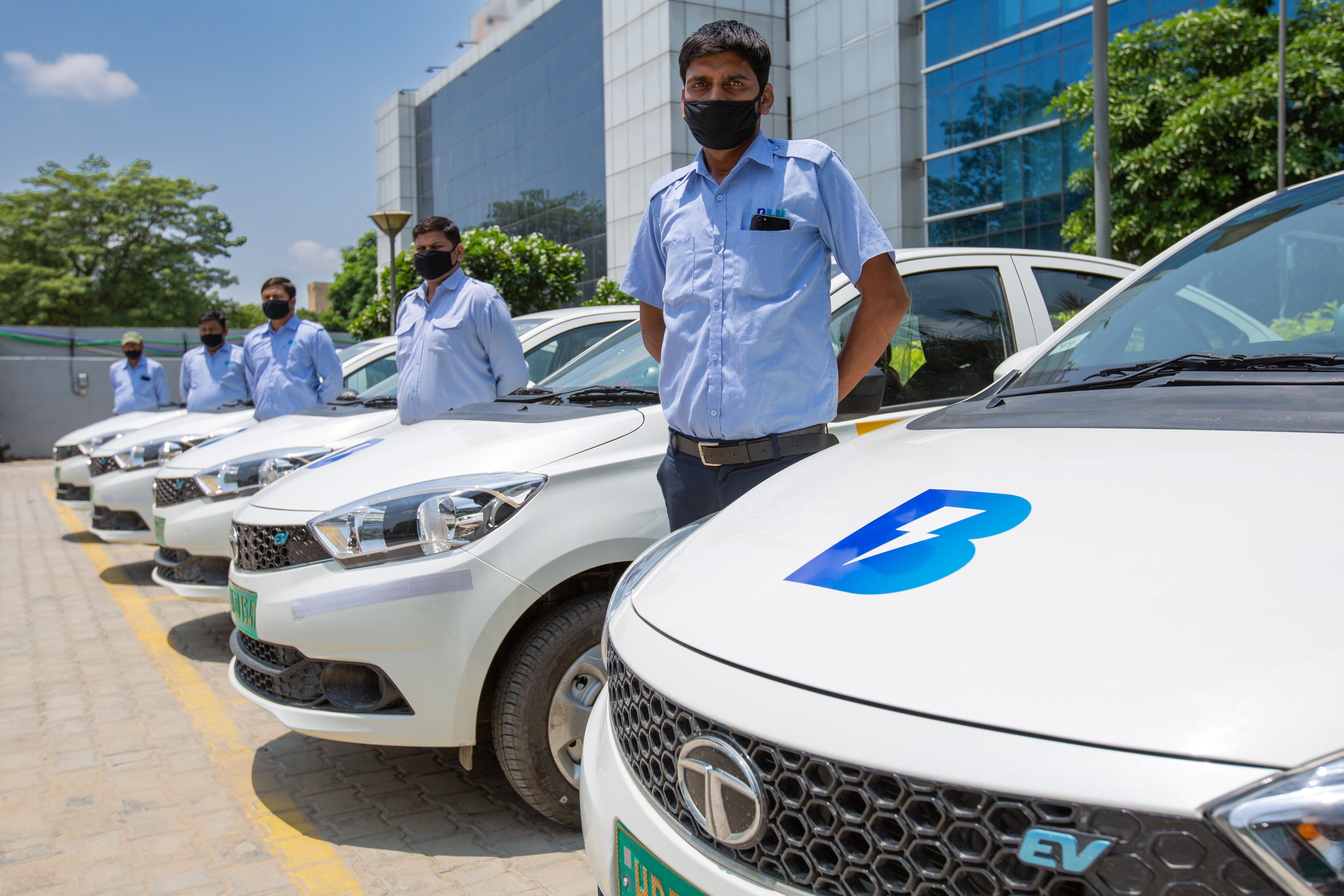
The all-electric ride-hailing platform BluSmart Mobility Pvt. will raise $250 million to expand its presence to six cities by 2024 to rival its conventional vehicle incumbents—Ola and Uber—in the sector.
“There is sufficient demand, but you have to gain the trust of the customer to realise the potential of this industry,” Anmol Singh Jaggi, the co-founder and chief executive officer of BluSmart Mobility, told BQ Prime.
Several consulting firms ranging from Frost & Sullivan to McKinsey have pegged the ride-hailing market to touch $90 billion by 2030.
But this potential will only be fructified if people have confidence in these companies, Jaggi said.

Anmol Singh Jaggi, co-founder, BluSmart. (Source: Company)
Charging Ahead
Post the Covid-19 pandemic, issues such as high CNG prices, shortage of drivers, surge pricing and frequent cancellations have led to a barrage of complaints against ride-hailing platforms across social media platforms.
BluSmart claims to solve these issues, simply by taking on the burden of expenses and freeing the drivers to focus on the driving.
“We don't let our drivers own cars as they mostly come from the bottom of the pyramid who cannot afford them,” Jaggi said. “The drivers spend their time to make an income, instead of worrying about all the expenses that come with owning such assets.”
Even though incumbents like Ola and Uber are expected to gradually shift to electric vehicles, BluSmart is confident of maintaining its lead.
According to Jaggi, the primary reason customers use their platform is better performance on cancellation and surge pricing front, and not because of the electric fleet.
It is difficult for the incumbents to solve their problems by merely changing the fuel type and the shift may even compound issues, as they will need to build charging stations along with overhauling existing technology systems, he said.
Expansion Plans
The company started its operations in 2019 from Delhi-NCR and recently expanded to Bengaluru.
With a fundraise of $250 million on the cards, it plans to expand to more than six cities with a fleet of 25,000 cars by the end of 2024. The company has raised $75 million so far from funds such as BP Ventures, Mayfield, Survam Partners and 9Unicorn fund.
The ride-hailing platform has strategic partnerships with automaker Tata Motors Ltd. and charging infrastructure company Jio-bp—entities operated by two of the country's largest conglomerates.
It has a total fleet of 2,700 cars, most of them Xpres-T EVs from Tata Motors.
While the company considers itself limited to the premium segment of the cab-hailing space due to the absence of smaller EVs in India, that could change with the launch of Tiago EV—touted to be the most affordable electric car in India.
“If we get the Tiago EV, we will be able to get a product which we can compare to smaller, economy product of rivals and lower the price point for the customers,” Jaggi said.
The company will look to induct a few hundred units of Tiago to their fleet after two-three months—as it is not available for commercial purposes yet—and expand it to thousands if the product is well-received by the customers.
According to Jaggi, the induction of smaller cars can reduce the price to Rs 14-15 per km, from Rs 23-24 with the current fleet of cars like Tigor EV.
BluSmart claims that their pricing in the premium segment is 15% cheaper than the competition on an average.
“At 14-15 rupees a km, the market size is 10 times bigger than the market size at Rs 24-25 a km,” Jaggi said.
Watch the full conversation here:

-
Rs 50-Lakh Gold In Bank Locker, Rs 3 Lakh Of Protection: The Gap Most Families Don't Know About

The RBI ties a bank's liability to the annual locker rent and families who want to insure their jewellery face a separate question about how to prove what was inside.
-
The More Food Turns Into Fuel, The Harder It Is To Read Agricultural Markets | The Reason Why
A policy designed to reduce dependence on imported fuel can create new pressures elsewhere in the food economy.
-
Your iPhone Costs 12 Grams Of Gold, A Car About 100. What Does Your Life Weigh?
Measured in rupees, almost everything looks more expensive than it did a generation ago. Measured in grams of gold, a lot of it has become cheaper.
-
Gold Is Rs 22,000 Cheaper Than A Month Ago. Should You Buy Amid The Wedding Season?
Gold's potential slide to $3,500 could save around Rs 4,700 per 10 grams, but a soft inflation print could just as easily push prices back up. One way to split the risk is to buy in parts, some now and the rest after the Fed's Dec. 9 decision.
-
AI Agents Are Gaining Power. Who Governs Them?
Artificial intelligence agents promise to transform productivity by moving machines from assisting decisions to executing them. But as organisations delegate greater authority to these AI-agents, they must first establish who controls that authority and who remains accountable when things go wrong.
-
Why Swapping Your Old Gold Can Trigger A Rs 5 Lakh Tax Bill, And How You Can Avoid It Legally
Swapping old gold for new is taxed as a sale and a fresh purchase. Getting your own gold remade can cut most of that bill, though it has its own costs.
-
The AI Trade is Done. The Real Opportunity for Investors Starts in 2027 | Unhedged Position
As pureplay AI stocks plunge and circular, capex-led financing unwinds, 2027 is set to be a year of reckoning for AI companies. Yet the bust clears the way for a better opportunity for investors in 2027 -- shifting the spotlight from AI builders to the companies using AI.
-
Leadership As Mission: Why The Age Of AI Demands More Human Leadership
Debjani Ghosh examines how AI is changing leadership, arguing that its success must be measured by its impact on people and the accountability of those guiding its use.
-
We May Need Another Tukaram Mundhe To Fight Air Pollution | The Reason Why
Developers may install basic measures such as sprinklers and green nets, resume work, and continue violating rules when this equipment stops working.
-
Extracting Value From Battery Scrap Could Be Challenging For India | The Reason Why
A discarded lithium-ion battery still contains valuable materials such as lithium, nickel and cobalt. These can be recovered and reused. When such batteries are crushed and shredded, they produce a dark powder called black mass.









