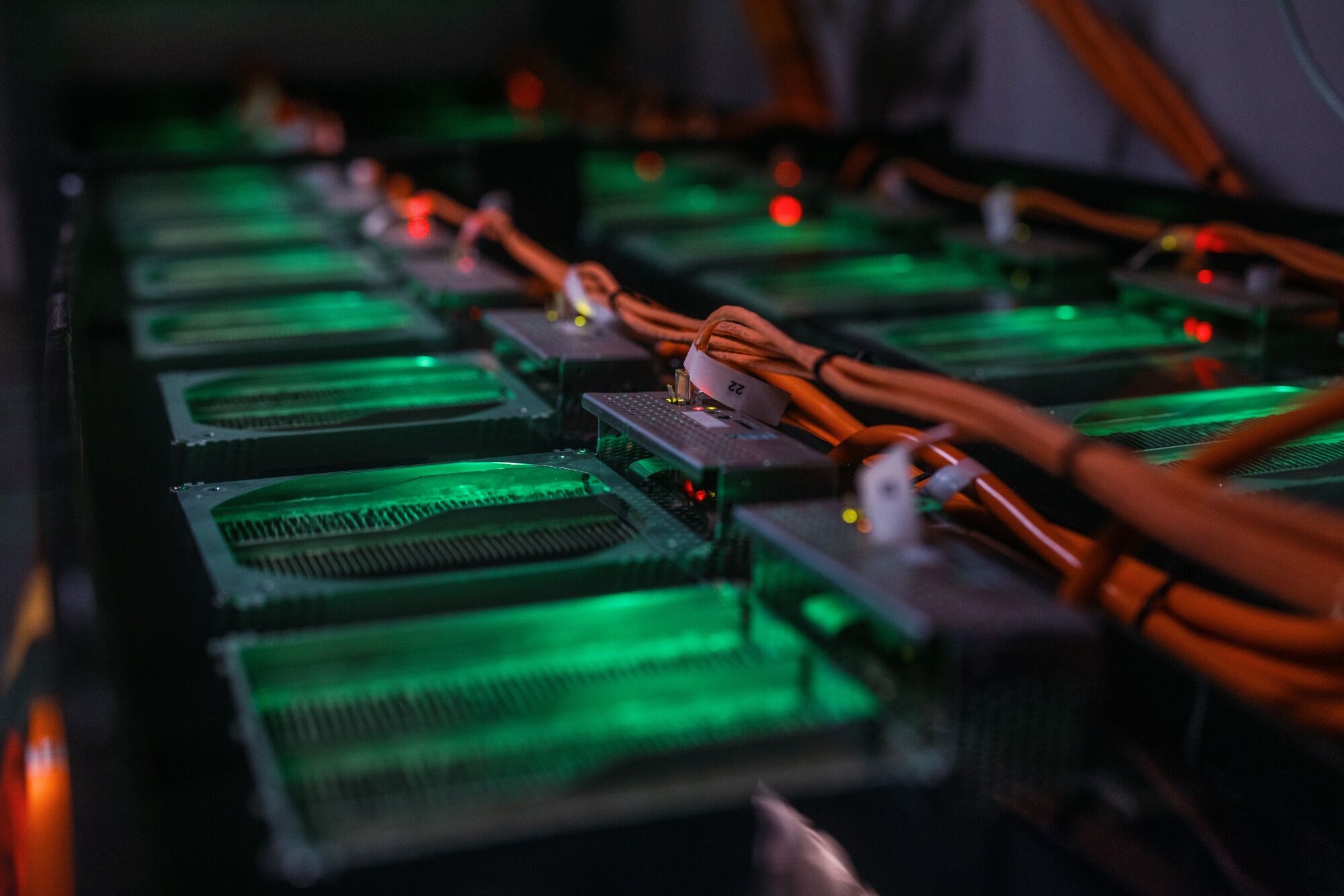
In Malaysia's illegal crypto mining hotspots, the hunt begins in the sky.
Drones buzz over rows of shops and abandoned houses, sweeping for pockets of unexpected heat, the thermal signature of machines that shouldn't be running. On the ground, police carry handheld sensors that sniff out irregular power use. Sometimes the pursuit is more low-tech: residents call in with complaints of strange bird noises, only for officers to discover nature sounds being used to mask the roar of machinery behind closed doors.
Together, the tools form a roving surveillance net in the pursuit of illegal Bitcoin miners.
Also Read | Layoffs Are Rising In Tech, But These Skills Are Helping People Unlock Better Pay
The miners they're chasing are careful. They hop from empty storefronts to deserted houses, installing heat shields to cloak the glow of their rigs. They equip entrances with CCTV cameras, heavy-duty security and broken-glass deterrents to keep unwanted visitors out.
This is the cat-and-mouse game between Bitcoin miners and Malaysian authorities, who recorded about 14,000 illicit mining sites over the past five years. Power theft has inflicted about $1.1 billion in losses on state-owned energy company Tenaga Nasional, or TNB, during that time, according to the energy ministry. And it's accelerating – by early October, with Bitcoin hitting record highs (before collapsing more than 30% and rebounding again), authorities had logged some 3,000 power-theft cases tied to mining.
Now, Malaysia is ramping up its response. On Nov. 19, the government rolled out a cross-agency special committee that's staffed by the Ministry of Finance, Bank Negara Malaysia and TNB. The taskforce plans to coordinate a crackdown on rogue operators.
“The risk of allowing such activities to happen is no longer about stealing,” said Akmal Nasrullah Mohd Nasir, the deputy minister of energy transition and water transformation, who chairs the panel. “You can actually even break our facilities. It becomes a challenge to our system.”
Bitcoin mining is a competition of brute-force arithmetic. Racks of specialised machines, called “rigs”, spit out trillions of calculations a second in hopes of validating transactions. When they get it right, the miners earn coins.
It's big business. Globally, Bitcoin mining chews through more electricity than overall consumption in South Africa or Thailand. More than 75% of that activity now takes place in the US, according to a Cambridge Centre for Alternative Finance report. Malaysia's slice of the industry is a little more opaque. In January 2022, the country accounted for 2.5% of the global hashrate – a measure of computational power – but Cambridge did not publish updated data for its latest survey.
What is clear is that miners in Malaysia have a talent for repurposing unusual spaces.
Overlooking the Strait of Malacca stands ElementX Mall, a colossal complex that emptied during the Covid-19 pandemic and never recovered. Today, much of it still looks like a construction site, with bare concrete floors and exposed wiring. In early 2022, the mall found an unlikely tenant: Bitcoin miners. By early 2025, the rigs were gone but only after a TikTok video of the operation went viral.
Hundreds of miles east, in Sarawak, similarly striking operations exist. A company called Bityou set up a mining farm in a former logging yard, Bloomberg News previously reported. Bityou declined to comment for this story.
Bitcoin mining in Malaysia is legal as long as operators obtain power properly and pay taxes.
Akmal, who joined several raids last year, isn't convinced. At the special committee's first meeting on Nov. 25, members debated whether to recommend banning Bitcoin mining outright.
“Even if you run it properly, the challenge is that the market itself is very volatile,” he said. “I don't see any well-run mining that can be considered as successful legally.”
He went further still, suggesting that the sheer number of illegal Bitcoin mining sites and the behavioral patterns of the people behind them point to the involvement of organized crime.
“It's clearly run by the syndicate, because of how mobile they are from setting up in one place to another place,” Akmal said. “It does have modus operandi.”
Essential Business Intelligence, Sharp Market Insights, Practical Personal Finance Advice, Daily Fuel, Gold and Silver Prices and Latest Stories — On NDTV Profit.