Bajaj Auto Gets A New Flagship In Pulsar NS400Z
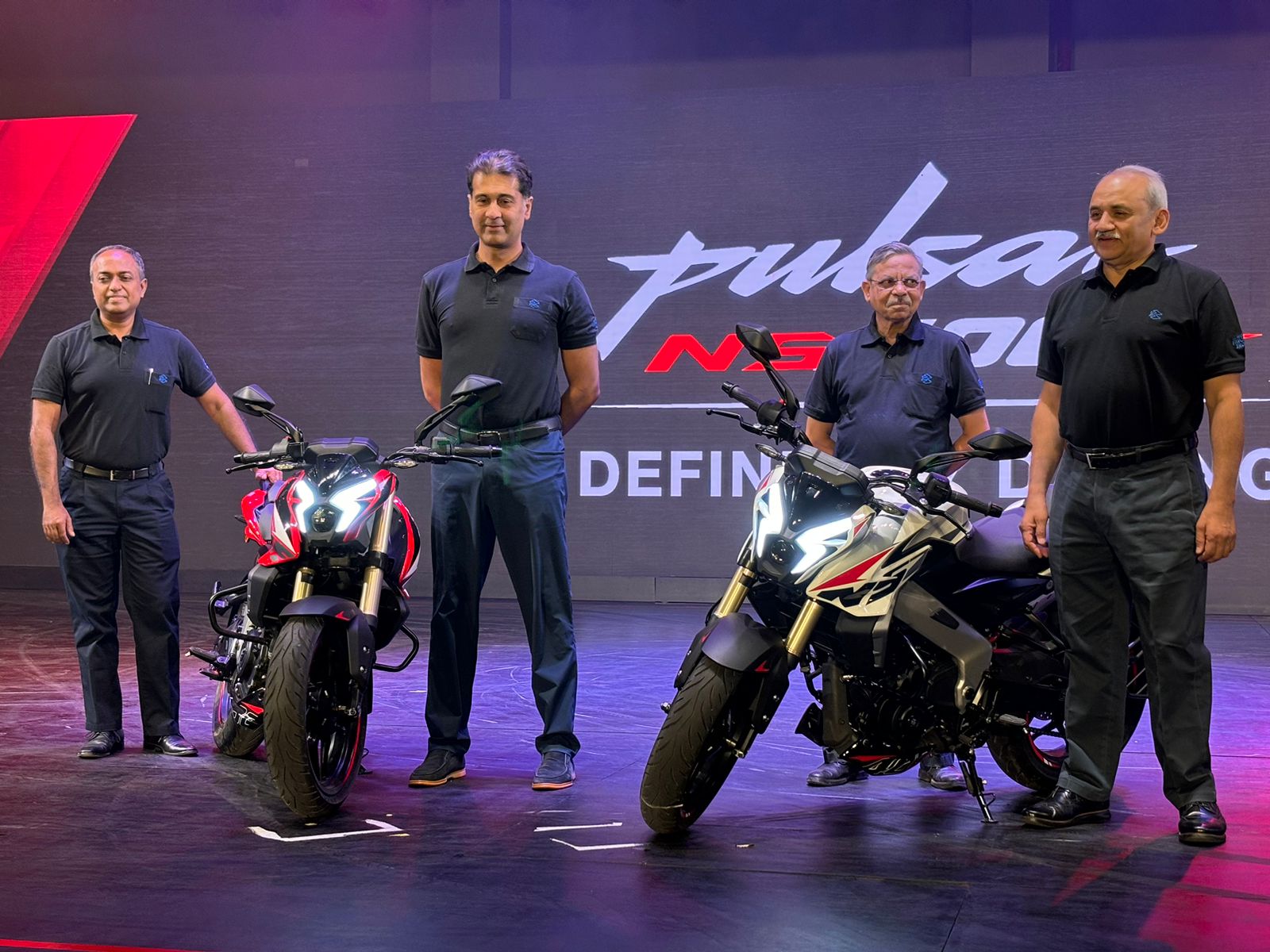
Bajaj Auto Ltd. has launched its biggest Pulsar yet, to build on the brand equity the motorcycle enjoys, even after more than two decades in continuous production.
With the Pulsar NS400Z, the Pune-based automaker has at once gained a new flagship that promises power to the masses and delivers a flavour of motorcycling that is distinct from its brethren in the Dominar 400, KTM 390 Duke and the Triumph Speed 400—all middleweight pocket rockets made by ‘Hamara Bajaj'.
At Rs 1.85 lakh, it will also be the cheapest of the lot.
Bajaj Pulsar NS400Z Features
Equipped with the 373 cc engine that powered the KTM 390 Duke until last year, the Pulsar NS400Z borrows its underpinnings from the Dominar 400 as well as the much-smaller Pulsar NS200. The new motorcycle produces 40 BHP of power at the crank and sends 35 NM of torque to the rear wheel via a six-speed powertrain. The braking duties are handled by upside-down forks at the front and a single disc at the rear.
In terms of equipment, the motorcycle gets LED lights all around, including the lightning bolt-shaped daylight running lights that flank the projector headlight upfront. At the back, the signature trailing tail-lights make their presence felt.
Unlike the other Pulsars in Bajaj Auto's line-up, the Pulsar NS400Z gets a flat handlebar that should aid handling in city traffic as well as enable effortless cruising on the highway. The instrument cluster gets a colour TFT screen with Bluetooth connectivity and turn-by-turn navigation on some variants.
The motorcycle is available in four colours—black, white, red and grey—with a smattering of graphics. Online bookings are now open at Rs 5,000.

-
Talking Points This Week: Tech Nerves, FII Buying, And A Faraway Banking Shock

The global markets are not shining this Diwali. The exception in the large markets is, India.
-
Midterm Rally Lasted A Day. The Hard Reality Of A Divided US May Last Two Years | Opinion
Between a contested AI boom, a debt ceiling that arrives in 2027 and a president with every incentive to act alone, the next two years may prove more volatile than the first day's rally suggests.
-
Blue Wave Will Derail the AI Trade but Won't Dismantle the AI Era | Unhedged Position
The Democrats' sweep of the US Congress will see politics collide with economic forces both over the long and short term.
-
It's Time To Take The GST Council's Bet On Trust Global
Payment records can prove India's services exports, and clear, proportionate rules can bring foreign digital sellers into the tax net.
-
Opinion | India at 38: From Innovation Overperformer to Innovation Powerhouse
India now has 453 VC-backed deep science startups, 18 of them late-stage, after 117 percent growth since 2020. Laurus Labs, at USD 9.3 billion, is the most valuable deep science company in any middle-income economy outside China.
-
Navigating Energy Crossroads: S Jaishankar's Call For Diversified Supply Chains At G20 Ministerial Meeting
As geopolitical fault lines continue to test maritime trade routes and commodity flows, Jaishankar's message remains pertinent: true economic resilience requires open markets, protected transit lines, and a genuine commitment to multilateral cooperation rather than coercion.
-
Indians Are Travelling, But Not Every Journey Is A Holiday | The Week In Whys
Pilgrims, patients and working women are the real travellers, and the system hasn't quite caught up with them.
-
Getting To Work Costs Women More | The Reason Why
It is not just about women paying more than men. It is about women paying much more in cities than in villages.
-
AI Bias In Investing Cannot Be Eliminated, But It Can Be Governed
Framing is a particularly important example as identical financial information presented in terms of gains rather than losses can lead an LLM to reach a different assessment.









