Anil Agarwal's Vedanta Demerger: A Forced $10-Billion Restructuring
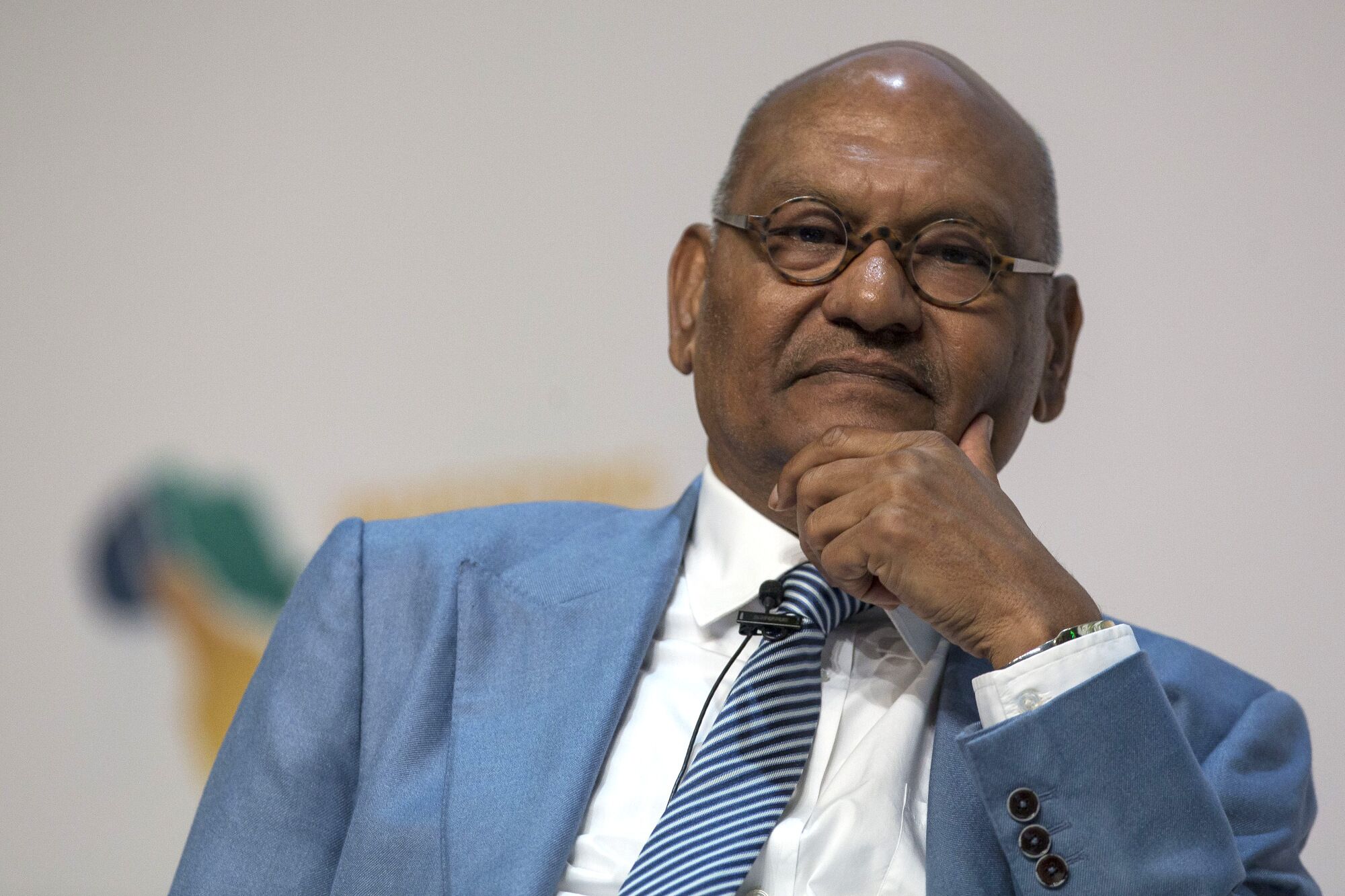
A decade ago, Anil Agarwal embarked on mega consolidation at his group's metals-to-crude India business under Vedanta Ltd. to drive valuations. He now plans to undo much of that—again to unlock value—amid debt woes.
In 2012–13, Agarwal merged the iron-ore businesses Sesa and Sterlite, and consolidated the oil and gas unit—then Cairn India—as a unit of Vedanta. It further aligned some of its subsidiaries to simplify group structure and add value. The objective was to also eliminate cyclicality and improve diversification.
Now, its London-based parent Vedanta Resources is under strain and has bond repayments worth about $4 billion coming up. The group will have to refinance this debt given the lack of liquidity at the parent and the inability to use cash at various subsidiaries except through dividends.
Agarwal even attempted to delist Vedanta Ltd. in October 2020 but failed. While the stock has since risen, its valuation has tumbled by half to $10 billion since its April 2022 peak.
Ratings agencies have highlighted financial stress at Vedanta Resources. Standard and Poor's downgraded it to ‘CCC' with a negative credit watch from ‘B-‘. Vedanta Resources' "limited alternate sources" of funding added to the downside risks; the payment of the January bond is highly likely, S&P said.
In August, Vedanta sold 4% of its Indian arm, partly to raise funds for $1-billion bonds due in January 2024. But an estimated funding gap of $600 million remains, the rating agency said. Vedanta could look at raising more funds from transfer of general reserves to retained earnings at Hindustan Zinc or asset sales, the ratings agency said.
Vertical Split
The group announced the demerger of businesses into six companies by September 2024.
Vedanta Ltd.: Incubating business and holding Hindustan Zinc.
Vedanta Oil and Gas
Vedanta Steel & Ferrous
Vedanta Base Metals
Vedanta Power
Vedanta Aluminium
But how would a split unlock value when the initial consolidation was also aimed at a similar goal?
The valuation and high multiples Vedanta used to get for various businesses have crashed despite sustained cash flows. This has undergone a significant change due to investors' increased sensitivity to environmental impact, the transition to alternative energy sources, and capital pool shrinking for industries facing ESG risk.
The management acknowledges that a lot has changed in the last two years.
"24 months ago, any of the energy transition, China-plus one, India's growth, inward investment, and resource nationalism were probably nascent themes... nearly not as advanced as we see today, particularly in respect of the explosion of interest that we see," said Omar Davis, president-strategy at Vedanta.
"We see it in our asset base. I presume our peers do as well across India," he said. "Our ability to point the company towards those pools of capital we began to feel was more constrained in our current format than it will be going forward in the new structure.”
Twin Debt Issues
Vedanta Group faces twin debt issues. One at parent Vedanta Resources, and the other at its Indian holdings. Agarwal has also pledged nearly all his holdings in Vedanta and Hindustan Zinc.
The demerger exercise at the Indian arm does not address the issue of Vedanta Resources, which has a debt obligation of $4.2 billion, with $1 billion coming up in January and $2.9 billion by FY25. As a result, the credit profile does not change for the parent. The demerger may only help in ringfencing Indian businesses from any future downgrade of the parent, expose them to business cycles of individual industries and remove Vedanta's holding company discount.
The second major issue will be the standalone debt worth Rs 44,274 crore at Vedanta Ltd. The biggest concern would be how it allocates this liability among all demerged entities. The only company with over a billion dollars in cash on its books is Hindustan Zinc, which may chart a similar vertical split of its own.
In a nut shell, it's a tough road ahead for Anil Agarwal. With debt repayments coming up and promoter ownership pledged, creditors need to be convinced about the demerger.
The conglomerate has been constantly looking at streamlining itself to ensure its business gets enough capital and better valuations, and the promoter gets regular cash flow through dividends at subsidiaries.
But will the latest restructuring plan solve the problem?

-
Navigating Energy Crossroads: S Jaishankar's Call For Diversified Supply Chains At G20 Ministerial Meeting

As geopolitical fault lines continue to test maritime trade routes and commodity flows, Jaishankar's message remains pertinent: true economic resilience requires open markets, protected transit lines, and a genuine commitment to multilateral cooperation rather than coercion.
-
Indians Are Travelling, But Not Every Journey Is A Holiday | The Week In Whys
Pilgrims, patients and working women are the real travellers, and the system hasn't quite caught up with them.
-
Getting To Work Costs Women More | The Reason Why
It is not just about women paying more than men. It is about women paying much more in cities than in villages.
-
AI Bias In Investing Cannot Be Eliminated, But It Can Be Governed
Framing is a particularly important example as identical financial information presented in terms of gains rather than losses can lead an LLM to reach a different assessment.
-
Joining The Dots | Dark Skies, Steady Diya: Why Hope Holds This Diwali
With war, a weak rupee and foreign outflows weighing on sentiment, policymakers at the NDTV World Summit and market veterans at NDTV Profit Ignite: Diwali Edition offered the same advice: stay invested and filter out the noise.
-
The Curious Case of Equitas Small Finance Bank And A CEO Who Quit For Stock
PN Vasudevan believes persistent investor concerns over a perceived conflict of interest had become a governance overhang on Equitas Small Finance Bank's stock, even as the lender improved profitability and asset quality.
-
Talking Points This Week: AI Cash Burn, A Tiger Comeback And An India That Still Finds Its Own Path
India is not immune to higher oil or tighter global liquidity, yet its earnings base is broader, its domestic policy levers are still available.
-
Foreign Investors Own Half Of HDFC Bank and ICICI Bank. An LTCG Cut Could Matter Most Here
Foreign portfolio investors have US$115 billion parked in HDFC Bank, ICICI Bank. If the government cuts long-term capital gains tax, Jefferies says returning foreign money could land here first.
-
'Never Seen This Level Of Negativity': Sandeep Tandon Says The Next Rally May Be Closer Than You Think
Veteran investor Sandeep Tandon says foreign selling is easing, large-caps are due a comeback and mid-caps are crowded, while he turns positive on gold, power and pharma this Diwali.
-
Indians Stay With Family, Not In Hotels | The Reason Why
India still lacks enough clean, reliable and affordable hotels for budget-conscious travellers.










