Air India-Vistara Merger To Forge Global Airline With 'Indian Heart': N Chandrasekaran
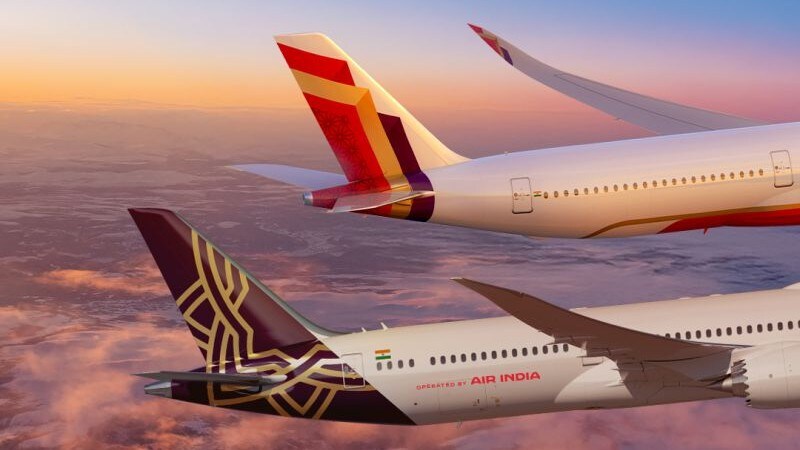
The Air India-Vistara merger is an important milestone in the transformation of Air India into a world-class global airline with an "Indian heart", Tata Sons Chairman N Chandrasekaran said on Thursday.
In a LinkedIn post, Chandrasekaran said this merger, on the back of the Air Asia and Air India Express merger, brought together four airlines to create one integrated airline group. The merger of Air India and Vistara was officially completed on Nov. 12.
"This week's merger between Air India Limited (AI) and Vistara is an important milestone in our commitment to transform AI into a world-class global airline with an Indian heart," Chandrasekaran wrote on his LinkedIn profile. "We have much to look forward to."
Chandrasekaran wrote that from its pre-privatisation size, the fleet has grown over 2.5 times and its 300 aircraft carry nearly 2 lakh passengers across 100 global destinations every day. Through its partners, the fleet offers worldwide connectivity to over 800 destinations.
"At the same time, it is important to acknowledge that a merger is undoubtedly a time of change — distinct cultures are put together to create something new and lasting. Such mergers take time to play out," he said.
"We have moved quickly, completing the process in 2 years, while keeping our eye on the ultimate goal: to realise AI's potential and turn it into a world-class global airline. Given our ambitions, this merger should be seen as part of a journey. Different parts of the business were at different points of maturity when the merger commenced, so they will take time to fully align," Chandrasekaran said.
Vistara will continue to deliver the service experience it is known for, while bringing to Air India some of its best practices. Customers will continue to experience Vistara's in-flight service and the cabin crew that they are accustomed to, according to Chandrasekaran.
"That brings me to AI, our national carrier. 2 years ago, when we took over, AI was in decline for a number of systemic reasons," the Tata Sons chairman said.
The turnaround it needed could not be solved simply by the allocation of resources, but by rethinking every aspect of Air India's functioning from the ground up. Change had to be meaningful, not just in matters of appearance, he said. "In the last 2 years, we have moved swiftly to invest in people, processes, systems and technology. New staff and planes are already in service, and more are on the way."
"The AI people will fly will be safer, its IT infrastructure will be stronger, and its personnel will reflect the next generation. We have created South Asia's largest training academy for pilots, cabin crew, and staff," Chandrasekaran said.
Air India is establishing a flying academy for cadet pilots and ground has been broken for a facility that will service its growing fleet of wide-body and narrow-body aircraft, he said. "I am optimistic about the future for AI. AI's new Airbus A350, which now flies to London and New York, gives us a glimpse of the future."
"As more new aircraft are delivered, and the legacy fleet is completely refitted, a new AI will take flight. We are fully aware that expectations for the new Air India are sky high. We expect nothing less, and we expect to deliver nothing less," he said.
The airline we are strengthening today will be ready for India's coming "aviation revolution". There is still more work to do, and Air India is bringing Vistara's best qualities to this merger, Chandrasekaran added.

-
Signature Play: The Classic Cocktail Is Dead. Or Is It?

Classic cocktails are disappearing from India's cocktail menus. But they're still being ordered, taught to bartenders and borrowed from. So, who's really having the last drink?
-
A New Samvat Wishlist: Inclusive Prosperity And Human Development
India has strengthened its economic foundations through infrastructure, digital access and enterprise. Its next growth chapter must deepen productivity, create better livelihoods and widen participation in prosperity.
-
Love, Sex Aur Dhokha: The Audacious Plot To Spy On Jensen Huang
A Taipei dinner, a Singapore chip buyer and a suspected Chinese asset: inside the alleged spy operation that got close to NVIDIA's Jensen Huang.
-
Ten Things I Learnt This Samvat
Patience can be a trap. Cheap stocks can stay cheap. Leverage can wipe you out. What did Samvat 2082 teach us? Niraj Shah writes on 10 lessons from the year gone by.
-
Talking Points This Week: Tech Nerves, FII Buying, And A Faraway Banking Shock
The global markets are not shining this Diwali. The exception in the large markets is, India.
-
Midterm Rally Lasted A Day. The Hard Reality Of A Divided US May Last Two Years | Opinion
Between a contested AI boom, a debt ceiling that arrives in 2027 and a president with every incentive to act alone, the next two years may prove more volatile than the first day's rally suggests.
-
Blue Wave Will Derail the AI Trade but Won't Dismantle the AI Era | Unhedged Position
The Democrats' sweep of the US Congress will see politics collide with economic forces both over the long and short term.
-
It's Time To Take The GST Council's Bet On Trust Global
Payment records can prove India's services exports, and clear, proportionate rules can bring foreign digital sellers into the tax net.
-
Opinion | India at 38: From Innovation Overperformer to Innovation Powerhouse
India now has 453 VC-backed deep science startups, 18 of them late-stage, after 117 percent growth since 2020. Laurus Labs, at USD 9.3 billion, is the most valuable deep science company in any middle-income economy outside China.









