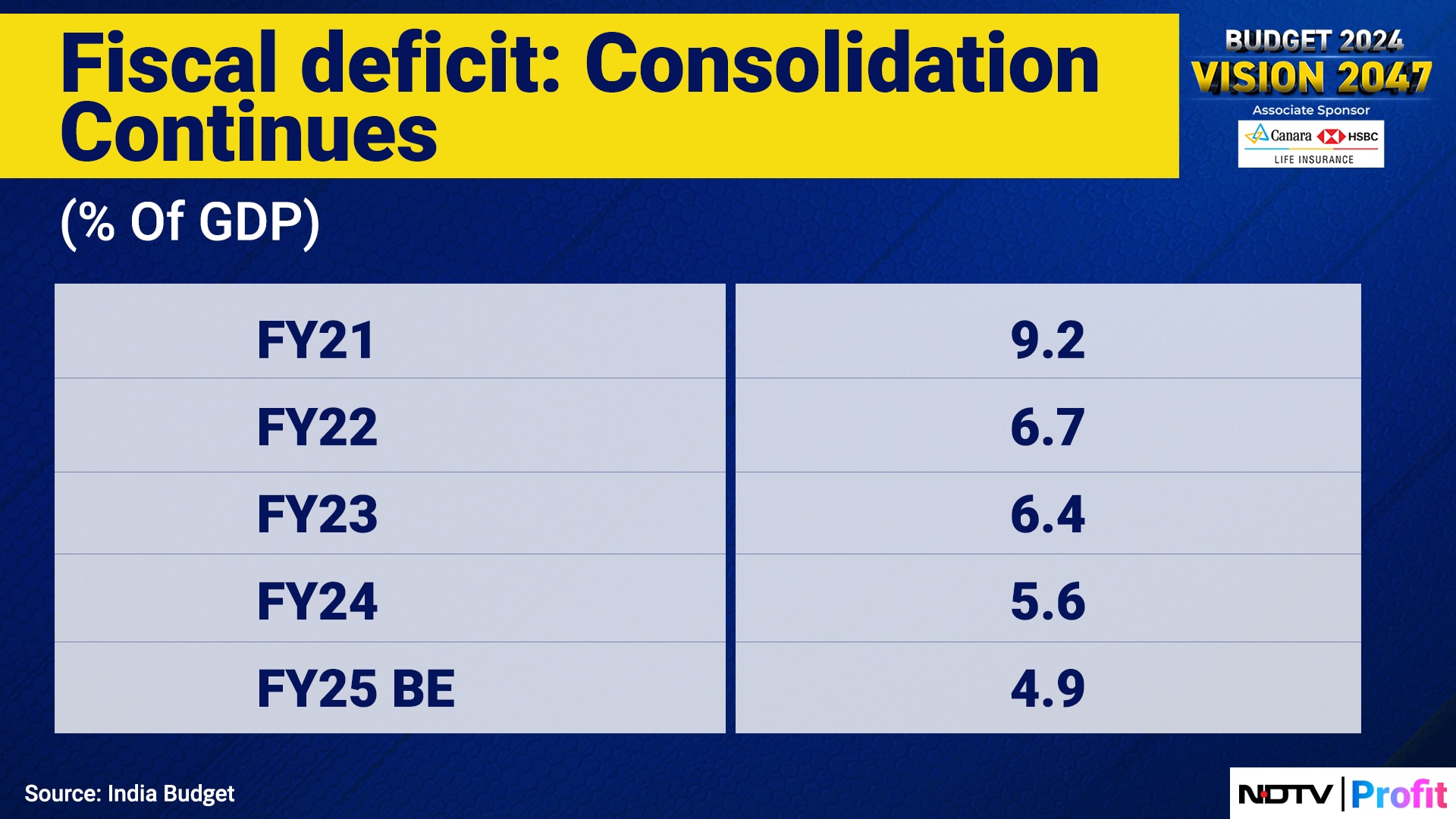
India aims to continue on its fiscal consolidation path in the ongoing financial year after bettering its deficit target for the current fiscal.
The union government will target a fiscal deficit of 4.9% of the gross domestic product for FY25, compared to a target of 5.1% set in the interim budget, Finance Minister Nirmala Sitharaman announced in her budget speech on Tuesday. For FY24 too, the fiscal deficit has been revised to 5.6% of the GDP.

-
 Indian Markets Turning Corner After Two Tough Years, Says Sandeep Tandon
-
 NDTV Profit Ignite 2026: Experts See Opportunity In Equities, Stay Bullish For Long-Term
-
 Buy Right, Sit Tight Does Not Work for Individual Stocks, Says Dinshaw Irani
-
 'Worst Is Behind': Quant MF Sees Market Bottom, Flags 'Extreme Euphoria' In Midcaps
-
 India's Mutual Fund Industry Could Become A $1 Trillion Opportunity, Say Fund Managers
-
 'Foreign Investors Are Baraatis': Raamdeo Agrawal's Take On LTCG Tax
-
 Stay Invested Through Market Cycles: Raamdeo Agrawal at NDTV Profit Ignite
-
 Ramesh Damani Remains Bullish On India For Next 20-30 Years, Sees Bargains Amid Market Weakness
-
 CAS Came After A Long Consultation Process: SEBI Chairman Tuhin Kanta Pandey AT NDTV PROFIT IGNITE
-
 Aim To Cut FPI Onboarding Time From Mth To Five Days: SEBI Chairman Tuhin Kanta Pandey AT NDTV PROFI
Gross borrowings are pegged at Rs 14.13 lakh crore, as estimated in the interim budget. Net borrowings are pegged at Rs 11.63 lakh crore.
Also Read | Layoffs Are Rising In Tech, But These Skills Are Helping People Unlock Better Pay
Sitharaman reaffirmed that the government would continue on the path of fiscal consolidation, reaching a fiscal deficit below 4.5% by FY26. The anticipated reiteration of the reduction in the fiscal deficit to below 4.5% of GDP in FY26 is welcome, said Aditi Nayar, chief economist at ICRA. Interestingly, the new medium-term fiscal consolidation path has been linked to a reduction in the debt/GDP ratio instead of continued compression of the fiscal deficit/GDP ratio. This will allow the government flexibility to chart an appropriate fiscal course that builds in higher capital spending as well as support for meeting the climate goals in a fairly uncertain global environment, said Nayar.
From a signalling perspective, there's an incentive for the government to project stability and an uncompromising focus on fiscal consolidation, despite the weaker political mandate, the company said.
The fiscal deficit had risen from 3.8% of the GDP in FY20 to 9.5% in FY21 amid increased development and welfare-related expenditures during the Covid-19 pandemic.
Essential Business Intelligence, Sharp Market Insights, Practical Personal Finance Advice, Daily Fuel, Gold and Silver Prices and Latest Stories — On NDTV Profit.