- Some listed companies with no economic activity act like shell firms, says SEBI chief Pandey
- SEBI plans third-party monitoring to ensure IPO funds are used as stated in offer documents
- Proposed rules include fines and freezing promoters' demat accounts for non-cooperation
Some listed companies with no economic activity function like shell companies and "add risk to the market", Securities and Exchange Board of India Chairman Tuhin Kanta Pandey said on Wednesday.
Pandey also said the regulator is working on a system under which "third-party monitoring agencies" will check whether money raised through initial public offerings is used for the purpose stated in the offer document.

-
 India Could Gain If AI Trade Unwinds, US Midterms May Hurt Markets: Ramesh Damani
-
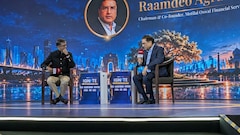 'Switch Off The Noise, Focus On Earnings': Raamdeo Agrawal's Advice To Investors
-
 Stay Invested Through Market Cycles: Raamdeo Agrawal at NDTV Profit Ignite
-
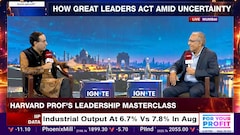 Courage, Not Tech, Will Decide Corporate Winners In The AI Era: Harvard Professor
-
 SEBI Chairman Cautions People On Fraudulent Investments
-
 Ramesh Damani Remains Bullish On India For Next 20-30 Years, Sees Bargains Amid Market Weakness
-
 CAS Came After A Long Consultation Process: SEBI Chairman Tuhin Kanta Pandey AT NDTV PROFIT IGNITE
-
 SEBI Says CAS Works Technologically, Explains Concern Over Expiry-Day Derivatives
-
 Aim To Cut FPI Onboarding Time From Mth To Five Days: SEBI Chairman Tuhin Kanta Pandey AT NDTV PROFI
-
 "I Am A Material Man In A Material World': Quantum Advisors' Ajit Dayal On NDTV Profit Ignite
He made the remarks during a panel discussion at NDTV Profit Ignite: Diwali Edition in Mumbai.
Tighter Watch On IPO funds
Pandey's comments follow proposals SEBI floated earlier this month. A consultation paper issued on Oct. 13 drew on recommendations from a working group led by former SEBI executive director V S Sundaresan. The group proposed making monitoring agencies mandatory for all issuances, regardless of size, excluding the offer-for-sale portion.
Under those proposals, stock exchanges could fine a company Rs 50,000 for each reported instance of non-cooperation with its monitoring agency. If the default continues, exchanges would direct depositories to freeze promoters' demat accounts. Companies reported for non-cooperation would not be allowed to terminate the agency's agreement or appoint a replacement until the default is cleared. The proposals are still open for consultation and are not yet final rules.
Under current rules, IPO proceeds must be monitored by a SEBI-registered credit rating agency if the fresh issue exceeds Rs 100 crore.
ALSO READ: SEBI Chief: Direct MF Plans Default From Nov 1; IPO Rules, SME Framework Under Review
Part Of A Wider Governance Push
Earlier, in his keynote address, Pandey said “public capital brings public responsibility” and that companies must be accountable for how they use investors' money. He said SEBI has proposed stronger monitoring of issue proceeds to improve transparency and accountability. It is also reviewing the framework for debenture trustees, with a focus on stronger oversight.
The regulator will also revisit the framework for main-board IPOs and follow-on public offers, alongside a review of listing and disclosure obligations. Separately, it is reviewing the SME IPO framework and the Innovators Growth Platform, particularly for new-age companies, to improve access to public capital for growing businesses.
SEBI is also piloting an AI-based tool to monitor disclosures by debenture trustees, stock exchanges, depositories and credit rating agencies. The tool is meant to flag early signs of corporate debt defaults, Pandey said.
ALSO READ: SEBI To Review Closing Auction Rules After One Year, Chairman Pandey Reiterates
Essential Business Intelligence, Sharp Market Insights, Practical Personal Finance Advice, Daily Fuel, Gold and Silver Prices and Latest Stories — On NDTV Profit.